Best Smart Thermostats in 2026: Cut Your Energy Bill Without Losing Comfort
Quick Comparison
| Product | Best For | Buy |
|---|---|---|
 Google Nest Learning Thermostat, 4th Gen (Best Overall) Google · 24V HVAC (C-wire optional) · 6.9 oz (with base) | Homeowners who want a thermostat that builds its own schedule | |
 Ecobee Smart Thermostat Premium (Best Premium Features) Ecobee · 24V HVAC (PEK included for no C-wire) · 1.37 lbs | Tech enthusiasts who want a thermostat that doubles as a smart speaker | |
 Ecobee Smart Thermostat Enhanced (Best Mid-Range) Ecobee · 24V HVAC (PEK included for no C-wire) · 5.9 oz | Homeowners who want Ecobee quality without paying for extras | |
 Sensi Touch 2, ST76 (Best Value) Copeland (formerly Emerson Sensi) · 24V HVAC (C-wire required) · 5.6 oz | Value-conscious buyers who want a premium touchscreen experience | |
 Amazon Smart Thermostat (Best Budget) Amazon · 24V HVAC (C-wire required) · 3.9 oz | Alexa households that want smart thermostat basics at the lowest price | |
 Honeywell Home T9 (Best for Multi-Room Comfort) Honeywell Home (Resideo) · 24V HVAC (C-wire adapter included) · 1.31 lbs | Homes with hot and cold spots that need targeted room control | |
 Ecobee Smart Thermostat Essential (Best Entry-Level Ecobee) Ecobee · 24V HVAC (C-wire required) · 5.5 oz | Budget buyers who want Ecobee's app and ecosystem at the lowest price |
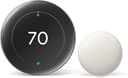
Google Nest Learning Thermostat, 4th Gen (Best Overall)
Homeowners who want a thermostat that builds its own schedule
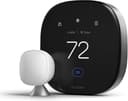
Ecobee Smart Thermostat Premium (Best Premium Features)
Tech enthusiasts who want a thermostat that doubles as a smart speaker
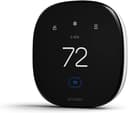
Ecobee Smart Thermostat Enhanced (Best Mid-Range)
Homeowners who want Ecobee quality without paying for extras
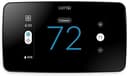
Sensi Touch 2, ST76 (Best Value)
Value-conscious buyers who want a premium touchscreen experience
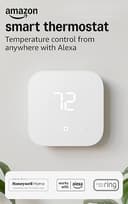
Amazon Smart Thermostat (Best Budget)
Alexa households that want smart thermostat basics at the lowest price
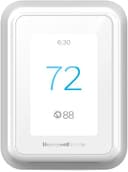
Honeywell Home T9 (Best for Multi-Room Comfort)
Homes with hot and cold spots that need targeted room control
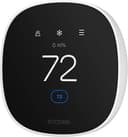
Ecobee Smart Thermostat Essential (Best Entry-Level Ecobee)
Budget buyers who want Ecobee's app and ecosystem at the lowest price
If you are still adjusting your thermostat manually, you are leaving money on the wall. The best smart thermostat pays for itself within the first year through energy savings alone, and the right one makes your home noticeably more comfortable without you lifting a finger. The wrong one, though, creates more frustration than it solves, especially if it does not work with your HVAC system or your preferred smart home ecosystem.
Here is the truth most reviews skip: the "smartest" thermostat is not always the best choice. I think a learning thermostat that costs $280 is overkill for a single-zone apartment. A $60 budget model might not support your heat pump. And that fancy air quality monitor on the premium model? Most people never look at it after the first week.
I compared seven smart thermostats across every price point to find the right match for every home, budget, and HVAC setup. Whether you want a thermostat that learns your schedule automatically, one that works across every smart home platform, or simply the most reliable way to control your heating and cooling from your phone, one of these picks will fit.
Quick Picks: Best Smart Thermostats at a Glance
- Best Overall: Google Nest Learning Thermostat (4th Gen). I'd pick this for most homeowners: it learns your schedule, has a beautiful display, and works with every major ecosystem.
- Best Premium Features: Ecobee Smart Thermostat Premium. Built-in Alexa/Siri, air quality monitor, and included room sensor.
- Best Mid-Range: Ecobee Smart Thermostat Enhanced. Same core performance as the Premium at $60 less. In my opinion, this is where most budgets should land.
- Best Value: Sensi Touch 2 (ST76). Gorgeous touchscreen, solid app, excellent HVAC compatibility.
- Best Budget: Amazon Smart Thermostat. Alexa integration for under $60 with surprisingly capable scheduling.
- Best for Multi-Room Comfort: Honeywell Home T9. Room sensors with 200-foot range for targeted temperature control.
- Best Entry-Level Ecobee: Ecobee Smart Thermostat Essential. New for 2025, balances features and price at $130.
What to Look For in a Smart Thermostat
Before the individual reviews, here are the factors that actually determine whether a smart thermostat will work well in your home.
C-Wire Compatibility
The C-wire (common wire) provides continuous 24V power to your thermostat. Most smart thermostats need one, and this is where installations go wrong. If your home was built before 2000, there is a good chance you only have four wires running to your thermostat location, and none of them is a C-wire.
Some thermostats (like the Nest Learning Thermostat) can work without a C-wire by "power stealing" from your HVAC system. Others (like the Ecobee models) include a Power Extender Kit (PEK) that solves the problem without running new wire. The Amazon Smart Thermostat requires a C-wire but sells a bundle with a Honeywell C-wire adapter for $75. The Sensi Touch 2 strictly requires a C-wire with no workaround.
Check your existing wiring before you buy. Pull off your current thermostat and count the wires. If you see a wire connected to the "C" terminal, you are good. If not, prioritize models that include a solution.
Smart Home Ecosystem
This matters more than most people realize. If your home runs on Alexa, a thermostat that only supports Google Assistant creates friction. If you are invested in Apple HomeKit, your options narrow considerably.
The Google Nest Learning Thermostat (4th Gen) now supports Matter, which means it works with Alexa, Google Home, Apple Home, and SmartThings. Ecobee thermostats work with all major platforms including HomeKit. The Honeywell T9 supports Alexa, Google, and SmartThings. The Amazon Smart Thermostat, predictably, works best with Alexa and has limited functionality outside that ecosystem.
Learning vs. Scheduled
Learning thermostats (like the Nest Learning Thermostat) observe your behavior and build a schedule automatically. You turn the heat up when you wake, turn it down when you leave, and within a week or two the thermostat handles it without you. This sounds magical, but it works best in homes with consistent routines. If your schedule varies wildly, a programmable thermostat with manual scheduling gives you more reliable results.
Most smart thermostats now offer some form of geofencing, where the thermostat detects when your phone leaves a defined radius around your home and adjusts the temperature accordingly. This is arguably more useful than learning for homes with unpredictable schedules.
Room Sensors
A single thermostat reads the temperature in one spot, usually a hallway. If your bedroom runs five degrees warmer than that hallway, the thermostat has no way to know. Room sensors solve this by reading temperature (and sometimes occupancy) in multiple rooms and averaging or prioritizing based on where people actually are.
Ecobee pioneered this approach, and their SmartSensors remain the best implementation. The Honeywell T9 also supports room sensors with an impressive 200-foot range. The Nest Learning Thermostat (4th Gen) includes a Nest Temperature Sensor in the box.
Energy Savings
Every smart thermostat claims energy savings. The numbers are real but vary. Ecobee claims up to 26% savings on heating and cooling. Nest cites 12% on heating and 15% on cooling. These figures assume you are switching from a non-programmable thermostat and actually allowing the smart features to work. If you override the schedule constantly, you will not see those savings.
The real energy savings come from three features: automatic away detection (stops heating an empty house), optimized scheduling (runs HVAC only when needed), and system monitoring (alerts you to inefficiencies). Every thermostat in this roundup offers all three.
Best Smart Thermostat Reviews: Our Top 7 Picks
Google Nest Learning Thermostat, 4th Gen (Best Overall)
Google Nest Learning Thermostat, 4th Gen (Best Overall)
Homeowners who want a thermostat that builds its own schedule
Pros
- Genuine learning algorithm builds your schedule automatically
- Matter support works with every major smart home platform
- Included temperature sensor for multi-room monitoring
- No C-wire required in most installations
Cons
- At $280, it is the most expensive option in this roundup
- Learning takes 1-2 weeks to optimize, which can feel inconsistent at first
- Remote sensors sold separately beyond the one included
the Google Nest Learning Thermostat (4th Gen) is the best smart thermostat for most homes. It is the only thermostat in this roundup that genuinely learns your preferences and builds an optimized schedule without you programming anything. Turn the dial a few times during your first week, and the Nest figures out the rest.
The 4th generation brings a significantly larger 2.68-inch circular display with Dynamic Farsight, which shows useful information (time, temperature, weather) from across the room. The display is 60% larger than the 3rd gen, and the jump in readability is immediately noticeable. The design is sleek, with a polished metal body available in silver, gold, and obsidian that genuinely looks good on a wall.
This generation adds Matter support, which is a big deal. Previous Nest thermostats were locked into the Google ecosystem. Now the 4th gen works natively with Alexa, Apple Home, Google Home, and Samsung SmartThings. It includes a Nest Temperature Sensor (2nd gen) in the box for monitoring a second room. Compatibility covers 95% of 24V HVAC systems, and no C-wire is required in most homes thanks to power-sharing technology.
The Adaptive Eco feature is particularly smart. It learns the minimum and maximum temperatures you find comfortable and keeps your home within that range using the least energy possible. Combined with Home/Away Assist (which uses your phone's location and the built-in occupancy sensor), the Nest avoids heating or cooling an empty house.
Ecobee Smart Thermostat Premium (Best Premium Features)
Ecobee Smart Thermostat Premium (Best Premium Features)
Tech enthusiasts who want a thermostat that doubles as a smart speaker
Pros
- Built-in Alexa or Siri voice assistant with speaker
- Air quality monitoring (VOC and CO2)
- Radar-based occupancy detection is more accurate than PIR
- Included SmartSensor with excellent multi-room support
Cons
- At $250, you are paying for features many people will not use
- The built-in speaker sound quality is mediocre for music
- Larger form factor than most thermostats (4" square)
The Ecobee Smart Thermostat Premium packs more features into a thermostat than any other model on the market. It includes a built-in smart speaker with your choice of Siri or Alexa, an air quality monitor, a radar-based occupancy sensor, smoke alarm detection, and a SmartSensor in the box. It is less a thermostat and more a wall-mounted smart home hub.
The air quality monitor tracks indoor VOCs and CO2 levels, alerting you when ventilation is needed. The radar-based occupancy sensor is more accurate than the PIR sensors used by competitors, detecting presence even when you are sitting still. The built-in speaker lets you stream Spotify, use it as an intercom between rooms (if you have multiple Ecobee devices), and control other smart home devices by voice.
What I like most about this model is the room sensor support. The included SmartSensor reads temperature and occupancy in a second room, and you can add more sensors (sold in two-packs for about $80). The thermostat can prioritize rooms based on occupancy or follow a schedule, so your bedroom gets priority at night while the living room gets priority during the day. For homes with hot and cold spots, this makes a genuine difference.
Ecobee claims up to 26% annual savings on heating and cooling, and the Premium supports the widest range of HVAC systems in this roundup: conventional furnaces, ACs (2H/2C), heat pumps (2H/2C plus 2-stage AUX), boilers, PTACs, and fan coil units. The included PEK means no C-wire is needed.
Ecobee Smart Thermostat Enhanced (Best Mid-Range)
Ecobee Smart Thermostat Enhanced (Best Mid-Range)
Homeowners who want Ecobee quality without paying for extras
Pros
- Same core HVAC performance and energy savings as the Premium
- Radar-based occupancy detection included
- Works with all four major smart home platforms
- PEK included for homes without C-wire
Cons
- No included SmartSensor (sold separately, ~$80 for a two-pack)
- No built-in voice assistant or speaker
- Same large 4" form factor as the Premium
I think the Ecobee Smart Thermostat Enhanced is the smart pick for most budgets. It shares the same core HVAC control, radar-based occupancy detection, and energy savings (up to 26%) as the Premium model above, but drops the built-in voice assistant, air quality monitor, and included SmartSensor to save you $60.
That trade-off makes sense for most people. If you already have an Echo or HomePod in the room, you do not need another speaker in your thermostat. And while the air quality monitor is interesting, it is not a feature that influences daily thermostat decisions for most households. The Enhanced still supports external SmartSensors (sold separately), so you can add multi-room monitoring later if you want it.
The glass touchscreen is the same 540x540 resolution display as the Premium, and the app experience is identical. It works with Alexa, Google Assistant, Apple HomeKit, and SmartThings. The PEK is included for homes without a C-wire. HVAC compatibility matches the Premium: conventional systems (2H/2C), heat pumps (2H/2C plus AUX), boilers, and fan coil units.
For the homeowner who wants reliable smart thermostat performance with broad ecosystem support and does not need the Premium's extras, the Enhanced delivers the best value in the Ecobee lineup.
Sensi Touch 2, ST76 (Best Value)
Sensi Touch 2, ST76 (Best Value)
Value-conscious buyers who want a premium touchscreen experience
Pros
- Best-looking touchscreen display in this price range
- Backed by Copeland's 100+ years of HVAC expertise
- Flexible 7-day scheduling with geofencing
- Estimated 23% energy savings
Cons
- C-wire strictly required (no adapter or workaround)
- No Apple HomeKit support
- Room sensors cost extra and are a newer addition
The Sensi Touch 2 is the thermostat that punches above its price. In my opinion, its 4.3-inch color touchscreen is the most beautiful display in this roundup, with a modern glass design that looks more expensive than it is. The on-screen interface is intuitive and responsive, making manual adjustments feel natural rather than clunky.
Backed by Copeland (formerly Emerson), the Sensi Touch 2 carries over a century of HVAC expertise. It works with a wide range of systems: conventional forced air, heat pumps, radiant, and geothermal. The Sensi app walks you through installation step by step, and most owners complete the process in under 30 minutes.
Smart features include flexible scheduling (7-day programmable), geofencing, usage reports, and smart home integration with Alexa, Google Assistant, and Samsung SmartThings. One notable absence: it does not support Apple HomeKit. If you are in the Apple ecosystem, look at the Ecobee models instead.
The Sensi Touch 2 also supports optional room sensors (sold separately) for multi-room temperature monitoring. Energy savings are estimated at up to 23% on HVAC costs. The biggest limitation is the strict C-wire requirement. There is no workaround, no adapter in the box. Check your wiring before you buy.
Amazon Smart Thermostat (Best Budget)
Amazon Smart Thermostat (Best Budget)
Alexa households that want smart thermostat basics at the lowest price
Pros
- Unbeatable price at $60 for a smart thermostat
- Alexa Hunches provides learning-style automation
- Echo devices double as temperature sensors
- ENERGY STAR certified with real energy savings
Cons
- No touchscreen (app and voice control only)
- Limited to Alexa ecosystem (minimal Google/no HomeKit support)
- 1-year warranty is shortest in this roundup
- Basic display shows temperature only
I recommend the Amazon Smart Thermostat for anyone who wants to prove you do not need to spend $200+ to get meaningful smart thermostat features. At around $60 (or $75 with the C-wire adapter bundle), it delivers Alexa-powered scheduling, geofencing through Alexa Hunches, and energy-saving routines that rival models costing three times as much.
The design is minimalist: a small, square, white unit with a simple LCD display. It does not have a touchscreen. You control it primarily through the Alexa app or voice commands via a nearby Echo device. The on-device controls are limited to basic temperature adjustments. If you are someone who prefers tapping a touchscreen on the wall, this is not the right fit. But if your household already uses Alexa for everything else, the Amazon thermostat integrates seamlessly.
Alexa Hunches is the standout feature. It learns your patterns and adjusts the thermostat based on whether you appear to be home or away, similar to the learning capabilities of the Nest. You can also use compatible Echo devices as temperature sensors to address hot and cold spots in different rooms, adding multi-room awareness without buying dedicated sensors.
HVAC compatibility covers most 24V systems (conventional forced air, heat pumps, radiant boilers), which accounts for about 85% of U.S. homes. It is not compatible with 110-240V systems like electric baseboard heat. The C-wire is required, though Amazon sells the adapter bundle for $15 more.
Honeywell Home T9 (Best for Multi-Room Comfort)
Honeywell Home T9 (Best for Multi-Room Comfort)
Homes with hot and cold spots that need targeted room control
Pros
- Supports up to 20 room sensors with 200-foot range
- Included Smart Room Sensor and C-wire adapter in box
- Multi-room prioritization based on occupancy or schedule
- Wide HVAC compatibility including hot water and steam
Cons
- No Apple HomeKit support
- Touchscreen feels dated compared to Ecobee and Sensi
- The 1.31 lb weight makes it the heaviest thermostat here
- Does not learn your schedule (manual programming only)
The Honeywell Home T9 takes multi-room temperature management further than any other thermostat at its price point. It includes one Smart Room Sensor in the box, and you can add up to 20 sensors total with a 200-foot wireless range. For large homes, multi-story homes, or homes with rooms that consistently run too hot or too cold, that sensor capacity is unmatched.
The T9's touchscreen display is functional if not flashy. It shows current temperature, target temperature, and which rooms are being prioritized. The multi-room display lets you see at a glance which rooms are at what temperature, and you can set priorities based on occupancy or a custom schedule (living room during the day, bedrooms at night).
Smart features include geofencing, 7-day scheduling, and compatibility with Alexa, Google Assistant, and Samsung SmartThings. It does not support Apple HomeKit. The built-in occupancy sensor detects when you are home or away and adjusts accordingly. HVAC compatibility covers forced air (gas, oil, or electric), hot water and steam systems, and heat pumps with electric backup. It does not work with electric baseboard heat.
The C-wire adapter is included in the box, which is a nice touch. If your home does not have a C-wire, the adapter provides a straightforward alternative without running new wiring.
Ecobee Smart Thermostat Essential (Best Entry-Level Ecobee)
Ecobee Smart Thermostat Essential (Best Entry-Level Ecobee)
Budget buyers who want Ecobee's app and ecosystem at the lowest price
Pros
- Apple HomeKit support at the lowest price in this roundup
- Full Ecobee app with scheduling, geofencing, and energy reports
- Color touchscreen for easy on-device control
- 3-year warranty matches the more expensive Ecobee models
Cons
- C-wire required with no Power Extender Kit included
- No included room sensor (not compatible with SmartSensors)
- Smaller 2.8" display compared to Enhanced and Premium
- Newer model with less long-term track record
The Ecobee Smart Thermostat Essential, new for 2025, fills the gap between the budget Amazon thermostat and the mid-range Ecobee Enhanced. At $130, it gives you Ecobee's excellent app experience, broad smart home compatibility (Alexa, Google Assistant, Siri, HomeKit), and a color touchscreen in an affordable package.
The 2.8-inch touchscreen is smaller than the Enhanced and Premium models, but it is responsive and clear enough for daily use. You get the full Ecobee app with scheduling, geofencing, energy reports, and smart home integrations. Ecobee claims up to 23% savings on annual heating and cooling costs, which at this price means the thermostat could pay for itself in about six months.
HVAC compatibility is solid: it works with most 24VAC systems including gas, oil, electric, and dual-fuel forced air (2H/1C or 1H/2C), heat pumps (2H/1C), and boilers. That covers roughly 85% of homes. The C-wire is required, and unlike the Enhanced and Premium models, the Essential does not include a Power Extender Kit.
For the homeowner who wants a reliable smart thermostat with Apple HomeKit support at a reasonable price, the Essential hits a sweet spot that the Amazon thermostat ($60, no HomeKit) and the Sensi Touch 2 ($170, no HomeKit) cannot match.
Ecobee vs. Nest vs. Honeywell: Quick Comparison
Choosing between the three biggest names in smart thermostats comes down to what you value most.
Google Nest Learning Thermostat (4th Gen) is the pick if you want a thermostat that programs itself. The learning algorithm is genuinely useful if your schedule is consistent. Matter support means it now works with every platform, removing the ecosystem lock-in that plagued earlier generations. The design is the most visually appealing, and the included temperature sensor adds basic multi-room awareness. The downside is the $280 price and the fact that learning can be inconsistent during the first two weeks.
Ecobee (Premium or Enhanced) is the pick if room sensors and ecosystem flexibility are your priorities. Ecobee's SmartSensor system is the most refined multi-room solution, and the ability to prioritize rooms based on occupancy is a feature the Nest handles less gracefully. Ecobee has supported HomeKit longer and more consistently than anyone else. The PEK for no-C-wire homes is a practical advantage. The downside is that Ecobee thermostats are larger and heavier than most competitors.
Honeywell Home T9 is the pick if you have a large home with significant temperature variations across rooms. Supporting up to 20 sensors with 200-foot range is overkill for a 1,500 sq ft ranch, but it is exactly right for a 3,000 sq ft two-story home with a bonus room over the garage. The included C-wire adapter is thoughtful. The downside is the dated interface and lack of a true learning algorithm.
Feature: Price | Nest 4th Gen: ~$280 | Ecobee Premium: ~$250 | Ecobee Enhanced: ~$190 | Honeywell T9: ~$200
Feature: Learning | Nest 4th Gen: Yes | Ecobee Premium: No | Ecobee Enhanced: No | Honeywell T9: No
Feature: Included Sensor | Nest 4th Gen: 1 temp sensor | Ecobee Premium: 1 SmartSensor | Ecobee Enhanced: None | Honeywell T9: 1 room sensor
Feature: Max Sensors | Nest 4th Gen: 6 | Ecobee Premium: 32 | Ecobee Enhanced: 32 | Honeywell T9: 20
Feature: HomeKit | Nest 4th Gen: Yes (Matter) | Ecobee Premium: Yes | Ecobee Enhanced: Yes | Honeywell T9: No
Feature: Voice Assistant | Nest 4th Gen: Via ecosystem | Ecobee Premium: Built-in | Ecobee Enhanced: Via ecosystem | Honeywell T9: Via ecosystem
Feature: C-Wire Needed | Nest 4th Gen: No (most homes) | Ecobee Premium: No (PEK) | Ecobee Enhanced: No (PEK) | Honeywell T9: No (adapter)
Feature: Air Quality | Nest 4th Gen: No | Ecobee Premium: Yes | Ecobee Enhanced: No | Honeywell T9: No
Feature: ENERGY STAR | Nest 4th Gen: Yes | Ecobee Premium: Yes | Ecobee Enhanced: Yes | Honeywell T9: Yes
Common Questions
Do I need a C-wire for a smart thermostat?
Most smart thermostats need continuous power, and a C-wire provides that. However, several models offer workarounds. The Nest Learning Thermostat works without one in most homes via power-sharing technology. Ecobee's Enhanced and Premium include a Power Extender Kit. The Honeywell T9 includes a C-wire adapter. The Amazon Smart Thermostat and Ecobee Essential require a C-wire with no built-in alternative. Before buying, pull off your current thermostat and check if a wire connects to the "C" terminal.
Will a smart thermostat work with my HVAC system?
All seven thermostats in this roundup work with standard 24V HVAC systems, which covers roughly 85-95% of homes. This includes forced air (gas, electric, oil), heat pumps, and most radiant/boiler systems. None of them work with high-voltage systems like 110-240V electric baseboard heaters. If you have a less common system (like a millivolt gas fireplace or a proprietary communicating system), check the manufacturer's compatibility tool before purchasing.
Is a learning thermostat worth the extra cost?
It depends on your routine. If you wake up, leave for work, come home, and go to bed at roughly the same times each day, a learning thermostat like the Nest saves you the trouble of programming a schedule. If your routine varies significantly (shift work, frequent travel, irregular hours), a programmable thermostat with geofencing will serve you better. Geofencing adjusts based on whether you are actually home, regardless of what time it is.
How much can a smart thermostat actually save?
Manufacturers claim 12-26% savings on heating and cooling costs. These figures are based on switching from a basic non-programmable thermostat. If you are already using a programmable thermostat effectively, savings will be smaller. The biggest savings come from automatic away detection: if your previous thermostat heated your house all day while you were at work, a smart thermostat that stops doing that will save meaningful money. For the average U.S. household spending $1,000-$1,500 per year on heating and cooling, realistic savings are $100-$300 annually.
Can I install a smart thermostat myself?
Yes, and most people do. All seven models in this roundup are designed for DIY installation with step-by-step app guidance. The process involves turning off your HVAC system at the breaker, removing your old thermostat, labeling the wires, mounting the new base plate, connecting the wires, and attaching the display. Most installations take 20-45 minutes. The Ecobee and Sensi apps provide the best installation walkthroughs. If you are uncomfortable working with electrical wiring, a professional installation typically costs $75-$150.
What about connecting a smart thermostat to other smart devices?
Smart thermostats become even more useful when connected to other smart home devices. For example, pairing with a smart lock can trigger "away" mode when you lock the door. Connecting to a smart ceiling fan lets you coordinate airflow with your thermostat's temperature readings. And plugging energy-hungry devices into a smart surge protector gives you a complete picture of your home's energy usage alongside your HVAC data.
Final Thoughts
The best smart thermostat for your home depends on three things: your HVAC system's wiring, your preferred smart home ecosystem, and how much you value automation versus manual control.
For most homes, I'd pick the Google Nest Learning Thermostat (4th Gen) as the top recommendation. Its learning algorithm, Matter support across all ecosystems, beautiful display, and included temperature sensor make it the most complete package. The $280 price is steep, but the energy savings and convenience justify it within the first year.
If you want the most features packed into a thermostat, the Ecobee Smart Thermostat Premium delivers everything from voice assistant to air quality monitoring. If you want Ecobee's quality without the extras, I think the Enhanced at $190 is the smarter buy for most people.
For the value-conscious buyer, the Sensi Touch 2 at $170 offers a premium touchscreen and solid smart features. And if you are on a tight budget with an Alexa household, the Amazon Smart Thermostat at $60 delivers impressive smart features for less than a nice dinner out.
Whichever you pick from this best smart thermostat roundup, the upgrade from manual temperature control is one of those rare home improvements that saves money, increases comfort, and simplifies your daily routine. Match it to your home's wiring and your ecosystem, and let it do its job.
Affiliate Disclosure
This post contains affiliate links. As an Amazon Associate, HomeBuildLab earns from qualifying purchases at no additional cost to you. Learn more
Looking for the right tools and products?
Check out our product reviews and buying guides to find the best gear for your project.
Browse Reviews