Ecobee vs Nest vs Honeywell: Which Smart Thermostat Deserves Your Wall?
Quick Comparison
| Product | Best For | Buy |
|---|---|---|
 Google Nest Learning Thermostat, 4th Gen (Best Overall) Google · 24V HVAC (C-wire optional) · 6.9 oz (with base) | Homeowners who want a thermostat that builds its own schedule | |
 Ecobee Smart Thermostat Premium (Best Premium Features) Ecobee · 24V HVAC (PEK included for no C-wire) · 1.37 lbs | Tech enthusiasts who want a thermostat that doubles as a smart speaker | |
 Honeywell Home T9 (Best for Multi-Room Comfort) Honeywell Home (Resideo) · 24V HVAC (C-wire adapter included) · 1.31 lbs | Homes with hot and cold spots that need targeted room control |
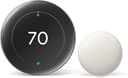
Google Nest Learning Thermostat, 4th Gen (Best Overall)
Homeowners who want a thermostat that builds its own schedule
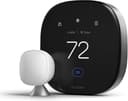
Ecobee Smart Thermostat Premium (Best Premium Features)
Tech enthusiasts who want a thermostat that doubles as a smart speaker
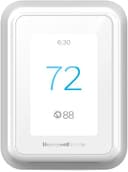
Honeywell Home T9 (Best for Multi-Room Comfort)
Homes with hot and cold spots that need targeted room control
The ecobee vs Nest vs Honeywell debate is the smart thermostat version of "Ford vs Chevy vs Toyota." All three brands make solid products. All three will save you money on energy bills. But they approach the problem of home comfort in fundamentally different ways, and picking the wrong one means you'll either overpay for features you'll never use or miss something you'll wish you had. I've spent weeks digging into this thermostat comparison, and the differences are bigger than most people realize.
Here's the truth: most comparison articles treat these three as interchangeable. They're not. In my opinion, each brand has carved out a genuinely distinct approach to the same problem. Ecobee leans heavily into air quality and multi-room sensing. Nest bets everything on AI-driven learning and a sleek design. Honeywell plays the reliability and value card with straightforward controls that don't require a PhD in app navigation.
I compared the Ecobee Smart Thermostat Premium, Google Nest Learning Thermostat (4th Gen), and Honeywell Home T9 across every factor that matters: learning algorithms, room sensors, smart home compatibility, energy savings, installation, and price. Here's my honest breakdown.
Quick Answer: Ecobee vs Nest vs Honeywell
Get the Ecobee Smart Thermostat Premium if you want the most complete feature set, including air quality monitoring, built-in Alexa and Siri, and the best multi-room sensor system. It's the all-in-one pick for smart home enthusiasts.
Get the Google Nest Learning Thermostat (4th Gen) if you want a thermostat that genuinely learns your schedule without manual programming, looks stunning on your wall, and integrates deeply with the Google Home ecosystem. It's the "set it and forget it" pick.
Get the Honeywell Home T9 if you want a reliable smart thermostat at a lower price point, prefer straightforward scheduling over AI-driven automation, and don't need the premium bells and whistles. It's the practical pick.
For most homeowners upgrading from a basic programmable thermostat, I'd pick the Ecobee Premium for the best overall value despite its higher price tag. The included SmartSensor, air quality monitor, and broad ecosystem support justify the investment.
Key Differences at a Glance
Feature: Price | Ecobee Premium: ~$250 | Nest Learning (4th Gen): ~$280 | Honeywell T9: ~$150-200
Feature: Display | Ecobee Premium: 4" LCD touchscreen | Nest Learning (4th Gen): 2.7" LCD (borderless) | Honeywell T9: Touchscreen
Feature: Included Sensor | Ecobee Premium: 1 SmartSensor | Nest Learning (4th Gen): 1 Nest Temp Sensor (2nd Gen) | Honeywell T9: 1 Smart Room Sensor
Feature: Learning | Ecobee Premium: eco+ algorithms | Nest Learning (4th Gen): True AI learning | Honeywell T9: Adaptive Recovery
Feature: Air Quality Monitor | Ecobee Premium: Yes (built-in) | Nest Learning (4th Gen): No | Honeywell T9: No
Feature: Built-in Speaker | Ecobee Premium: Yes (Alexa/Siri) | Nest Learning (4th Gen): No | Honeywell T9: No
Feature: HomeKit Support | Ecobee Premium: Yes | Nest Learning (4th Gen): Yes (via Matter) | Honeywell T9: Yes
Feature: Google Home | Ecobee Premium: Yes | Nest Learning (4th Gen): Yes (native) | Honeywell T9: Yes
Feature: Alexa | Ecobee Premium: Yes (built-in) | Nest Learning (4th Gen): Yes | Honeywell T9: Yes
Feature: Matter Support | Ecobee Premium: Yes | Nest Learning (4th Gen): Yes | Honeywell T9: No
Feature: C-Wire Required | Ecobee Premium: No (PEK included) | Nest Learning (4th Gen): No (most systems) | Honeywell T9: No (adapter included)
Feature: HVAC Monitoring | Ecobee Premium: Basic | Nest Learning (4th Gen): System Health Monitor | Honeywell T9: Basic
Feature: Geofencing | Ecobee Premium: Yes | Nest Learning (4th Gen): Yes | Honeywell T9: Yes
Feature: Energy Savings | Ecobee Premium: Up to 26%/year | Nest Learning (4th Gen): ~12% heating, ~15% cooling | Honeywell T9: ~10-12%/year
Feature: Warranty | Ecobee Premium: 3 years | Nest Learning (4th Gen): 2 years | Honeywell T9: 2 years
Ecobee Smart Thermostat Premium: Strengths and Weaknesses
The Ecobee Premium is the Swiss Army knife of smart thermostats. It does more things than any single thermostat probably should, and it does most of them well.
The display is the best in class. The 4-inch touchscreen is large, responsive, and easy to read from across the room. Adjusting settings directly on the thermostat feels natural rather than forcing you into the app for every change. The zinc-alloy finish looks premium without being flashy.
The SmartSensor system is where Ecobee truly separates itself. The included SmartSensor detects both temperature and occupancy. Place it in the room where you spend the most time, and the thermostat adjusts based on that room's conditions rather than wherever you mounted the thermostat. You can buy additional sensors (around $40 each) and the "Follow Me" feature prioritizes whichever rooms are occupied. For multi-story homes with temperature differences between floors, this alone is worth the investment.
Air quality monitoring is a genuine differentiator. What I like most about the Ecobee Premium is this built-in sensor that tracks humidity and VOCs (volatile organic compounds), alerting you when your indoor air quality drops. No other thermostat in this smart thermostat comparison offers this without additional hardware.
The built-in smart speaker pulls double duty. With Alexa and Siri built in, the Ecobee functions as a voice assistant in your hallway. You can play music, set timers, control other smart home devices, and check the weather without a separate Echo or HomePod. Whether that's a selling point or unnecessary complexity depends on your setup.
Where Ecobee falls short: The eco+ learning algorithms aren't as intuitive as Nest's true AI learning. Ecobee relies more on occupancy detection and scheduled programs than on predicting your behavior. If you want a thermostat that adapts to your routine without any input, Nest does it better. The Premium's $250 price is also steep if you don't care about air quality monitoring or the built-in speaker.
Best for: Smart home enthusiasts, multi-story homes, Apple HomeKit households, and anyone who values air quality data.
Google Nest Learning Thermostat (4th Gen): Strengths and Weaknesses
The Nest Learning Thermostat practically invented the modern smart thermostat category, and the 4th generation is its best version yet. Google redesigned it from the ground up with a larger display, Matter support, and improved AI.
The learning algorithm remains the gold standard. Within about a week of manual adjustments, the Nest begins predicting your schedule and adjusting automatically. It learns when you wake up, when you leave for work, when you come home, and when you go to bed. After the initial learning period, most users rarely touch the thermostat again. Ecobee's eco+ features offer similar functionality, but Nest's approach is more seamless and requires less configuration.
The design is arguably the best-looking thermostat ever made. I think the 4th Gen's 2.7-inch borderless display (60% larger than the previous model) hidden behind layers of mirror and colored films is genuinely impressive. The Dynamic Farsight feature shows useful information visible from across the room, including temperature, time, or weather. Available in Obsidian, Silver, and Gold finishes, it genuinely looks like a piece of art on your wall.
System Health Monitor is a feature you hope you never need, but you'll be glad you have. The Nest monitors your HVAC system's performance and sends alerts if it detects potential issues like a failing furnace or a refrigerant leak in your heat pump. Early detection of HVAC problems can save you hundreds or thousands in emergency repair costs.
Energy Shift from Nest Renew can automatically shift your energy use to times when electricity is cleaner or cheaper, which is particularly useful if you're on a time-of-use utility rate plan.
Where Nest falls short: No built-in air quality monitor. The included Nest Temperature Sensor (2nd Gen) measures temperature only, not occupancy, so you lose the "Follow Me" style room detection that Ecobee offers. The $280 price makes it the most expensive option here, and you're paying a premium for design and AI that some users may never fully appreciate. Also, while it now supports Matter and HomeKit, it's still most tightly integrated with Google Home. If you're deep in the Apple or Amazon ecosystem, the Ecobee may serve you better.
Best for: Hands-off users who hate programming schedules, Google Home households, design-conscious homeowners, and anyone on a time-of-use electricity plan.
Honeywell Home T9: Strengths and Weaknesses
Honeywell has been making thermostats since 1906. The T9 is their answer to the smart thermostat revolution, and it takes a more conservative approach than its competitors. That's not necessarily a bad thing.
The price is the headline. At roughly $150 to $200 with an included Smart Room Sensor, the T9 undercuts both the Ecobee Premium and Nest 4th Gen significantly. If your budget is tight, or if you're outfitting a rental property, the T9 delivers real smart thermostat functionality for less.
The Smart Room Sensors are solid. They measure both temperature and humidity with a range of up to 200 feet. You can prioritize specific rooms on a schedule, so the master bedroom stays comfortable at night while the living room gets priority during the day. The sensors are battery-powered and easy to place anywhere.
Installation is genuinely easy. The included C-wire adapter means most homes can install the T9 without running new wiring. Honeywell's wire-sensing technology auto-configures the thermostat during setup, which reduces the chance of a wiring mistake that could damage your HVAC system.
Adaptive Intelligent Recovery is underrated. Instead of AI learning, the T9 uses a simpler approach: it learns how long your system takes to reach the target temperature and starts heating or cooling early to hit your scheduled comfort times. It's not as flashy as Nest's learning algorithm, but it works reliably and predictably.
Where Honeywell falls short: The T9 doesn't support Matter, which may limit future smart home integration. The app experience is adequate but not as polished as Ecobee's or Google Home's. The learning features are basic compared to Nest's AI. There's no air quality monitoring, no built-in speaker, and the display lacks the visual appeal of either competitor. The T9 also uses a standard touchscreen without the borderless design language that makes Nest look so premium.
Best for: Budget-conscious buyers, rental properties, homeowners who prefer manual scheduling, and anyone who values Honeywell's long track record of reliability.
Head-to-Head Breakdown
Learning Features and Automation
Winner: Nest. The Nest Learning Thermostat lives up to its name. Its AI genuinely learns your patterns and adjusts without manual input. Ecobee's eco+ is capable but leans on occupancy detection rather than behavioral prediction. Honeywell's Adaptive Recovery is functional but limited to pre-heating and pre-cooling timing.
if you want a wifi thermostat that programs itself, Nest is the clear choice. If you prefer to set a schedule and let sensors optimize it, Ecobee is the better fit.
Room Sensors
Winner: Ecobee. All three include one sensor in the box, but Ecobee's SmartSensor detects both temperature and occupancy. The "Follow Me" feature automatically prioritizes occupied rooms. Nest's sensor reads temperature only. Honeywell's sensor reads temperature and humidity but lacks occupancy detection.
For large homes with hot and cold spots, Ecobee's sensor system is the most effective at balancing comfort across rooms.
Ecosystem Compatibility
Winner: Ecobee (by a narrow margin). Ecobee supports Alexa (built-in), Siri (built-in), Google Assistant, HomeKit, SmartThings, IFTTT, and Matter. That's the broadest compatibility of any smart thermostat on the market.
Nest supports Google Home (native), Alexa, HomeKit (via Matter), and Matter. It's well-rounded but most deeply integrated with Google's ecosystem.
Honeywell supports Alexa, Google Assistant, and HomeKit, but lacks Matter support. This could become a limitation as the smart home industry moves toward Matter as the universal standard.
Energy Reports and Savings
Winner: Tie between Ecobee and Nest. Ecobee claims up to 26% savings per year, while Nest reports roughly 12% on heating and 15% on cooling. Independent studies put real-world savings for both in the 10-15% range for most households. The actual savings depend more on your home's insulation, local climate, and previous thermostat habits than on the specific brand.
Both Ecobee and Nest provide detailed energy reports in their apps showing usage patterns, comparisons to previous periods, and suggestions for improvement. From user feedback, Honeywell's energy reports are noticeably more basic.
Installation
Winner: Tie. All three thermostats offer relatively easy DIY installation for homes with standard HVAC wiring. Ecobee includes a Power Extender Kit (PEK) for homes without a C-wire. Nest works without a C-wire on most systems by charging its internal battery through the heating and cooling wires. Honeywell includes a C-wire adapter.
Installation typically takes 30-45 minutes regardless of brand. If you have an older home with unusual wiring, all three brands offer compatibility checkers on their websites before you buy.
Price and Value
Winner: Honeywell (on price), Ecobee (on value). The Honeywell T9 costs $100 less than the Nest and $50 to $100 less than the Ecobee. If your budget is the primary concern, the T9 delivers genuine smart thermostat features at the lowest price.
But the Ecobee Premium includes more in the box (air quality monitor, built-in speaker, occupancy-sensing SmartSensor) that would cost extra with the other brands, or simply aren't available. When you factor in everything you get, the Ecobee's $250 price represents strong value per feature.
Which Ecosystem Wins? Alexa vs Google vs Apple HomeKit
Your existing smart home ecosystem should heavily influence your thermostat choice. Here's how each thermostat fits.
If you're in the Apple ecosystem (HomeKit, HomePod, Siri): Get the Ecobee Premium. It has Siri built into the thermostat itself, and HomeKit integration is native rather than running through Matter as a bridge. You can control it from your iPhone, Apple Watch, or HomePod without any additional setup.
If you're in the Google ecosystem (Google Home, Nest speakers, Android): Get the Nest Learning Thermostat. The integration is seamless. Your Nest speakers can control it by voice, the Google Home app provides the most polished control experience, and features like Energy Shift with Nest Renew are exclusive to Google's platform.
If you're in the Amazon ecosystem (Alexa, Echo speakers, Ring): Get the Ecobee Premium. Alexa is built into the thermostat, so it can function as an Echo device in your hallway. You get all of Alexa's routines, skills, and smart home control natively.
If you're ecosystem-agnostic or just starting out: Get the Ecobee Premium. Its support for every major platform gives you the most flexibility if you switch ecosystems later or run a mixed setup.
If you want the simplest setup with minimal smart home integration: Get the Honeywell T9. It works with all three assistants and doesn't demand that you go all-in on any particular platform.
My Recommendation by Use Case
Best overall smart thermostat: Ecobee Smart Thermostat Premium. I'd pick this for most people. The combination of air quality monitoring, occupancy-sensing room sensors, built-in voice assistants, and support for every major smart home platform makes it the most versatile option. The $250 price is justified by what you get in the box.
Best for hands-off automation: Google Nest Learning Thermostat (4th Gen). If you want a thermostat that truly programs itself and you'd rather never open an app, Nest's AI learning is unmatched. The stunning design is a bonus.
Best on a budget: Honeywell Home T9. At $150 to $200 with an included sensor, it delivers room-specific comfort and smart scheduling at a price that makes sense for cost-conscious homeowners or rental properties.
Best for multi-story homes: Ecobee Smart Thermostat Premium. The occupancy-aware SmartSensors and "Follow Me" feature solve the uneven temperature problem that plagues homes with a single thermostat and multiple floors.
Best for Google Home users: Google Nest Learning Thermostat (4th Gen). The integration depth with Google's ecosystem is unmatched, and features like System Health Monitor and Energy Shift add genuine value.
Best for renters: Honeywell Home T9. The lower price, easy installation with included C-wire adapter, and straightforward controls make it the least risky investment for a home you might not live in long-term.
Need help deciding what features matter most? My smart thermostat buying guide breaks down every specification in plain language. And if you're upgrading your home's smart devices beyond just the thermostat, check out my picks for the best smart thermostats and the best smart locks to pair with your new setup.
Recommended Products
Ready to buy? These are the top picks from our best smart thermostat guide.
Google Nest Learning Thermostat, 4th Gen (Best Overall)
Google Nest Learning Thermostat, 4th Gen (Best Overall)
Homeowners who want a thermostat that builds its own schedule
Pros
- Genuine learning algorithm builds your schedule automatically
- Matter support works with every major smart home platform
- Included temperature sensor for multi-room monitoring
- No C-wire required in most installations
Cons
- At $280, it is the most expensive option in this roundup
- Learning takes 1-2 weeks to optimize, which can feel inconsistent at first
- Remote sensors sold separately beyond the one included
Ecobee Smart Thermostat Premium (Best Premium Features)
Ecobee Smart Thermostat Premium (Best Premium Features)
Tech enthusiasts who want a thermostat that doubles as a smart speaker
Pros
- Built-in Alexa or Siri voice assistant with speaker
- Air quality monitoring (VOC and CO2)
- Radar-based occupancy detection is more accurate than PIR
- Included SmartSensor with excellent multi-room support
Cons
- At $250, you are paying for features many people will not use
- The built-in speaker sound quality is mediocre for music
- Larger form factor than most thermostats (4" square)
Honeywell Home T9 (Best for Multi-Room Comfort)
Honeywell Home T9 (Best for Multi-Room Comfort)
Homes with hot and cold spots that need targeted room control
Pros
- Supports up to 20 room sensors with 200-foot range
- Included Smart Room Sensor and C-wire adapter in box
- Multi-room prioritization based on occupancy or schedule
- Wide HVAC compatibility including hot water and steam
Cons
- No Apple HomeKit support
- Touchscreen feels dated compared to Ecobee and Sensi
- The 1.31 lb weight makes it the heaviest thermostat here
- Does not learn your schedule (manual programming only)
Final Thoughts
The ecobee vs Nest vs Honeywell decision ultimately comes down to what you value most. Ecobee gives you the most features per dollar and works with everything. Nest gives you the smartest automation and the most beautiful hardware. Honeywell gives you a reliable, affordable foundation that does the core job well.
None of these is a bad choice. All three will save you money on energy bills, all three offer remote control from your phone, and all three support voice assistants. The differences are in how they get there and how much you're willing to spend. In my opinion, you genuinely can't go wrong with any of the three, but the Ecobee edges ahead for most households.
If you're still on the fence, ask yourself one question: do you want your thermostat to learn on its own (Nest), respond to where you are in your home (Ecobee), or follow a schedule you set (Honeywell)? That answer should point you to the right wall.
Affiliate Disclosure
This post contains affiliate links. As an Amazon Associate, HomeBuildLab earns from qualifying purchases at no additional cost to you. Learn more
Looking for the right tools and products?
Check out our product reviews and buying guides to find the best gear for your project.
Browse Reviews