Generator Sizing Guide: What Wattage Do I Need?
Quick Comparison
| Product | Best For | Buy |
|---|---|---|
 Honda EU2200i (Best Overall) Honda · Gas (unleaded) · 47 lbs | Anyone who wants the most reliable portable inverter generator on the market | |
 Champion 200988 4500W Dual Fuel (Best Dual Fuel) Champion · Dual fuel (gas/propane) · 103 lbs | Home backup and emergency preparedness with fuel flexibility |
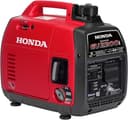
Honda EU2200i (Best Overall)
Anyone who wants the most reliable portable inverter generator on the market
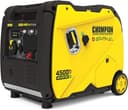
Champion 200988 4500W Dual Fuel (Best Dual Fuel)
Home backup and emergency preparedness with fuel flexibility
Buying a generator without sizing it first is like buying shoes without checking your foot size. I think this is one of the most expensive mistakes homeowners make with power equipment. Too small and you overload the unit, trip breakers, and risk burning out the motor. Too large and you spend hundreds of extra dollars on capacity you never use, while lugging around a heavier machine that burns more fuel than necessary. A proper generator sizing guide saves you from both mistakes.
Here's the truth most people miss: the wattage number on the box is not the number that matters most. From generator specs and user complaints, generators list two wattage ratings, running watts and starting watts, and confusing the two is the single most common reason people buy the wrong size. A 3,500-watt generator does not mean you can run 3,500 watts of appliances continuously. It means you can briefly handle 3,500 watts during a surge, while your sustained capacity is closer to 2,800 watts.
This guide breaks down running watts versus starting watts, gives you a step-by-step method for calculating your actual wattage needs, provides a common appliance wattage chart, and matches generator sizes to real use cases, from camping trips to whole-house backup.
Running Watts vs Starting Watts Explained
Every generator has two wattage ratings, and understanding the difference is the foundation of proper sizing.
Running watts (also called rated watts or continuous watts) represent the sustained power output the generator can deliver indefinitely. This is the number that matters for your total load calculation. If your generator is rated at 3,000 running watts, that is the maximum continuous load it can handle without overheating or shutting down.
Starting watts (also called surge watts or peak watts) represent the brief burst of extra power the generator can deliver for a few seconds. This surge handles the startup demands of motors and compressors, which draw significantly more power when they first kick on than when they are running steadily. Starting watt capacity is typically 15% to 25% higher than running watts.
When you see a generator advertised as "4,500 watts," check whether that number refers to running watts or starting watts. In my opinion, the way many manufacturers put the starting watt number in the headline (because it looks more impressive) borders on misleading. The running watt number is buried in the spec sheet. Always size your generator based on running watts, then verify that the starting watt capacity can handle your largest motor startup.
How to Calculate Your Wattage Needs
Calculating your generator size is straightforward once you know the process. Follow these four steps.
Step 1: List Every Appliance You Want to Power
Write down every device, appliance, and tool you plan to run simultaneously. Be realistic. During a power outage, you probably do not need the toaster, the microwave, and the hair dryer all running at the same time. Focus on essentials first: refrigerator, lights, phone chargers, sump pump, furnace fan, and any medical equipment.
Step 2: Find the Running Wattage for Each Appliance
Check the nameplate on each appliance (usually on the back or bottom) for its wattage rating. If the label lists amps instead of watts, multiply amps by volts to get watts. For a standard 120-volt outlet: 5 amps x 120 volts = 600 watts.
If you cannot find the nameplate, use the appliance wattage chart in the next section as an estimate.
Step 3: Add Up All Running Wattages
Total every appliance's running wattage. This sum is your baseline continuous load. Your generator's running watt rating must meet or exceed this number.
Step 4: Add the Highest Starting Watt Surge
Identify the appliance with the highest starting watt requirement (usually a sump pump, air conditioner, or refrigerator compressor). Add that appliance's starting watt surge (the difference between its starting and running watts) to your running watt total. This final number is the minimum starting watt capacity your generator needs.
Example calculation:
Appliance: Refrigerator | Running Watts: 200 | Starting Watts: 1,200
Appliance: Sump pump (1/3 HP) | Running Watts: 800 | Starting Watts: 1,300
Appliance: Furnace fan | Running Watts: 700 | Starting Watts: 1,400
Appliance: 5 LED lights | Running Watts: 50 | Starting Watts: 50
Appliance: Phone charger | Running Watts: 25 | Starting Watts: 25
Appliance: Total running | Running Watts: 1,775 | Starting Watts:
The largest starting watt surge comes from the furnace fan: 1,400 starting watts minus 700 running watts = 700-watt surge. Add that to the running total: 1,775 + 700 = 2,475 watts minimum starting capacity.
In this scenario, a generator rated at 1,800 running watts and 2,500 starting watts would handle the load. But adding even one more high-draw appliance (a space heater, a window AC unit) would push you over the limit. I'd suggest adding a 15% to 20% buffer above your calculated total, which gives you room to plug in something unexpected without overloading the generator.
Common Appliance Wattage Chart
Use this chart as a reference when calculating your generator sizing needs. These are typical values. Your specific appliances may differ, so always check the nameplate when possible.
Appliance: Refrigerator/freezer | Running Watts: 150-400 | Starting Watts: 1,200-2,000
Appliance: Chest freezer | Running Watts: 50-100 | Starting Watts: 500-1,000
Appliance: Sump pump (1/3 HP) | Running Watts: 800 | Starting Watts: 1,300
Appliance: Sump pump (1/2 HP) | Running Watts: 1,050 | Starting Watts: 2,150
Appliance: Furnace fan (1/2 HP) | Running Watts: 700 | Starting Watts: 1,400
Appliance: Central AC (10,000 BTU) | Running Watts: 1,500 | Starting Watts: 4,500
Appliance: Central AC (24,000 BTU) | Running Watts: 3,800 | Starting Watts: 7,000
Appliance: Window AC (5,000 BTU) | Running Watts: 500 | Starting Watts: 1,500
Appliance: Window AC (10,000 BTU) | Running Watts: 1,200 | Starting Watts: 3,600
Appliance: Space heater (1,500W) | Running Watts: 1,500 | Starting Watts: 1,500
Appliance: Electric water heater | Running Watts: 4,000-4,500 | Starting Watts: 4,000-4,500
Appliance: Microwave (1,000W) | Running Watts: 1,000 | Starting Watts: 1,000
Appliance: Toaster oven | Running Watts: 1,200 | Starting Watts: 1,200
Appliance: Coffee maker | Running Watts: 600-1,200 | Starting Watts: 600-1,200
Appliance: LED lights (per bulb) | Running Watts: 8-15 | Starting Watts: 8-15
Appliance: Incandescent bulb (60W) | Running Watts: 60 | Starting Watts: 60
Appliance: Laptop charger | Running Watts: 50-100 | Starting Watts: 50-100
Appliance: Phone charger | Running Watts: 15-25 | Starting Watts: 15-25
Appliance: TV (LED, 55") | Running Watts: 80-120 | Starting Watts: 80-120
Appliance: Wi-Fi router | Running Watts: 10-20 | Starting Watts: 10-20
Appliance: Garage door opener (1/2 HP) | Running Watts: 480 | Starting Watts: 1,100
Appliance: Well pump (1/2 HP) | Running Watts: 1,000 | Starting Watts: 2,100
Appliance: Circular saw | Running Watts: 1,400 | Starting Watts: 2,300
Appliance: Pressure washer (electric) | Running Watts: 1,200-1,800 | Starting Watts: 2,500-3,600
Note that resistive loads (heaters, light bulbs, toasters) have no starting surge. They draw the same wattage from the moment you turn them on. Reactive loads (anything with a motor or compressor) are the ones that spike on startup.
Generator Sizing Guide by Use Case
Rather than memorizing wattage charts, here is how generator size maps to three common scenarios. Find the one that matches your situation.
Camping, Tailgating, and Light Outdoor Use (1,000 to 2,000 Watts)
For basic outdoor activities, you need just enough power for lights, phone chargers, a small fan, and maybe a portable cooler or a laptop. A 1,000 to 2,000 watt inverter generator handles this comfortably while staying quiet and lightweight (typically 30 to 50 lbs).
Typical load:
- Portable cooler: 40-60W
- LED string lights: 20-40W
- Phone chargers (2): 30-50W
- Laptop: 50-100W
- Small fan: 50W
- Total: 190-300 running watts
A 2,000-watt inverter generator gives you more than enough headroom, plus the ability to run a small coffee maker or electric griddle one at a time. For camping specifically, inverter generators are the right choice because they run quietly (50 to 60 dB at quarter load) and produce clean power that is safe for sensitive electronics. Check out our best inverter generator roundup for specific recommendations.
Power Outage Essentials (3,000 to 5,000 Watts)
This is the most common use case: keeping your home functional during a storm, ice event, or grid failure. You want to run the refrigerator, some lights, the furnace fan, a sump pump, phone chargers, and a few small electronics.
Typical load:
- Refrigerator: 200W running, 1,200W starting
- Furnace fan: 700W running, 1,400W starting
- Sump pump (1/3 HP): 800W running, 1,300W starting
- 10 LED lights: 100W
- TV: 100W
- Phone/laptop chargers: 75W
- Wi-Fi router: 15W
- Total: ~1,990 running watts, highest surge adds ~700W
A generator in the 3,000 to 3,500 running watt range handles this load with a comfortable buffer. I'd recommend stepping up to 5,000 running watts if your budget allows, because that lets you add a window AC unit (a lifeline during summer outages) or run a few power tools for storm cleanup.
At this level, you have a choice between a portable inverter generator and a conventional open-frame generator. Inverter generators are quieter and more fuel-efficient but cost more per watt. Conventional generators are louder and heavier but deliver more raw power for the money.
Whole-House Backup and Jobsite Power (7,000 to 12,000+ Watts)
If you want to run central air conditioning, an electric water heater, a well pump, and multiple circuits simultaneously, you need 7,000 to 12,000+ running watts. This is also the range for contractors running multiple power tools on a jobsite (circular saws, compressors, and drills at the same time).
Typical load:
- Central AC (10,000 BTU): 1,500W running, 4,500W starting
- Refrigerator: 200W running
- Well pump: 1,000W running, 2,100W starting
- Electric water heater: 4,000W running
- Furnace fan: 700W running
- Lights, electronics, chargers: 300W
- Total: ~7,700 running watts
Generators this large are almost always conventional (open-frame) models because inverter generators in the 7,000+ watt range cost significantly more. Expect the unit to weigh 200 to 300+ lbs and require a 240-volt outlet for full capacity. Many homeowners in this range choose a permanently installed standby generator instead of a portable unit, which eliminates the need to manually start and connect the generator during an outage.
What About Starting Watt Surges?
Starting watt surges are the reason so many people think their generator is "too small" even though their running watt calculation looks fine on paper. What I find most important is understanding exactly why surges matter so much, because this is where the real sizing mistakes happen.
Electric motors (in refrigerators, sump pumps, air conditioners, well pumps, and furnace fans) need two to three times their running wattage to start. This surge lasts only a fraction of a second to a few seconds, but the generator must be able to deliver it. If your generator cannot supply the starting watts, the motor will not start. You will hear a clicking or humming sound, and the generator's overload protection will kick in.
Three strategies for managing surges:
- Stagger your startups. Never start all motor-driven appliances at the same time. Turn on the refrigerator first, let it settle into running mode (about 5 to 10 seconds), then start the sump pump, then the furnace fan. Each motor only surges for a moment, so staggering prevents multiple surges from stacking.
- Size for the largest single surge. Your generator's starting watt rating needs to cover your total running watts plus the highest single motor surge. You do not need to cover all surges simultaneously if you stagger.
- Consider a soft-start kit. I think this is one of the most underrated accessories for generator owners. For window and central AC units (the biggest surge offenders), aftermarket soft-start kits reduce the starting surge by 60% to 70%. A window AC that normally surges to 3,600 watts might only hit 1,500 watts with a soft-start kit installed. This lets a smaller generator handle loads that would otherwise require a much larger unit.
Inverter vs Conventional: Does Generator Sizing Guide Advice Change?
The sizing math is the same whether you choose an inverter generator or a conventional one. Running watts are running watts, and starting watts are starting watts, regardless of the technology. But there are practical differences that affect which size you end up buying.
Inverter generators produce clean, stable power (low total harmonic distortion, or THD, typically under 3%). They adjust engine speed to match the load, which saves fuel and reduces noise at partial loads. They are available from about 1,000 to 7,500 running watts. The trade-off is cost: an inverter generator costs roughly 30% to 50% more per watt than a conventional model.
Conventional generators produce power directly from the alternator, which results in slightly rougher output (higher THD, typically 5% to 15%). They run at a constant 3,600 RPM regardless of load, which makes them louder and less fuel-efficient. But they are available in much larger sizes (up to 15,000+ running watts) and cost less per watt.
If you are powering sensitive electronics (computers, smart TVs, medical equipment), an inverter generator's clean output protects those devices. For running motors, lights, and tools, a conventional generator works just fine. After comparing both types across dozens of models, the choice affects your budget and noise level, but it does not change how you calculate the wattage you need.
For a detailed comparison of the best options, see our best inverter generator roundup.
Common Generator Sizing Mistakes
Sizing by Running Watts Only
This is the most frequent mistake. You add up all your appliance running watts, buy a generator that matches, and then wonder why the refrigerator trips the overload every time the compressor kicks on. Always account for starting watt surges. Size your generator to handle your total running load plus the largest single starting surge.
Trying to Power Everything at Once
You do not need to replicate your normal electricity usage during an outage. Prioritize: refrigerator, sump pump, furnace fan, lights, and chargers. Skip the electric dryer, oven, and water heater unless you are buying a very large generator. Being selective with your load lets you buy a smaller, more affordable, and more portable unit.
Ignoring Altitude Derating
Generators lose roughly 3% to 3.5% of their power output for every 1,000 feet above sea level. A generator rated at 3,000 running watts at sea level produces only about 2,550 running watts at 5,000 feet elevation. If you live at altitude, factor this derating into your calculation.
Forgetting About Extension Cord Limits
A properly sized generator is useless if your extension cords cannot carry the load. Use heavy-gauge cords (10 or 12 AWG) for high-draw appliances, and keep cord runs as short as possible. Undersized extension cords cause voltage drops, which make motors run hotter and can damage appliances. For a snow blower or pressure washer in the yard, make sure you are not running a 100-foot light-duty cord that cannot handle the amperage.
Buying Too Big "Just in Case"
Oversizing wastes money on the purchase price, burns more fuel, and adds unnecessary weight. A 10,000-watt generator running at 20% capacity is inefficient and produces more carbon buildup in the engine over time. Right-sizing with a 15% to 20% buffer above your calculated load is the sweet spot.
Running a Generator Without a Transfer Switch
This is a safety mistake, not a sizing mistake, but it deserves mention. Never backfeed a generator into your home's electrical panel through a regular outlet. This sends power back through the utility lines and can electrocute line workers. If you plan to power your home's circuits, have an electrician install a transfer switch. Manual transfer switches cost $200 to $400, and the installation adds another $200 to $500 depending on your panel.
Recommended Tools
Ready to buy? These are the top picks from our best inverter generator guide.
Honda EU2200i (Best Overall)
Honda EU2200i (Best Overall)
Anyone who wants the most reliable portable inverter generator on the market
Pros
- Legendary reliability with commercial-grade GXR120 engine
- Whisper-quiet 48 dBA at quarter load
- CO-MINDER safety shutdown and Bluetooth app monitoring
- Exceptional fuel efficiency (up to 8.1 hours per tank)
Cons
- Premium price point compared to similar wattage competitors
- Only 1,800 running watts limits heavy-duty applications
- No electric start (recoil pull start only)
Champion 200988 4500W Dual Fuel (Best Dual Fuel)
Champion 200988 4500W Dual Fuel (Best Dual Fuel)
Home backup and emergency preparedness with fuel flexibility
Pros
- Dual-fuel flexibility with easy gas/propane switching
- 21 hours of runtime on a single propane tank at 25% load
- Electric start with Cold Start Technology for cold weather
- RV-ready 30A outlet with two 120V household outlets and USB
Cons
- Heavy at 103 lbs, not practical for camping or hiking
- 61 dBA is louder than premium competitors
- Propane produces about 10% fewer running watts than gasoline
Final Thoughts
A generator sizing guide is only useful if you follow through with honest math. In my experience researching generators and the most common buyer regrets, the people who skip the calculation always end up either overspending or underpowered. List the appliances you truly need to power simultaneously, add up the running watts, account for the largest starting watt surge, and add a 15% to 20% buffer. That final number tells you exactly what generator to buy.
For most homeowners preparing for power outages, a generator in the 3,000 to 5,000 running watt range covers the essentials: refrigerator, sump pump, furnace fan, lights, and chargers. Campers and tailgaters can get by with 1,000 to 2,000 watts. Whole-house backup and jobsite use requires 7,000 watts or more.
Do not let marketing confuse you. Check whether the wattage on the box is running watts or starting watts. Stagger your motor startups to manage surges. Consider a soft-start kit for your AC unit. And always run the numbers yourself rather than guessing.
Need an inverter generator recommendation? Check out our best inverter generator picks. And if you are shopping for other outdoor power equipment, our best pressure washer and best snow blower roundups cover those categories in depth.
Affiliate Disclosure
This post contains affiliate links. As an Amazon Associate, HomeBuildLab earns from qualifying purchases at no additional cost to you. Learn more
Looking for the right tools and products?
Check out our product reviews and buying guides to find the best gear for your project.
Browse Reviews