Best Inverter Generators for Home and Outdoor Use: 7 Picks for Clean, Quiet Power
Quick Comparison
| Product | Best For | Buy |
|---|---|---|
 Honda EU2200i (Best Overall) Honda · Gas (unleaded) · 47 lbs | Anyone who wants the most reliable portable inverter generator on the market | |
 Champion 200988 4500W Dual Fuel (Best Dual Fuel) Champion · Dual fuel (gas/propane) · 103 lbs | Home backup and emergency preparedness with fuel flexibility | |
 Westinghouse iGen4500 (Best for RV) Westinghouse · Gas (unleaded) · 104.7 lbs | RV owners who need reliable air conditioning power on the road | |
 WEN 56235i (Best Budget) WEN · Gas (unleaded) · 39 lbs | Budget-conscious buyers who need clean, quiet portable power | |
 Champion 200961 2500W Dual Fuel (Best Ultralight) Champion · Dual fuel (gas/propane) · 39 lbs | Campers and tailgaters who want dual-fuel flexibility in a lightweight package | |
 Generac iQ3500 (Best Mid-Size) Generac · Gas (unleaded) · 109.1 lbs | Users who need mid-range power with electric start and smart controls | |
 Honda EU3000iS (Best for Home Backup) Honda · Gas (unleaded) · 130.7 lbs | Homeowners who need reliable, long-running backup power during outages |
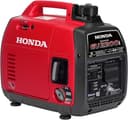
Honda EU2200i (Best Overall)
Anyone who wants the most reliable portable inverter generator on the market
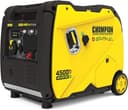
Champion 200988 4500W Dual Fuel (Best Dual Fuel)
Home backup and emergency preparedness with fuel flexibility
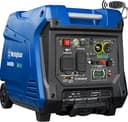
Westinghouse iGen4500 (Best for RV)
RV owners who need reliable air conditioning power on the road
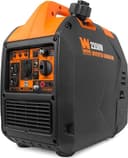
WEN 56235i (Best Budget)
Budget-conscious buyers who need clean, quiet portable power
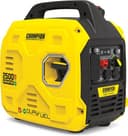
Champion 200961 2500W Dual Fuel (Best Ultralight)
Campers and tailgaters who want dual-fuel flexibility in a lightweight package
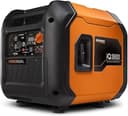
Generac iQ3500 (Best Mid-Size)
Users who need mid-range power with electric start and smart controls
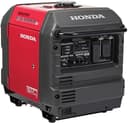
Honda EU3000iS (Best for Home Backup)
Homeowners who need reliable, long-running backup power during outages
Choosing the best inverter generator comes down to one question: how much clean, quiet power do you actually need? Unlike conventional portable generators that dump out rough, fluctuating electricity, inverter generators convert raw AC power to DC and back again, producing a smooth sine wave with less than 3% total harmonic distortion (THD). That means safe power for your laptop, phone, CPAP machine, and any other sensitive electronics.
Here's what most buyers get wrong. They obsess over peak wattage and ignore runtime, noise level, and fuel efficiency. A 4,500-watt generator sounds impressive until you realize it weighs over 100 pounds, burns through fuel in 4 hours at full load, and costs twice what you actually need. For camping and tailgating, 2,000 to 2,500 watts is plenty. For RV air conditioning, you need at least 3,000 running watts. For home backup during a power outage, 3,500 watts and above covers the essentials: refrigerator, lights, sump pump, and phone chargers.
I compared seven models across power output, noise level, fuel efficiency, portability, and value to find the best option for every use case and budget.
Quick Picks: Best Inverter Generators at a Glance
If I had to pick just one, I'd go with the Honda EU2200i for pure reliability or the Champion 200988 for home backup versatility. But here's the full breakdown.
- Best Overall: Honda EU2200i. The gold standard in portable power with unmatched reliability and 48 dBA operation.
- Best Dual Fuel: Champion 200988 4500W. Runs on gas or propane with electric start and 14 hours of runtime.
- Best for RV: Westinghouse iGen4500. 3,700 running watts with a 30A RV-ready outlet and remote start.
- Best Budget: WEN 56235i. Impressive 2,350 watts and 51 dBA noise level at a fraction of premium prices.
- Best Ultralight: Champion 200961 2500W. Dual-fuel flexibility at just 39 pounds.
- Best Mid-Size: Generac iQ3500. 3,000 running watts with electric start and PowerRush technology.
- Best for Home Backup: Honda EU3000iS. 2,800 running watts with 19.6 hours of runtime at quarter load.
What to Look For in an Inverter Generator
Before diving into the reviews, here are the specs that actually matter when choosing an inverter generator.
Running watts vs. starting watts. Starting watts (also called surge watts or peak watts) represent the brief power spike needed to start motor-driven appliances like air conditioners, refrigerators, and sump pumps. Running watts (also called rated watts) represent the continuous power output. Always size your generator by running watts, not starting watts. Add up the running wattage of everything you plan to power simultaneously, then add 20% headroom.
Noise level. Inverter generators are dramatically quieter than conventional generators because they throttle engine speed based on electrical load. Noise is measured in decibels (dBA) at a standard distance, typically 23 feet. Under 50 dBA is whisper-quiet (comparable to a quiet library). Between 50 and 60 dBA is conversational volume. Above 65 dBA and you're approaching conventional generator territory. If you plan to camp or use the generator near neighbors, noise matters more than you think.
Runtime and fuel efficiency. Runtime is typically listed at 25% load, which can be misleading. A generator rated for 14 hours at 25% load might only run 4 to 5 hours at full load. Look for both numbers. Eco-mode (available on most inverter generators) adjusts engine speed to match the load, stretching fuel further and reducing noise during light use.
Fuel type. Most inverter generators run on gasoline. Dual-fuel models add propane capability, which is valuable for emergency preparedness because propane stores indefinitely while gasoline degrades within 6 months. Propane produces slightly less power (typically 10-15% fewer watts) but burns cleaner and extends engine life.
Parallel capability. Many smaller models can be linked in parallel with a second identical unit, effectively doubling your power output. This gives you flexibility: use one unit for camping and both units for home backup. Parallel kits are sold separately, usually for $30 to $100.
Outlets. At minimum, look for two standard 120V household outlets (NEMA 5-20R). RV users need a 30A TT-30R outlet. USB ports are convenient for charging devices directly. A 12V DC outlet is useful for charging car batteries. Higher-wattage models sometimes include a 120V/240V outlet for larger appliances.
Our Top Picks
Honda EU2200i (Best Overall)
Honda EU2200i (Best Overall)
Anyone who wants the most reliable portable inverter generator on the market
Pros
- Legendary reliability with commercial-grade GXR120 engine
- Whisper-quiet 48 dBA at quarter load
- CO-MINDER safety shutdown and Bluetooth app monitoring
- Exceptional fuel efficiency (up to 8.1 hours per tank)
Cons
- Premium price point compared to similar wattage competitors
- Only 1,800 running watts limits heavy-duty applications
- No electric start (recoil pull start only)
In my opinion, the Honda EU2200i is the generator that every other manufacturer is trying to beat, and none have fully succeeded. The 121cc GXR120 commercial-grade engine starts reliably in any weather, runs at a whisper-quiet 48 to 57 dBA, and delivers 1,800 running watts (2,200 starting watts) of clean, stable power. It's the benchmark for a reason.
What sets Honda apart is long-term reliability. These generators routinely last 10 to 15 years with basic maintenance. The GXR120 engine is the same commercial-series engine Honda uses in its professional equipment, meaning it's overbuilt for residential use. Fuel consumption is exceptional: 3.2 hours at rated load and up to 8.1 hours at quarter load on a single 0.95-gallon tank.
The CO-MINDER carbon monoxide detection system automatically shuts down the generator if CO levels become dangerous, a critical safety feature for any use near enclosed spaces. Honda's My Generator smartphone app provides Bluetooth monitoring and remote stop functionality.
The tradeoff is price. The EU2200i costs significantly more than competitors with similar wattage. I think you're paying for Honda's engine quality, resale value (they hold value better than any competitor), and the peace of mind that comes with a unit that starts every single time.
Champion 200988 4500W Dual Fuel (Best Dual Fuel)
Champion 200988 4500W Dual Fuel (Best Dual Fuel)
Home backup and emergency preparedness with fuel flexibility
Pros
- Dual-fuel flexibility with easy gas/propane switching
- 21 hours of runtime on a single propane tank at 25% load
- Electric start with Cold Start Technology for cold weather
- RV-ready 30A outlet with two 120V household outlets and USB
Cons
- Heavy at 103 lbs, not practical for camping or hiking
- 61 dBA is louder than premium competitors
- Propane produces about 10% fewer running watts than gasoline
The Champion 200988 is the generator you want when the power goes out and stays out. The dual-fuel design lets you run on gasoline (3,500 running watts, 4,500 starting watts) or propane (3,150 running watts, 4,500 starting watts), and switching between fuels takes nothing more than a turn of the selector dial.
Why does dual fuel matter? During extended power outages, gas stations lose power too. A 20-pound propane tank gives you 21 hours of runtime at 25% load, and propane stores indefinitely in your garage without the stabilizer treatments gasoline requires. On gasoline, the 2.25-gallon tank delivers 14 hours at 25% load. That's enough to keep your refrigerator, sump pump, lights, and phone chargers running through the night.
The electric start is a genuine convenience. Push a button instead of yanking a pull cord, especially useful during stressful outage situations. Cold Start Technology ensures reliable ignition in freezing temperatures. The 212cc Champion engine produces clean power with less than 3% THD, safe for all your electronics.
At 103 pounds, this is not a grab-and-go camping generator. It has built-in wheels and folding handles for rolling around your property, but you won't be hauling it into a truck bed by yourself. Think of it as a home backup and RV unit that happens to be portable.
Westinghouse iGen4500 (Best for RV)
Westinghouse iGen4500 (Best for RV)
RV owners who need reliable air conditioning power on the road
Pros
- 30A RV-ready outlet with no adapter needed
- Remote key fob start and stop from inside your RV
- 18-hour runtime at 25% load on 3.4-gallon tank
- 52 dBA operation is campground-friendly
Cons
- 104.7 lbs requires wheels and a helping hand to load
- Gas-only (no propane option on this model)
- Recoil backup start can be stiff when cold
The Westinghouse iGen4500 is built specifically for the RV crowd, and it shows. The TT-30R 30A RV-ready outlet connects directly to your RV's power inlet without adapters. At 3,700 running watts (4,500 starting watts), it handles a 15,000 BTU RV air conditioner, microwave, and lights simultaneously. That's the combination most RV owners need, and many mid-range generators can't deliver it.
Remote start via key fob is a standout feature. Start and stop the generator from inside your RV without going outside in the cold, rain, or middle of the night. The auto-choke system means it starts cleanly without any manual adjustments.
Runtime is exceptional. The 3.4-gallon fuel tank provides up to 18 hours at 25% load, which means you can run your RV's essential systems overnight without refueling. The double-insulated acoustic enclosure keeps noise as low as 52 dBA, making it campground-friendly.
Parallel capability lets you link two iGen4500 units for 7,400 running watts, enough to power a larger RV with dual air conditioners. The parallel kit is sold separately. Like the Champion, this is a wheeled generator at nearly 105 pounds. It's meant to roll off your truck or trailer and sit at your campsite, not be carried.
WEN 56235i (Best Budget)
WEN 56235i (Best Budget)
Budget-conscious buyers who need clean, quiet portable power
Pros
- Outstanding value at roughly one-third the price of premium brands
- Ultra-clean power with under 1.2% THD at full load
- Lightweight 39 lbs is easy to carry and store
- Fuel shutoff prevents carburetor issues during storage
Cons
- 2-year warranty is shorter than premium competitors
- 1-gallon tank limits runtime to about 5.7 hours at half load
- No electric start (recoil only)
The WEN 56235i proves you don't need to spend $1,000 or more to get a capable quiet generator. At roughly a third of the price of the Honda EU2200i, the WEN delivers 1,900 running watts (2,350 starting watts) and actually outperforms the Honda on raw wattage. In my opinion, it's the best value in this entire roundup.
The 79cc 4-stroke OHV engine runs at 51 dBA at quarter load, which is quieter than a normal conversation. Total harmonic distortion stays under 0.3% at no load and under 1.2% at full load. That's cleaner power than some generators costing three times as much. Your laptop, phone, and CPAP machine are perfectly safe.
At 39 pounds with a one-gallon tank, the WEN is easy to carry with one hand. Eco-mode adjusts engine speed to match electrical demand, stretching fuel economy during light use. The fuel shutoff feature lets the carburetor run dry before storage, preventing the gummed-up carburetors that plague generators sitting in garages between uses.
Two 120V household outlets, a 12V DC outlet, and two USB ports cover the charging basics. Parallel-ready capability lets you link two WEN units for nearly double the output.
The honest tradeoff versus Honda: WEN's long-term reliability record is shorter. The 2-year warranty reflects that. If you use your generator a few weekends a year for camping or tailgating, I think the WEN is a smart buy. If you need a backup generator you can depend on for emergency home use over the next decade, spend more for the Honda.
Champion 200961 2500W Dual Fuel (Best Ultralight)
Champion 200961 2500W Dual Fuel (Best Ultralight)
Campers and tailgaters who want dual-fuel flexibility in a lightweight package
Pros
- Lightest dual-fuel inverter generator at 39 lbs
- 11.5 hours of runtime at 25% load on gasoline
- Propane hose and regulator included in the box
- 3-year warranty with free lifetime technical support
Cons
- 1,850 running watts won't power an RV air conditioner
- Propane reduces running wattage by about 10%
- Recoil start only (no electric start at this weight class)
The Champion 200961 is the lightest dual fuel generator in this roundup, and it packs surprising capability into a 39-pound package. On gasoline, it produces 1,850 running watts (2,500 starting watts) from its 1.05-gallon tank, running up to 11.5 hours at 25% load. Switch to propane and you get slightly reduced wattage but the convenience of fuel that never goes stale.
For camping and tailgating, dual fuel in a portable package is a genuine advantage. Propane canisters are easy to transport, don't spill, and won't leave your truck bed smelling like gasoline. The fuel selector dial makes switching between gas and propane straightforward.
Noise sits at 53 dBA from 23 feet, which is quiet enough for most campgrounds and won't draw complaints from neighboring campsites. Economy mode adjusts engine speed based on load, extending runtime and reducing noise further during light use.
The outlet layout is practical: two 120V household outlets, a 12V automotive outlet, and a dual-port USB adapter. A propane hose with built-in regulator is included, so you don't need to buy one separately. Champion's 3-year warranty and free lifetime technical support add real peace of mind at this price point.
If you need a pressure washer powered at a remote jobsite or want reliable backup power for essential circuits at home, two of these units in parallel deliver a combined 3,700 running watts.
Generac iQ3500 (Best Mid-Size)
Generac iQ3500 (Best Mid-Size)
Users who need mid-range power with electric start and smart controls
Pros
- PowerRush technology provides 50% more starting capacity
- Electric start with intuitive PowerDial controls
- Digital LCD shows wattage, runtime, fuel level, and maintenance alerts
- 14.1-hour runtime at 25% load
Cons
- Heavy at 109.1 lbs, needs wheels for transport
- Gas-only (no dual-fuel option)
- Higher price point for its wattage class
- Louder than smaller inverter generators at near-full load
What I like most about the Generac iQ3500 is that it sits in the sweet spot between compact camping generators and full-size home backup units. At 3,000 running watts (3,500 starting watts), it handles an RV air conditioner, a refrigerator, and several smaller devices at the same time. Generac's PowerRush technology delivers over 50% more starting capacity, helping motor-driven appliances start more reliably.
Electric start is standard, which matters more than you think at 3 AM during a power outage. The PowerDial integrates start, run, and stop functions into a single intuitive control. Three speed modes (Turbo, Standard, and Economy) let you balance power output against noise and fuel consumption based on what you're running.
The 2.6-gallon fuel tank provides up to 14.1 hours of runtime at 25% load and roughly 8.9 hours at 50% load. That's enough to run essentials overnight during an outage without a midnight refueling trip.
Parallel capability lets you connect two iQ3500 units for 6,000 running watts, which covers a full-house backup scenario. The digital smart LCD displays wattage output, remaining runtime, fuel level, and maintenance reminders.
At 109 pounds, the iQ3500 includes a telescoping handle and wheels for transport. It's too heavy to carry but rolls easily across flat ground. The enclosed design keeps noise below 60 dBA at 25% load, which is competitive for this wattage class.
Honda EU3000iS (Best for Home Backup)
Honda EU3000iS (Best for Home Backup)
Homeowners who need reliable, long-running backup power during outages
Pros
- Exceptional 19.6-hour runtime at quarter load
- Ultra-reliable Honda GX200 commercial engine
- Electric start with Eco-Throttle fuel management
- Quiet 50-57 dBA operation for residential use
Cons
- Premium price is the highest in this roundup
- 130.7 lbs with no wheels or handles included
- 2,800 running watts may not cover central air conditioning
- Gasoline only (no propane option)
The Honda EU3000iS is the generator you buy when the power goes out and you need your house to keep running. At 2,800 running watts (3,000 starting watts), it handles a refrigerator, freezer, sump pump, lights, phone chargers, and a window air conditioner or space heater simultaneously. More importantly, it runs for 19.6 hours at quarter load on a single 3.4-gallon tank. That's nearly a full day of continuous power without refueling.
Honda's 196cc GX200 engine is the same commercial workhorse used in pressure washers, water pumps, and commercial equipment worldwide. It's arguably the most proven small engine ever built. Electric start is standard, with recoil backup. The Eco-Throttle system adjusts engine speed automatically, improving fuel efficiency by up to 40% under partial loads.
At 50 to 57 dBA, the EU3000iS is remarkably quiet for its output. You can hold a conversation next to it without raising your voice. The fully enclosed body design with sound-dampening materials keeps noise contained.
CO-MINDER carbon monoxide detection provides the same automatic safety shutdown as the EU2200i. The i-Monitor LCD provides real-time voltage, hours of operation, and oil life monitoring.
I should be honest about the downside: at 130.7 lbs, this is barely portable. Honda includes no wheels or handles, so you'll need a generator cart or a strong friend to move it. And the price is steep. But for homeowners in areas with frequent power outages (ice storms, hurricanes, severe weather), the EU3000iS pays for itself the first time it keeps your pipes from freezing and your food from spoiling.
If you also need to keep your driveway clear during winter outages, pair this with one of the best snow blowers for complete storm readiness.
How to Size an Inverter Generator for Your Needs
Choosing the right wattage prevents two costly mistakes: buying too much generator (wasting money and hauling extra weight) or buying too little (overloading and damaging the unit).
Step 1: List everything you'll power simultaneously. Not everything you own. Just the devices you'll run at the same time. A refrigerator, a few lights, and phone chargers need about 1,200 running watts. Add a window AC unit and you're at 2,500 watts. Add a sump pump and space heater and you're above 3,500 watts.
Step 2: Check starting watts for motor-driven appliances. Refrigerators, air conditioners, sump pumps, and air compressors need a brief surge of 2 to 3 times their running wattage to start. Your generator's starting watts must exceed this surge, or the appliance won't start.
Step 3: Add 20% headroom. Running a generator at 100% capacity constantly shortens its life and increases noise. A generator running at 75-80% capacity runs cooler, quieter, and lasts longer.
Quick sizing guide:
- Camping/tailgating (lights, phone chargers, small TV): 1,000 to 2,000 watts
- RV with AC: 3,000 to 3,500 watts minimum
- Home backup (fridge, lights, sump pump, chargers): 2,500 to 3,500 watts
- Home backup with AC or multiple large appliances: 4,000+ watts
Inverter Generator Safety Tips
Any portable generator produces carbon monoxide (CO), which is odorless and deadly. Follow these rules without exception.
Never run a generator indoors. Not in a garage, basement, crawl space, or enclosed porch. CO accumulates rapidly in enclosed spaces, even with doors and windows open.
Place it at least 20 feet from your home. Point the exhaust away from doors, windows, and vents. CO can seep into your home through surprisingly small openings.
Use a CO detector in your home. Battery-operated CO detectors provide a critical second layer of protection. The CO-MINDER and CO Shield features on modern generators are good, but a detector inside your home is essential.
Never refuel while running. Let the generator cool for at least 5 minutes before adding fuel. Gasoline vapors can ignite on a hot engine.
Ground the generator properly. For home backup use, follow your local codes for grounding and transfer switch installation. A transfer switch prevents backfeeding electricity into power lines, which can electrocute utility workers.
Final Thoughts
The best inverter generator for you depends on how you plan to use it. For camping and light portable use, I'd pick the WEN 56235i for its excellent power and quiet operation at a price that's hard to argue with. For RV owners who need reliable air conditioning, the Westinghouse iGen4500 is purpose-built for the job. For serious home backup with fuel flexibility, the Champion 200988 dual-fuel model gives you the runtime and wattage to weather extended outages.
And if reliability is the one spec that matters most to you, the Honda EU2200i and EU3000iS remain the generators other brands are measured against. They cost more upfront, but they start when you need them, run forever, and hold their resale value. in a category where failure means no power during an emergency, that track record is worth paying for.
Affiliate Disclosure
This post contains affiliate links. As an Amazon Associate, HomeBuildLab earns from qualifying purchases at no additional cost to you. Learn more
Looking for the right tools and products?
Check out our product reviews and buying guides to find the best gear for your project.
Browse Reviews