Single-Stage vs Two-Stage Snow Blower: Which One Matches Your Winter?
Quick Comparison
| Product | Best For | Buy |
|---|---|---|
 EGO Power+ SNT2112 21" 56V Cordless Single-Stage Snow Blower (Best Single-Stage) EGO · Battery (56V ARC Lithium, two 5.0Ah batteries included) · 50.6 lbs | Paved driveways and walkways that typically see 8 inches of snow or less | |
 EGO Power+ SNT2405 24" 56V Two-Stage Snow Blower (Best Overall) EGO · Battery (56V ARC Lithium) · 143 lbs (without batteries) | Homeowners who want gas-level performance without the gas hassle |
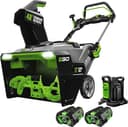
EGO Power+ SNT2112 21" 56V Cordless Single-Stage Snow Blower (Best Single-Stage)
Paved driveways and walkways that typically see 8 inches of snow or less
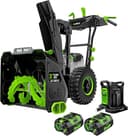
EGO Power+ SNT2405 24" 56V Two-Stage Snow Blower (Best Overall)
Homeowners who want gas-level performance without the gas hassle
The single-stage vs two-stage snow blower decision comes down to one honest question: how much snow actually lands on your driveway each winter? Not the worst storm you remember from five years ago. The typical Tuesday morning accumulation that needs clearing before work.
I think most homeowners overbuy. They picture the once-a-season blizzard and purchase a 300-pound two-stage beast that's overkill for the 4-inch dustings they deal with 90% of the time. On the flip side, some buyers grab a lightweight single-stage machine, only to discover it chokes on the first heavy, wet snowfall of the season.
I compared single-stage and two-stage snow blowers across clearing capacity, power, surface compatibility, throwing distance, and total cost. Here is a straightforward breakdown to help you choose the right machine for your actual winter conditions.
Quick Answer
Get a single-stage snow blower if you have a paved driveway under three cars long, your area typically gets 6 inches or less per storm, and you want a lightweight machine that's easy to maneuver and store.
Get a two-stage snow blower if you have a long or wide driveway, you regularly deal with 8 inches or more per storm, you have a gravel surface, or you need to move heavy, wet snow that would bog down a smaller machine.
Key Differences at a Glance
Factor: How It Works | Single-Stage: Auger contacts ground, scoops and throws snow in one motion | Two-Stage: Auger collects snow, impeller fan throws it out the chute
Factor: Clearing Width | Single-Stage: 18 to 22 inches | Two-Stage: 24 to 30+ inches
Factor: Intake Height | Single-Stage: 7 to 13 inches | Two-Stage: 16 to 23 inches
Factor: Max Snow Depth | Single-Stage: Up to 8 to 9 inches | Two-Stage: Up to 16+ inches
Factor: Throwing Distance | Single-Stage: 15 to 35 feet | Two-Stage: 25 to 50 feet
Factor: Drive System | Single-Stage: Push-propelled (you provide the force) | Two-Stage: Self-propelled with multiple speeds
Factor: Surface Type | Single-Stage: Paved only (auger touches ground) | Two-Stage: Paved or gravel (adjustable skid shoes)
Factor: Weight | Single-Stage: 50 to 100 lbs | Two-Stage: 200 to 300+ lbs
Factor: Power Source | Single-Stage: Electric, battery, or gas (typically 100 to 250cc) | Two-Stage: Gas (200 to 400cc) or battery (56V to 80V)
Factor: Price Range | Single-Stage: $150 to $600 | Two-Stage: $700 to $2,000+
Factor: Best For | Single-Stage: Light snow, small driveways, walkways | Two-Stage: Heavy snow, large driveways, gravel, ice
Single-Stage Snow Blowers: When They Make Sense
A single-stage snow blower uses a rubber or plastic auger that contacts the ground directly. It scoops snow and throws it out the chute in a single motion, with no intermediate impeller fan. This simpler design keeps the machine lighter, cheaper, and easier to handle.
Ideal conditions for single-stage
Light to moderate snowfall. If your area averages 6 inches or less per storm, a single-stage blower handles it comfortably. Machines like the Toro Power Clear 821 QZE with its 252cc engine and 21-inch clearing width make quick work of typical accumulations on residential driveways.
Small, paved driveways and walkways. Single-stage blowers shine on one-car and two-car driveways, sidewalks, and patios. Their 18 to 22-inch clearing width is sized right for these spaces, and their lighter weight (50 to 100 lbs) means you can easily steer them around tight corners and along narrow paths.
Easy storage. If garage space is at a premium, a single-stage blower takes up roughly the same footprint as a push lawn mower. Two-stage machines can occupy twice the floor space.
Budget-friendly entry. Electric single-stage models start around $150. Gas-powered single-stage blowers run $300 to $600. For homeowners in lighter snow regions, there is no reason to spend $1,500 on a machine that will be overpowered for most of the winter.
Limitations of single-stage
No gravel driveways. Since the auger contacts the pavement, it will pick up loose gravel and hurl it. This damages the machine and anything in the discharge path.
Wet, heavy snow is a struggle. Single-stage augers lack the secondary impeller that gives two-stage blowers their throwing power. Wet, dense snow can clog the chute and stall the auger, requiring frequent stops to clear jams.
Push-propelled only. You are the drive system. On flat surfaces this is fine. On inclined driveways, pushing a single-stage blower through heavy snow gets exhausting quickly.
Limited depth capacity. Most single-stage blowers max out at 8 to 9 inches of snow. If a storm drops a foot overnight, you will need multiple passes or manual shoveling to finish the job.
Two-Stage Snow Blowers: When They Make Sense
A two-stage snow blower separates the collection and throwing into two distinct steps. First, a metal auger (typically serrated steel) breaks up the snow and feeds it toward the center of the housing. Then, a high-speed impeller fan launches it out the chute. This two-step process moves more snow, faster, and farther.
Ideal conditions for two-stage
Heavy snowfall regions. If your winters regularly deliver 8 inches or more per storm, a two-stage blower is the practical choice. With intake heights of 16 to 23 inches and clearing widths of 24 to 30+ inches, these machines handle deep accumulation without bogging down.
Long or wide driveways. A two-car driveway that extends 50+ feet from the garage to the street is a different job than a short city driveway. Self-propelled drive systems with multiple forward and reverse speeds mean you are guiding the machine, not pushing it. That distinction matters on a 20-minute clearing job in freezing wind.
Gravel driveways. Two-stage blowers use adjustable skid shoes that raise the auger housing slightly above the ground surface. The auger never contacts the pavement (or gravel), so loose stones stay put. This is the single biggest reason many rural homeowners choose two-stage: it is the only type that works safely on unpaved surfaces.
Wet, packed, and icy snow. The serrated steel auger and high-speed impeller combination chews through the dense, wet snow that single-stage machines choke on. Two-stage blowers also handle end-of-driveway plow berms, the compacted ridge the city plow leaves at the bottom of your driveway.
Throwing distance. Two-stage blowers launch snow 25 to 50 feet, easily clearing a wide lawn or street curb. Single-stage machines max out around 35 feet under ideal conditions, and far less with wet snow.
Limitations of two-stage
Size and weight. Two-stage blowers weigh 200 to 300+ lbs. Moving them around the garage, loading them into a truck, or navigating tight walkways is harder.
Higher price. Expect to pay $700 to $2,000+ depending on engine size and features. Gas models from brands like Honda, Ariens, and Cub Cadet dominate this range, though battery options from EGO and Toro are gaining ground.
More maintenance. Gas two-stage machines require oil changes, spark plug replacement, shear pin inspection, and seasonal fuel stabilizer. Battery two-stage models reduce this burden, but they carry a higher upfront cost.
Overkill for light snow. If your region rarely exceeds 4 inches, a two-stage blower clears it in one pass but at three to four times the cost and storage footprint of a single-stage.
Single-Stage vs Two-Stage Snow Blower: Head-to-Head Breakdown
Clearing Width
Single-stage blowers offer 18 to 22-inch clearing widths. Two-stage models range from 24 to 30+ inches (some commercial units reach 36 to 38 inches). For a standard two-car driveway, a 24 to 28-inch two-stage clears the area in fewer passes. A 21-inch single-stage requires more passes but still finishes a small driveway in 10 to 15 minutes.
Intake Height
In my opinion, this is where the gap matters most. Single-stage intake heights top out around 12 to 13 inches. Two-stage models range from 16 to 23 inches. If your area receives frequent storms over 10 inches, a single-stage blower literally cannot ingest the snow in a single pass. You would need to skim the top layer first, then make a second pass for the base, which doubles your clearing time.
Throwing Distance
Single-stage blowers throw snow 15 to 35 feet depending on conditions. Two-stage blowers throw 25 to 50 feet. The practical difference: with a single-stage, you need to aim the chute carefully to avoid piling snow where it will just need moving again. With a two-stage, you can launch snow well clear of the driveway, sidewalk, and any path you have already cleared.
Power Source
Single-stage blowers come in three flavors: corded electric ($150 to $250), battery ($250 to $500), and gas ($300 to $600). Two-stage blowers are predominantly gas ($700 to $2,000), though battery-powered two-stage models from EGO, Toro, and Greenworks now cover the $800 to $1,600 range. Battery two-stage blowers are still newer to the market and best suited for moderate-to-heavy snow rather than extreme conditions.
Surface Compatibility
Single-stage augers ride on the ground. They scrape the pavement nearly clean, which is great for concrete and asphalt. However, this ground contact makes them incompatible with gravel, pavers with uneven joints, or any surface with loose material. Two-stage blowers hover above the surface on adjustable skid shoes, making them compatible with essentially any driveway material.
Price and Value
a reliable single-stage gas blower like the Toro Power Clear 821 QZE runs around $500 to $550. A comparable two-stage like the Ariens Deluxe 24 runs $1,000 to $1,200. You are paying roughly double for the auger and impeller system, self-propelled drive, larger engine, and greater snow capacity. For homeowners who genuinely need that capacity, the investment pays for itself in saved time and eliminated frustration. For light-snow homeowners, the single-stage delivers 80% of the capability at less than half the cost.
What About Three-Stage Snow Blowers?
Three-stage snow blowers add an accelerator (a third auger positioned between the collection augers and the impeller) that breaks up snow roughly 50% faster before it reaches the impeller fan. Brands like Cub Cadet, Troy-Bilt, and Craftsman offer three-stage models.
The result is faster clearing of deep, heavy, or icy snow. Three-stage models can handle 18 to 23+ inches of accumulation and process it more quickly than a comparable two-stage.
The trade-offs are significant. Three-stage blowers cost $1,500 to $2,500+, weigh more, and have additional mechanical components that increase maintenance complexity and potential failure points. for regions that routinely see 15+ inches per storm (think Buffalo, Denver, or the Lake Erie snowbelt), a three-stage machine can save meaningful time. For everywhere else, I think a good two-stage is more than sufficient.
My Recommendation
For most homeowners in moderate snow regions (under 8 inches per storm): I'd pick a single-stage snow blower every time. It costs less, stores easily, and handles typical accumulations without drama. If you want a gas option, the Toro Power Clear series is the benchmark. For battery, the EGO SNT2112 21-inch single-stage is lightweight and maintenance-free.
For homeowners in heavy snow regions, with long driveways, or with gravel surfaces: a two-stage snow blower is the only practical option. The self-propelled drive, higher intake, greater throwing distance, and surface versatility justify the higher cost. What I like most about the Ariens Deluxe 24 and Honda HSS724 is their proven reliability season after season. For a battery option, the EGO SNT2400 24-inch two-stage delivers serious performance without the gas maintenance.
Not sure where you fall in the single-stage vs two-stage snow blower debate? Look at your local average snowfall data. If your region averages fewer than 40 inches per season and individual storms rarely exceed 6 inches, single-stage will serve you well. If your area averages 60+ inches per season with regular storms over 8 inches, go two-stage.
For more snow removal options, check out our roundup of the best snow blowers for specific model recommendations. If you also need to manage leaves and debris seasonally, our best leaf blowers guide covers battery and gas options. And if winter storms knock out your power, a quiet inverter generator keeps your home running until the grid comes back.
Recommended Tools
Ready to buy? These are the top picks from our best snow blower guide.
EGO Power+ SNT2112 21" 56V Cordless Single-Stage Snow Blower (Best Single-Stage)
EGO Power+ SNT2112 21" 56V Cordless Single-Stage Snow Blower (Best Single-Stage)
Paved driveways and walkways that typically see 8 inches of snow or less
Pros
- Steel auger and brushless motor with variable-speed auger control
- Throws snow up to 40 feet, farther than most single-stage models
- Two 5.0Ah batteries and a dual-port charger included
- Light at 50.6 lbs with a quick-fold handle for storage
Cons
- Best at 8 inches or less; deeper storms mean extra passes
- Single-stage design isn't suited for gravel driveways
- Battery runtime drops in extreme cold and heavy, wet snow
EGO Power+ SNT2405 24" 56V Two-Stage Snow Blower (Best Overall)
EGO Power+ SNT2405 24" 56V Two-Stage Snow Blower (Best Overall)
Homeowners who want gas-level performance without the gas hassle
Pros
- Push-button start with no gas, oil, or tune-ups
- Peak Power tech delivers strong two-stage performance
- Variable-speed auger and self-propel for precise control
- Batteries cross-compatible with 56V EGO tool ecosystem
Cons
- Premium price at ~$1,649 for the full kit
- Runtime limited by battery capacity in extreme conditions
- Heavy at 143 lbs, comparable to gas models
Final Thoughts
The single-stage vs two-stage snow blower choice is really about matching the machine to your actual winter, not the worst-case scenario. A single-stage blower handles light to moderate snow on paved driveways affordably and efficiently. A two-stage blower tackles deep snow, gravel surfaces, long driveways, and the kind of wet, heavy accumulation that buries a smaller machine.
I always tell people: buy for the winter you have 90% of the time. If you get two or three big storms a year that exceed your machine's capacity, one session with a shovel is cheaper than spending an extra $800 on a bigger blower that sits idle the rest of the season. But if heavy snow is your weekly reality from December through March, a two-stage (or even three-stage) snow blower is not a luxury. It is the tool that makes winter livable. When choosing between a single-stage vs two-stage snow blower, match the machine to your snowfall, your driveway, and your budget, and you will be set for years.
Affiliate Disclosure
This post contains affiliate links. As an Amazon Associate, HomeBuildLab earns from qualifying purchases at no additional cost to you. Learn more
Looking for the right tools and products?
Check out our product reviews and buying guides to find the best gear for your project.
Browse Reviews