How to Winterize a Pressure Washer: Protect Your Pump Before the First Freeze
Quick Comparison
| Product | Best For | Buy |
|---|---|---|
 Greenworks Pro GPW3000 (Best Overall) Greenworks · Electric (corded, 120V) · 47 lbs | Homeowners who want the strongest electric cleaning power without dealing with gas | |
 Sun Joe SPX3000 (Best Value) Sun Joe · Electric (corded, 120V) · 31 lbs | Budget-conscious homeowners who need reliable cleaning for cars, decks, and patio furniture |
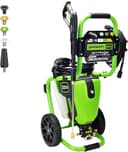
Greenworks Pro GPW3000 (Best Overall)
Homeowners who want the strongest electric cleaning power without dealing with gas
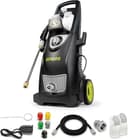
Sun Joe SPX3000 (Best Value)
Budget-conscious homeowners who need reliable cleaning for cars, decks, and patio furniture
Learning how to winterize a pressure washer is one of those 15-minute tasks that saves you hundreds of dollars. I think it's the single best return on time you'll get from any seasonal maintenance. Water left inside the pump, hoses, and fittings expands when it freezes. That expansion cracks pump heads, destroys seals, and warps check valves. A replacement pump alone costs $150 to $400 depending on the model. The pump saver solution that prevents all of this? About $10.
Here's the truth: most pressure washer "failures" after winter storage aren't manufacturing defects. They're freeze damage from skipping winterization. From warranty claims and repair forums, the pump is the heart (and the most expensive component) of your pressure washer. Water freezes harder than brass and aluminum, so even a single overnight freeze with water trapped inside can split the pump housing beyond repair.
Whether you own a gas or electric model, the process takes less than 15 minutes and requires only a few inexpensive supplies. If you're still shopping for a pressure washer, check out our best pressure washers roundup before you buy.
What You'll Need
Gather these supplies before you start. Everything is available at any hardware store or online.
Pump Saver/Protector (required):
This is the single most important winterizing supply. Pump saver is a specially formulated antifreeze and lubricant designed for pressure washer pumps. It protects internal components from freezing (typically down to -25 F or lower), prevents corrosion, and keeps seals lubricated during storage. Popular options include Briggs and Stratton Pump Saver, STA-BIL Pump Protector, Karcher Pump Guard, and Simpson Pump Guard.
Do not use automotive antifreeze. I can't stress this enough: it's not formulated for pressure washer seals and can cause damage to internal components.
Fuel Stabilizer (gas models only):
Fuel stabilizer prevents gasoline from breaking down and forming varnish deposits in the carburetor and fuel lines during storage. STA-BIL is the most common brand, but any quality fuel stabilizer works. You'll need this if you plan to leave fuel in the tank over winter.
Additional Supplies:
- Clean water source (garden hose)
- Bucket of clean water (for flushing detergent lines)
- Clean rags or towels
- Owner's manual (for model-specific instructions)
- Spark plug wrench (optional, for gas models)
- Fresh engine oil (if your gas model is due for an oil change)
Step-by-Step: How to Winterize Your Pressure Washer
Follow these steps in order. The entire process takes about 15 minutes for electric models and 20 to 25 minutes for gas models.
Step 1: Flush Out All Detergent
If you've been using any cleaning solution or detergent, you need to flush it out completely. Place the detergent siphon tube into a bucket of clean water. Connect your garden hose, turn on the water supply, and run the machine on low pressure for one to two minutes. This pushes clean water through the entire detergent system and prevents chemical residue from corroding internal components over the winter.
Step 2: Disconnect and Drain All Water
Turn off the machine and shut off the water supply. Squeeze the spray gun trigger to release any trapped pressure. This step is critical for safety, as pressurized water can cause injury.
Now disconnect the garden hose, spray gun, wand, and high-pressure hose from the pump. Tilt the machine slightly in each direction to drain any remaining water from the pump and fittings. Water hides in low points, so be thorough. Pull the recoil starter (gas models) or briefly cycle the trigger (electric models) a few times to expel water from inside the pump.
Step 3: Apply Pump Saver
What I find most important is this step. Pump saver protects the internal pistons, seals, and valves from freeze damage, corrosion, and mineral buildup.
For aerosol-style pump savers (like Briggs and Stratton or Simpson): attach the pump saver nozzle to the garden hose inlet on the pump. Press and hold the button while pulling the starter cord (gas) or cycling the trigger (electric) until you see the solution flowing out of the pump outlet. This confirms the antifreeze has filled the entire pump chamber.
For liquid pump savers: pour the solution into the garden hose inlet and cycle the pump briefly to distribute it throughout the system.
Leave the pump saver inside the pump for the entire storage period. That's the whole point.
Step 4: Stabilize the Fuel (Gas Models Only)
Gasoline starts degrading within 30 days. After 90 days, untreated fuel can form varnish deposits that clog the carburetor jets and fuel lines, leading to hard starts or complete failure come spring.
In my opinion, Option A below is almost always the better choice. But here are your two options:
Option A (recommended): Add fuel stabilizer. Pour the recommended amount of fuel stabilizer into the tank, then run the engine for two minutes to circulate the treated fuel through the carburetor and fuel lines. This is the easier approach and what most manufacturers recommend.
Option B: Drain the fuel completely. Run the engine until it dies from fuel starvation. This ensures no fuel remains to degrade. However, this leaves internal carburetor components exposed to air, which can cause gaskets to dry out. If you choose this route, consider spraying a small amount of fogging oil into the carburetor before storage.
Step 5: Change the Engine Oil (Gas Models Only)
If your gas pressure washer is due for an oil change, do it now rather than in the spring. Used engine oil contains combustion byproducts and moisture that cause corrosion when they sit in the crankcase for months. Draining the old oil and refilling with fresh oil protects internal engine components during storage.
Check your owner's manual for the correct oil type. Most residential gas pressure washers use SAE 10W-30.
Step 6: Clean the Nozzles, Filters, and Exterior
Remove the spray nozzles and inspect them for debris. A clogged nozzle tip forces backpressure through the system, which can cause problems on your first spring startup. Clean each nozzle with a small pin or the cleaning tool that came with your machine.
Remove and clean the inlet water filter (the small screen inside the garden hose connector). Rinse off any sediment or mineral deposits. If the mesh is damaged or clogged beyond cleaning, replace it. They cost a couple of dollars.
Wipe down the entire machine with a clean rag. Remove any dirt, mud, or chemical residue from the frame, wheels, and pump housing.
Step 7: Store It Properly
I'd suggest paying close attention to where you store your pressure washer, because it matters almost as much as the winterization itself. Follow these guidelines:
- Indoor storage is best. A garage, shed, or basement protects the machine from extreme temperature swings, moisture, and UV damage.
- Keep it off bare concrete. Concrete floors wick moisture upward. Place the machine on a piece of plywood, a rubber mat, or a shelf.
- Cover it. A tarp or fitted cover keeps dust, insects, and rodents away from hoses and openings. Mice love nesting inside pressure washer frames.
- Store hoses loosely coiled. Don't kink or tightly wrap high-pressure hoses. Tight bends weaken the reinforcement over time.
- Never store it with water inside. If you followed steps 2 and 3, the only liquid inside should be pump saver.
Gas vs Electric: Winterizing Differences
The pump protection process is identical for both gas and electric pressure washers. The difference is that gas models require additional steps for the engine.
Electric pressure washers are simpler to winterize. You only need to flush the system, drain the water, apply pump saver, and store it properly. No fuel, no oil, no carburetor concerns. This is one of the genuine advantages of electric models. If you're deciding between the two, our electric vs gas pressure washer comparison breaks down the full tradeoffs.
Gas pressure washers require everything above plus fuel stabilization (or fuel draining), an oil change, and ideally a spark plug inspection. The carburetor is especially vulnerable to fuel degradation. If you skip the fuel stabilizer step, expect a difficult or impossible start in the spring, often requiring a carburetor cleaning or rebuild.
Task: Flush detergent | Electric: Yes | Gas: Yes
Task: Drain water | Electric: Yes | Gas: Yes
Task: Apply pump saver | Electric: Yes | Gas: Yes
Task: Stabilize fuel | Electric: No | Gas: Yes
Task: Change engine oil | Electric: No | Gas: Yes (recommended)
Task: Inspect spark plug | Electric: No | Gas: Yes (optional)
Task: Time required | Electric: 10 to 15 min | Gas: 20 to 25 min
Common Mistakes That Ruin Your Pump
From user forums and manufacturer support pages, these are the most frequently reported errors. Every one of them is avoidable.
Skipping pump saver entirely. This is the number one cause of pressure washer failure after winter storage. Even if you drain all the water, residual moisture inside the pump can freeze and crack seals. Pump saver displaces that moisture and provides antifreeze protection.
Using automotive antifreeze instead of pump saver. Automotive antifreeze (ethylene glycol) is toxic and not designed for the rubber seals and o-rings inside pressure washer pumps. It can swell or deteriorate those seals, causing leaks. Always use a product specifically made for pressure washer pumps.
Leaving the garden hose connected. A connected hose traps water inside the pump inlet. If temperatures drop below freezing overnight, that water expands and cracks the inlet fitting or the pump head itself.
Storing the machine outside without protection. Even with pump saver applied, repeated freeze-thaw cycles and moisture exposure stress every component. Rain, snow, and UV light degrade hoses, seals, and plastic housings. Store indoors whenever possible.
Forgetting about the detergent system. Chemical residue left in the siphon tube and internal passages corrodes components over months of storage. Always flush with clean water before winterizing.
Ignoring the fuel system (gas models). Unstabilized fuel is the top reason gas pressure washers won't start in spring. It's a $5 bottle of stabilizer versus a $50 to $100 carburetor cleaning or replacement.
How to De-Winterize in Spring
When warm weather returns and you're ready to start pressure washing again, follow these steps to bring your machine back into service safely.
- Inspect the machine. Before connecting anything, visually check hoses, fittings, the pump, and the frame for cracks, leaks, or rodent damage. Look inside the frame and any enclosed areas for mouse nests.
- Reconnect all components. Reattach the high-pressure hose, spray gun, wand, and your preferred nozzle.
- Flush the pump saver. Connect the garden hose and turn on the water supply. Let water flow through the system for 30 to 60 seconds before starting the engine or motor. This flushes the pump saver solution out of the pump.
- Check oil and fuel (gas models). Verify the oil level is correct. If you drained the fuel in fall, add fresh gasoline. If you stabilized the fuel, it should still be good.
- Start the machine. Follow your normal startup procedure. Run it at low pressure for a minute to circulate water through the entire system. Check for leaks at every connection point.
- Test spray. Use a wide-angle nozzle (white 40-degree) on a safe surface like a concrete pad to verify proper pressure and spray pattern before starting any cleaning project. If you need a refresher on technique, our guide on how to pressure wash a house covers the full process.
If your pressure washer won't start after winter, I'd suggest checking these common culprits first: stale fuel (gas models), a fouled spark plug, or a tripped GFCI breaker (electric models). Work through those before assuming the pump is damaged.
Recommended Tools
Ready to buy? These are the top picks from our best pressure washer guide.
Greenworks Pro GPW3000 (Best Overall)
Greenworks Pro GPW3000 (Best Overall)
Homeowners who want the strongest electric cleaning power without dealing with gas
Pros
- Highest PSI in an electric model at this price point
- Brushless motor for longer life and quieter operation
- Steel frame construction outlasts plastic competitors
- No gas, oil, or engine maintenance required
Cons
- At 47 lbs, heavier than most electric models
- 120V cord limits you to outlet proximity
- Flow rate drops to 1.1 GPM at rated pressure
Sun Joe SPX3000 (Best Value)
Sun Joe SPX3000 (Best Value)
Budget-conscious homeowners who need reliable cleaning for cars, decks, and patio furniture
Pros
- Exceptional value at around $170
- Dual detergent tanks for easy soap switching
- Lightweight at 31 lbs for easy portability
- PWMA-certified pressure and flow ratings
Cons
- 2030 PSI won't tackle the toughest concrete stains
- 20-foot hose is shorter than competitors
- Plastic body is less durable than steel-framed models
Final Thoughts
Knowing how to winterize a pressure washer is straightforward maintenance that pays for itself many times over. In my opinion, it's the one seasonal task you absolutely cannot afford to skip. A $10 can of pump saver and 15 minutes of your time protects a machine worth hundreds of dollars from freeze damage that's usually irreparable. The process is simple: flush the system, drain the water, apply pump saver, handle the fuel (gas models), and store it indoors.
I recommend doing this every fall before the first freeze, and your pressure washer will fire right up every spring. Skip it once, and you might be shopping for a replacement pump, or a whole new machine. If winter has you thinking about other seasonal equipment, check out our best snow blowers roundup for the tools that take over when the pressure washer goes into storage.
Affiliate Disclosure
This post contains affiliate links. As an Amazon Associate, HomeBuildLab earns from qualifying purchases at no additional cost to you. Learn more
Looking for the right tools and products?
Check out our product reviews and buying guides to find the best gear for your project.
Browse Reviews