Electric vs Gas Pressure Washer: Which One Cleans Smarter in 2026?
Quick Comparison
| Product | Best For | Buy |
|---|---|---|
 Sun Joe SPX3000 (Best Value) Sun Joe · Electric (corded, 120V) · 31 lbs | Budget-conscious homeowners who need reliable cleaning for cars, decks, and patio furniture | |
 Westinghouse WPX3200 (Best Gas for Homeowners) Westinghouse · Gas (4-stroke OHV) · 63 lbs | Homeowners with large properties who need gas-powered cleaning without professional pricing |
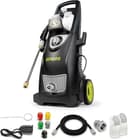
Sun Joe SPX3000 (Best Value)
Budget-conscious homeowners who need reliable cleaning for cars, decks, and patio furniture
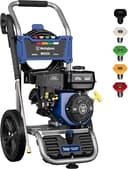
Westinghouse WPX3200 (Best Gas for Homeowners)
Homeowners with large properties who need gas-powered cleaning without professional pricing
The electric vs gas pressure washer decision used to be simple. Gas meant power. Electric meant convenience. In 2026, that distinction has blurred considerably. Electric pressure washers now reach 3,000+ PSI, which puts them squarely in territory that was gas-only a few years ago. Meanwhile, gas models continue to dominate for commercial work and large-scale cleaning where raw output and portability matter most. the right choice depends less on PSI numbers and more on how you actually plan to use the machine.
Here's the truth most buyers overlook: PSI alone doesn't determine cleaning performance. GPM (gallons per minute) matters just as much, because GPM is what actually flushes debris away once PSI has broken it loose. Gas washers typically deliver 2.3 to 4.0 GPM, while electric models top out around 1.2 to 2.0 GPM. That gap in water volume is the real difference between the two types, and it's the reason gas models still clean faster on large surfaces.
I compared electric and gas pressure washers across every factor that affects your buying decision: cleaning power, maintenance burden, noise, portability, upfront cost, and long-term ownership costs. Here's an honest breakdown so you can buy with confidence.
Quick Answer
Get an electric pressure washer if you're cleaning cars, patio furniture, decks, fences, siding, and driveways around your home. Electric washers handle 90% of residential cleaning tasks, cost less upfront, require almost zero maintenance, and run quietly enough to use on a Saturday morning without angering your neighbors.
Get a gas pressure washer if you need to clean large surface areas quickly (long driveways, barn siding, commercial lots), work in locations without electrical outlets, or regularly tackle heavy-duty jobs like stripping paint and removing oil stains from concrete.
In my opinion, electric is the smarter buy for most homeowners. For contractors, property managers, and rural homeowners with big cleaning jobs, gas earns its keep.
Key Differences at a Glance
Factor: PSI Range | Electric Pressure Washer: 1,300 to 3,200 | Gas Pressure Washer: 2,700 to 4,200+
Factor: GPM Range | Electric Pressure Washer: 1.2 to 2.0 | Gas Pressure Washer: 2.3 to 4.0
Factor: Noise Level | Electric Pressure Washer: 70 to 85 dB | Gas Pressure Washer: 85 to 100+ dB
Factor: Weight | Electric Pressure Washer: 20 to 40 lbs | Gas Pressure Washer: 50 to 80+ lbs
Factor: Maintenance | Electric Pressure Washer: Minimal (rinse after use) | Gas Pressure Washer: Moderate (oil, fuel, winterizing)
Factor: Runtime | Electric Pressure Washer: Unlimited (corded) | Gas Pressure Washer: Tank-dependent (30 to 60 min per tank)
Factor: Portability | Electric Pressure Washer: Limited by cord and outlet | Gas Pressure Washer: Fully portable
Factor: Upfront Cost | Electric Pressure Washer: $100 to $500 | Gas Pressure Washer: $300 to $800+
Factor: Annual Maintenance Cost | Electric Pressure Washer: ~$10 to $20 | Gas Pressure Washer: ~$50 to $150
Factor: Lifespan | Electric Pressure Washer: 3 to 5 years (typical) | Gas Pressure Washer: 5 to 10+ years (with maintenance)
Factor: Emissions | Electric Pressure Washer: Zero | Gas Pressure Washer: Yes (gasoline exhaust)
Factor: Starting | Electric Pressure Washer: Push-button / pull trigger | Gas Pressure Washer: Pull-start (some electric-start)
Electric Pressure Washers: When to Choose
Electric pressure washers are the right pick for the majority of homeowners. Here's when they shine.
Home Exterior Cleaning
A 2,000 to 3,000 PSI electric washer handles vinyl siding, brick, concrete driveways, wooden decks, and fences without issue. The Sun Joe SPX3000 at 2,030 PSI and 1.76 GPM cleans most residential surfaces effectively. If you need more muscle, models like the Greenworks GPW3000 deliver 3,000 PSI, which is enough to strip loose paint from wood and remove ground-in grime from concrete.
Car and Vehicle Washing
Electric washers in the 1,300 to 1,900 PSI range are ideal for vehicles. They deliver enough pressure to blast road grime without risking paint damage. Gas washers at 2,700+ PSI can strip clear coat if you're not careful with nozzle distance. I'd pick electric for car washing every time. It isn't just adequate. It's actually the safer choice.
Noise-Sensitive Neighborhoods
Electric pressure washers operate at 70 to 85 dB, comparable to a vacuum cleaner. Gas models run at 85 to 100+ dB, similar to a lawn mower or louder. The difference is significant: electric washers also shut off completely when you release the trigger, while gas engines idle continuously. If you live in a neighborhood with noise ordinances or close neighbors, electric keeps the peace.
Easy Storage and Low Maintenance
Electric washers weigh 20 to 40 lbs and store upright in a garage corner. No fuel to drain, no oil to change, no winterizing required. Rinse the nozzle after each use, flush the pump before winter storage, and you're done. Gas washers require engine oil changes, fuel stabilizer, spark plug replacement, air filter cleaning, and proper winterization to prevent pump freeze damage.
Budget-Friendly Entry Point
A capable electric pressure washer costs $150 to $300, while a comparable gas model starts around $350 to $500. If you pressure wash a few times per year (the typical homeowner pattern), electric delivers the cleaning you need without the upfront investment or ongoing maintenance costs of gas.
Gas Pressure Washers: When to Choose
Gas pressure washers earn their place when the job demands more water volume, more portability, or more sustained heavy-duty cleaning.
Large Surface Areas
Here's where GPM becomes the deciding factor. A gas washer at 3,200 PSI and 2.5 GPM cleans a 2,000-square-foot driveway roughly twice as fast as an electric washer at 2,000 PSI and 1.5 GPM. The higher GPM flushes more debris per pass, meaning fewer passes to get the surface clean. If you're cleaning a multi-car driveway, barn siding, or a long fence line, gas saves real time.
Remote Locations Without Power
Gas pressure washers need only water and fuel. No extension cords, no GFCI outlets, no circuit breakers to worry about. If you're cleaning on a rural property, a rental cabin, a job site, or anywhere electricity isn't readily available, gas is the only practical option.
Heavy-Duty Cleaning Tasks
Stripping paint, removing oil stains from concrete, cleaning commercial equipment, and blasting years of grime from neglected surfaces all benefit from the higher PSI and GPM that gas models deliver. A Simpson MegaShot at 3,100 PSI and 2.5 GPM powered by a Honda GCV200 engine handles these demanding jobs without bogging down. Electric models can do some of this work, but they take considerably longer and may struggle with the toughest buildup.
Professional and Semi-Professional Use
If you clean properties for income (even as a side job), a gas pressure washer pays for itself quickly. The combination of higher GPM, unlimited portability, and faster cleaning on large surfaces means you finish jobs in less time. Models like the Simpson AL3425 at 3,600 PSI and 2.5 GPM provide the output that professional cleaning demands.
Electric vs Gas Pressure Washer: Head-to-Head Breakdown
PSI and GPM: Understanding Cleaning Power
PSI (pounds per square inch) measures how hard the water hits the surface, breaking apart dirt and grime. GPM (gallons per minute) measures how much water flows, flushing debris away after PSI loosens it. The product of PSI and GPM gives you "cleaning units" (CU), which is the most accurate measure of overall cleaning performance.
A gas washer at 3,200 PSI and 2.5 GPM delivers 8,000 CU. An electric washer at 2,000 PSI and 1.5 GPM delivers 3,000 CU. That's a massive difference in cleaning throughput, even though the PSI numbers look somewhat comparable. For quick jobs on small surfaces, you won't notice. For large jobs, the gas washer finishes in nearly half the time.
Maintenance
I think this is where electric wins most decisively. After each use, you rinse the nozzle and flush the pump. Before winter, you run pump saver through the system. That's it.
Gas washers require engine oil changes (every 50 hours or annually), spark plug inspection, air filter cleaning, fuel stabilizer at the end of each season, and pump winterization with antifreeze. Skip the winterization and you risk a cracked pump, which is a $200 to $400 repair. Gasoline goes stale in about 30 days, and ethanol-blended fuel deteriorates even faster, causing carburetor gumming and hard starts. Over five years, gas pressure washer maintenance costs $250 to $500 more than electric.
Portability
Gas takes this category handily. A gas washer rolls wherever you need it. No extension cords, no outlet proximity concerns. Electric washers typically need a 12 to 14 gauge extension cord no longer than 50 feet (some manufacturers void warranties with longer cords), and they require a GFCI-protected outlet. That cord also creates a tripping hazard and limits maneuverability around obstacles.
Noise
Electric washers operate at 70 to 85 dB with complete silence between trigger pulls. Gas washers run at 85 to 100+ dB with a constantly idling engine. On the logarithmic decibel scale, a 10 dB increase means roughly double the perceived loudness. Hearing protection is recommended for gas models but optional for most electric washers.
Cost: Upfront and Long-Term
Upfront, electric wins. A solid electric pressure washer runs $150 to $400, while gas models cost $300 to $800. Long-term, electric wins again. Electricity costs pennies per session, maintenance is minimal, and there's no fuel to buy. Gas washers consume $5 to $10 in fuel per session, plus $50 to $150 annually in maintenance supplies (oil, filters, spark plugs, fuel stabilizer, pump saver).
The one area where gas holds an advantage is lifespan. A well-maintained gas pressure washer with a Honda or Briggs & Stratton engine can last 10+ years. Electric models typically last 3 to 5 years with moderate use, partly because their pumps are often less repairable and more prone to failure from hard water mineral buildup. I think this longevity gap is the strongest argument for gas, but only if you actually use the machine often enough to justify the upkeep.
Lifespan and Durability
Gas pressure washers are built with more robust components: aluminum or brass pump heads, commercial-grade engines, and steel frames. These machines are designed for heavy, repeated use. Electric models often use plastic pump housings and lighter-duty internals that aren't meant for daily professional use. For a homeowner using the machine 10 to 20 times per year, an electric washer lasts long enough. For frequent, demanding use, gas construction holds up better over time.
Our Recommendation: Electric vs Gas Pressure Washer
For most homeowners: An electric pressure washer in the 2,000 to 2,500 PSI range with at least 1.5 GPM covers the vast majority of residential cleaning: driveways, decks, siding, fences, patio furniture, and vehicles. You'll spend less upfront, avoid ongoing maintenance hassles, and clean quietly enough to use anytime. What I like most about electric models is the grab-and-go simplicity: plug in, squeeze the trigger, and you're cleaning. Check out our best pressure washers roundup for specific models I recommend.
For large properties and heavy-duty work: A gas pressure washer in the 3,000 to 3,500 PSI range with 2.5 GPM provides the cleaning throughput you need for big jobs. I won't sugarcoat it: the maintenance commitment is real. But so is the performance advantage on large surfaces. If you're already maintaining gas outdoor power equipment (like the tools in our best leaf blower and best hedge trimmer roundups), adding a gas pressure washer to your routine isn't a significant additional burden.
Skip gas if: You clean your driveway and deck twice a year and wash your car on weekends. An electric washer does this for less money, less noise, and zero maintenance headaches.
Skip electric if: You clean a 3,000-square-foot driveway regularly, work on properties without outlets, or need to strip paint and remove deep stains from concrete. Electric washers can technically do these jobs, but they'll take twice as long and may not deliver the results you need.
Recommended Tools
Ready to buy? These are the top picks from our best pressure washer guide.
Sun Joe SPX3000 (Best Value)
Sun Joe SPX3000 (Best Value)
Budget-conscious homeowners who need reliable cleaning for cars, decks, and patio furniture
Pros
- Exceptional value at around $170
- Dual detergent tanks for easy soap switching
- Lightweight at 31 lbs for easy portability
- PWMA-certified pressure and flow ratings
Cons
- 2030 PSI won't tackle the toughest concrete stains
- 20-foot hose is shorter than competitors
- Plastic body is less durable than steel-framed models
Westinghouse WPX3200 (Best Gas for Homeowners)
Westinghouse WPX3200 (Best Gas for Homeowners)
Homeowners with large properties who need gas-powered cleaning without professional pricing
Pros
- 8,000 cleaning units, the highest residential-grade performance in this roundup
- 4-stroke engine requires no fuel mixing
- Never-flat 12" wheels handle any terrain
- Excellent value at around $350 for a gas model
Cons
- At 63 lbs, significantly heavier than any electric option
- Gas engine requires oil changes and seasonal maintenance
- Loud operation (hearing protection recommended)
Final Thoughts
The electric vs gas pressure washer debate comes down to a simple question: how big are your cleaning jobs, and how often do you tackle them?
For the homeowner who pressure washes their driveway, deck, and siding a few times per season, electric delivers everything you need at a lower price with virtually no maintenance. The gap in raw power matters less than you'd think when your jobs take 30 minutes instead of three hours.
For the property owner or contractor with large surfaces, remote locations, and demanding cleaning tasks, gas pressure washers provide the water volume and portability that electric can't match. The maintenance is manageable if you're already comfortable with small engine upkeep.
My advice: buy for the work you actually do, not the work you imagine doing. most people who buy gas pressure washers would have been better served by electric. They end up with a machine that sits in the garage collecting dust between infrequent uses, its carburetor slowly gumming up from stale fuel. Don't let "more power" tempt you into buying more maintenance than your cleaning schedule justifies.
Affiliate Disclosure
This post contains affiliate links. As an Amazon Associate, HomeBuildLab earns from qualifying purchases at no additional cost to you. Learn more
Looking for the right tools and products?
Check out our product reviews and buying guides to find the best gear for your project.
Browse Reviews