Leaf Blower vs Leaf Vacuum: Which Is Better for Your Yard?
Quick Comparison
| Product | Best For | Buy |
|---|---|---|
 EGO Power+ LB6504 56V 650 CFM Blower (Best Overall) EGO · Battery (56V ARC Lithium) · 9.7 lbs (with battery) | Homeowners with quarter-acre to half-acre yards who want one blower that handles everything | |
 Worx WG512 Trivac 3-in-1 (Best Overall) Worx · Corded Electric · 8.6 lbs | Homeowners who want one tool for blowing, vacuuming, and mulching |
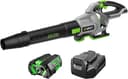
EGO Power+ LB6504 56V 650 CFM Blower (Best Overall)
Homeowners with quarter-acre to half-acre yards who want one blower that handles everything
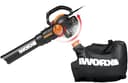
Worx WG512 Trivac 3-in-1 (Best Overall)
Homeowners who want one tool for blowing, vacuuming, and mulching
The leaf blower vs leaf vacuum debate comes down to one question: do you want to move leaves or collect them? Both tools handle fall cleanup, but they solve the problem in fundamentally different ways. A leaf blower uses forced air to push debris into piles. A leaf vacuum uses suction to collect and (usually) shred leaves into a bag. Same job, opposite approaches.
Here's the truth most people don't consider, and I think it's the most important thing to understand before you spend a dollar: the right tool depends far more on your yard size and what you plan to do with the leaves than on which tool is "better" in the abstract. A half-acre lot with mature oak trees demands a different solution than a small patio surrounded by flower beds. And for many homeowners, a 3-in-1 blower/vacuum/mulcher splits the difference nicely.
I compared dedicated leaf blowers, dedicated leaf vacuums, and 3-in-1 combo units across speed, collection efficiency, mulching capability, noise, versatility, and price. Here's an honest breakdown to help you choose the right tool for your situation.
Quick Answer
Get a leaf blower if you have a large yard, want the fastest cleanup possible, and don't mind raking leaves into bags after blowing them into piles. Blowers cover ground quickly and handle wet, heavy debris better than vacuums.
Get a leaf vacuum if you want leaves collected and mulched automatically, you compost or garden actively, and your yard is small to medium in size. Vacuums eliminate the raking step entirely.
Get a 3-in-1 blower/vacuum/mulcher if you want flexibility without buying two separate tools. You can blow leaves into piles across your large yard, then switch to vacuum mode for targeted collection near flower beds and walkways.
Key Differences at a Glance
Factor: Primary Function | Leaf Blower: Moves leaves with forced air | Leaf Vacuum: Collects leaves via suction
Factor: Speed (large areas) | Leaf Blower: Very fast | Leaf Vacuum: Slow
Factor: Collection | Leaf Blower: No (requires separate raking/bagging) | Leaf Vacuum: Yes (built-in collection bag)
Factor: Mulching | Leaf Blower: No | Leaf Vacuum: Yes (most models shred 10:1 to 18:1)
Factor: Wet Leaf Performance | Leaf Blower: Good to excellent | Leaf Vacuum: Poor to moderate
Factor: Weight | Leaf Blower: 5-10 lbs (handheld), 15-25 lbs (backpack) | Leaf Vacuum: 8-12 lbs (handheld with bag)
Factor: Noise | Leaf Blower: 65-75 dB (battery), 90-100+ dB (gas) | Leaf Vacuum: 65-75 dB (electric)
Factor: Versatility | Leaf Blower: Clears gutters, dries cars, cleans garages | Leaf Vacuum: Leaf collection only
Factor: Price Range | Leaf Blower: $30-$500+ | Leaf Vacuum: $50-$200
Factor: Best For | Leaf Blower: Large yards, fast clearing, versatility | Leaf Vacuum: Small yards, composting, precision cleanup
Leaf Blowers: When They Win
Leaf blowers are the better tool in several common scenarios.
Large Yards and Heavy Leaf Cover
If your yard is a quarter-acre or larger, a dedicated leaf blower is the practical choice. A quality blower pushes 400-700 CFM (cubic feet per minute) of air, clearing leaves from an entire lawn in minutes. A leaf vacuum would take three to four times as long covering the same area because you're collecting every leaf instead of just moving them.
The math is simple: a backpack blower can clear a half-acre yard in 20-30 minutes. A handheld vacuum with a collection bag that fills every 5-10 minutes would turn that same job into a 2-hour ordeal.
Wet and Heavy Debris
Leaf blowers push through wet, matted leaves that would clog a vacuum's intake tube. After a rainstorm, your blower still works. Your vacuum mostly doesn't. The forced air approach handles sticks, acorns, and heavier debris that vacuums struggle to pick up.
Versatility Beyond Leaves
This is where blowers pull ahead significantly, and in my opinion, it's the most underrated advantage. A good leaf blower does more than clear leaves. Use it to clean gutters, dry your car after washing, blow sawdust from your workshop, clear grass clippings from driveways, or push light snow off walkways. A leaf vacuum does exactly one thing: vacuum leaves.
Speed and Efficiency
For pure cleanup speed, nothing beats a blower. You're moving debris in broad sweeps rather than collecting it one intake-width at a time. If your primary goal is getting leaves off the lawn quickly (and you don't care about collecting them), a blower finishes the job in a fraction of the time.
Leaf Vacuums: When They Win
Leaf vacuums earn their place in specific situations where collection and processing matter more than raw speed.
Composting and Garden Mulch
this is the strongest argument for a dedicated leaf vacuum. Most vacuum models include a mulching impeller that shreds leaves at a 10:1 to 18:1 ratio. That means 16 bags of whole leaves become one bag of finely shredded material. This mulched output is ready for compost bins or direct application as garden mulch.
Shredded leaves decompose significantly faster than whole leaves. They break down in weeks rather than months, feeding soil microbes and earthworms while suppressing weeds. If you maintain garden beds, a leaf vacuum pays for itself in free mulch material every fall.
Precision Cleanup in Small Areas
Leaf vacuums excel in tight spaces where a blower creates chaos. Flower beds, patios, walkways between shrubs, and areas near parked cars are all spots where blowing sends leaves everywhere except where you want them. A vacuum collects precisely, leaving clean surfaces without scattering debris into adjacent areas.
Noise-Sensitive Neighborhoods
Electric leaf vacuums typically operate at 65-75 dB, which is roughly conversational volume. In my opinion, this is a bigger deal than most people realize. Gas leaf blowers hit 90-100+ dB, loud enough to require hearing protection and annoy every neighbor within earshot. If you live in a neighborhood with noise ordinances or you simply prefer not to be "that person" at 8 AM on Saturday, a quiet electric vacuum is far more neighbor-friendly.
Smaller Yards Under a Quarter-Acre
On a small lot, the vacuum's slower coverage speed becomes a non-issue. You can vacuum a small yard in 20-30 minutes and finish with a bag of ready-to-compost mulch. No raking leaves into piles, no stuffing them into lawn bags, no trips to the curb. The vacuum handles the entire process in one pass.
Leaf Blower vs Leaf Vacuum: Head-to-Head Breakdown
Speed
Blowers win decisively. A 500+ CFM blower clears a large lawn in minutes. A vacuum moves at a fraction of that pace because it's collecting, not just moving. For large properties, blowing is 3-4 times faster than vacuuming. For small patios and walkways, the difference shrinks to almost nothing.
Collection Efficiency
Vacuums win here. A blower moves leaves into piles that you then rake and bag manually. A vacuum collects directly into an attached bag. The trade-off is bag capacity: most handheld vacuums hold 1-2 bushels, which fills quickly in heavy leaf cover. You'll stop to empty the bag frequently. Walk-behind vacuums with larger hoppers (10+ bushels) solve this but cost significantly more.
Mulching
Vacuums win by default since blowers don't mulch at all. What I like most about vacuum mulching is the sheer volume reduction: a vacuum with a metal impeller shreds leaves at 16:1 or better, reducing 16 bags of leaves to one bag of fine mulch. This saves disposal time and creates valuable garden material. Plastic impellers found in cheaper models deliver lower ratios (8:1 to 10:1) and wear out faster.
Noise
Electric vacuums are the quietest option at 65-75 dB. Battery-powered blowers fall in a similar range. Gas blowers are the loudest at 90-100+ dB. If noise matters, both battery blowers and electric vacuums stay within comfortable levels. Gas blowers are the only category that regularly triggers neighborhood complaints and noise ordinance violations.
Versatility
Blowers win. Beyond leaf duty, blowers clear gutters, dry vehicles, blow off workshop surfaces, and handle light snow. A leaf vacuum collects leaves. That's it. If you want one tool that earns its storage space year-round, a blower delivers far more utility.
Price
Dedicated leaf vacuums typically cost $50-$200 for handheld electric models. Leaf blowers range from $30 for basic corded electric to $500+ for professional backpack gas models. Battery blowers in the sweet spot for homeowners run $150-$300. For equivalent quality, costs are similar. The real cost difference is in the accessories: blower users still need rakes and lawn bags, while vacuum users get collection built in.
3-in-1 Blower/Vacuum/Mulchers: The Compromise
If you can't decide between a leaf blower and leaf vacuum, a 3-in-1 unit gives you both functions in a single tool. Models like the Worx Trivac, Toro Ultra, and Black+Decker BEBL7000 switch between blowing, vacuuming, and mulching modes.
How They Work
Most 3-in-1 units use a single motor with a reversible airflow design. Flip a switch or turn a dial to change from blower mode (pushing air out) to vacuum mode (pulling air in through the same tube or a separate intake). Collected leaves pass through an impeller for mulching before entering the collection bag.
The Realistic Trade-Off
I think it's important to set realistic expectations here. A 3-in-1 does both jobs, but it doesn't do either job as well as a dedicated tool. In blower mode, most 3-in-1 units produce 250-400 CFM, which is adequate for residential use but weaker than a dedicated blower at 500-700 CFM. In vacuum mode, suction is moderate, and the collection bag is typically smaller (1-1.5 bushels) than dedicated vacuums.
Switching between modes mid-job also takes 30 seconds to a minute, which interrupts workflow. And 3-in-1 units tend to be heavier than single-function tools because they carry the hardware for both operations.
Who Should Buy One
A 3-in-1 makes sense if you have a medium-sized yard (quarter-acre or less), you want one tool instead of two, and you don't need professional-grade power in either mode. The Worx Trivac and Toro Ultra both deliver reliable performance in the $80-$120 range, which is less than buying a separate blower and vacuum.
For yards over a half-acre or for anyone who needs serious blowing power, buy a dedicated blower. For serious gardeners who compost heavily, a dedicated vacuum with a larger collection bag and higher mulching ratio is worth the specialization.
Our Recommendation
For most homeowners with medium to large yards: I'd pick a leaf blower as the first tool. It's faster, more versatile, and handles the primary job (getting leaves off your lawn) more efficiently. You can always rake and bag after blowing, and the blower earns its keep year-round with gutter cleaning, driveway maintenance, and workshop cleanup. Check our best leaf blower roundup for top picks across battery, corded, and gas models.
For gardeners and composters with small to medium yards: Get a leaf vacuum. The built-in mulching turns fall cleanup into a mulch production session. If you're already maintaining garden beds and compost bins, the shredded leaf output is genuinely valuable, and you skip the raking-and-bagging step entirely. See our best leaf vacuum guide for models that balance suction power with mulching ratio.
For budget-conscious homeowners who want flexibility: A 3-in-1 blower/vacuum/mulcher in the $80-$120 range covers both bases adequately. You won't get the raw power of a dedicated backpack blower or the collection capacity of a dedicated vacuum, but you get both functions in one tool at a reasonable price.
Recommended Tools
Ready to buy? These are the top picks from our best leaf blower and best leaf vacuum guides.
EGO Power+ LB6504 56V 650 CFM Blower (Best Overall)
EGO Power+ LB6504 56V 650 CFM Blower (Best Overall)
Homeowners with quarter-acre to half-acre yards who want one blower that handles everything
Pros
- Excellent balance of power (650 CFM / 180 MPH) and runtime
- Quiet 64 dB operation, safe for noise-restricted neighborhoods
- Battery and charger included in the kit
- Variable speed with turbo button for on-demand power
Cons
- 9.7 lbs with battery is noticeable during extended use
- Turbo mode drains the battery quickly (about 20 minutes)
- Premium price compared to corded alternatives
Worx WG512 Trivac 3-in-1 (Best Overall)
Worx WG512 Trivac 3-in-1 (Best Overall)
Homeowners who want one tool for blowing, vacuuming, and mulching
Pros
- 600 CFM provides strong suction for wet and dry leaves
- Metal impeller outlasts plastic alternatives and handles small debris
- Easy one-dial switching between blower, vacuum, and mulcher
- Lightweight at 8.6 lbs for comfortable extended use
Cons
- Corded limits range (plan for a 100-foot outdoor extension cord)
- 1.4-bushel bag fills quickly on large properties
- Two-speed only (no variable speed dial)
Final Thoughts
The leaf blower vs leaf vacuum question doesn't have one right answer, and I think that's actually a good thing. It depends on your yard size, what you do with leaves after collecting them, and how much you value speed versus convenience.
For quick clearing on larger lots, blowers are the clear winner. For tidy collection and free garden mulch on smaller properties, vacuums justify the slower pace. And 3-in-1 combos split the difference for homeowners who want versatility without buying two tools.
One last consideration: think about your broader yard tool needs. If you're also shopping for a hedge trimmer or other outdoor power equipment, check whether your preferred battery platform offers a blower or vacuum in the same ecosystem. Sharing batteries across tools saves money and simplifies charging. Many homeowners find that a battery leaf blower from the same brand as their trimmer and mower becomes the most practical choice by default.
Whatever you choose, I believe the best leaf tool is the one you'll actually use consistently. A blower gathering dust in the garage is worse than a vacuum you use every weekend.
Affiliate Disclosure
This post contains affiliate links. As an Amazon Associate, HomeBuildLab earns from qualifying purchases at no additional cost to you. Learn more
Looking for the right tools and products?
Check out our product reviews and buying guides to find the best gear for your project.
Browse Reviews