Best Pressure Washers in 2026: From Patio Furniture to Concrete Driveways
Quick Comparison
| Product | Best For | Buy |
|---|---|---|
 Greenworks Pro GPW3000 (Best Overall) Greenworks · Electric (corded, 120V) · 47 lbs | Homeowners who want the strongest electric cleaning power without dealing with gas | |
 Sun Joe SPX3000 (Best Value) Sun Joe · Electric (corded, 120V) · 31 lbs | Budget-conscious homeowners who need reliable cleaning for cars, decks, and patio furniture | |
 Westinghouse ePX3500 (Best Compact) Westinghouse · Electric (corded, 120V) · 19 lbs | Anyone who needs a powerful but ultra-portable pressure washer for quick jobs and tight storage | |
 DeWalt DWPW2400 (Best Mid-Range Electric) DeWalt · Electric (corded, 120V) · 45.2 lbs | Homeowners who value durability, warranty coverage, and a trusted brand | |
 Karcher K1700 (Best for Beginners) Karcher · Electric (corded, 120V) · 20.7 lbs | First-time pressure washer buyers who want simplicity and low risk | |
 Westinghouse WPX3200 (Best Gas for Homeowners) Westinghouse · Gas (4-stroke OHV) · 63 lbs | Homeowners with large properties who need gas-powered cleaning without professional pricing | |
 Simpson MegaShot MS61222 (Best Gas Value) Simpson · Gas (CRX165 engine) · 54 lbs | Budget-conscious buyers who want gas pressure washer performance under $300 | |
 Simpson PowerShot PS60843 (Best Commercial) Simpson · Gas (CRX420 engine) · 135 lbs | Professional cleaners and homeowners with the largest, toughest cleaning jobs |
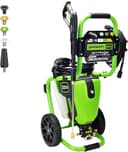
Greenworks Pro GPW3000 (Best Overall)
Homeowners who want the strongest electric cleaning power without dealing with gas
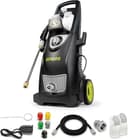
Sun Joe SPX3000 (Best Value)
Budget-conscious homeowners who need reliable cleaning for cars, decks, and patio furniture
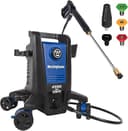
Westinghouse ePX3500 (Best Compact)
Anyone who needs a powerful but ultra-portable pressure washer for quick jobs and tight storage
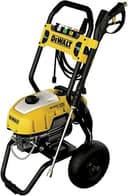
DeWalt DWPW2400 (Best Mid-Range Electric)
Homeowners who value durability, warranty coverage, and a trusted brand
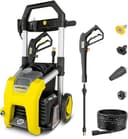
Karcher K1700 (Best for Beginners)
First-time pressure washer buyers who want simplicity and low risk
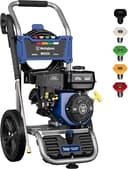
Westinghouse WPX3200 (Best Gas for Homeowners)
Homeowners with large properties who need gas-powered cleaning without professional pricing
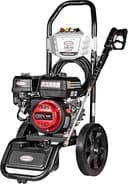
Simpson MegaShot MS61222 (Best Gas Value)
Budget-conscious buyers who want gas pressure washer performance under $300
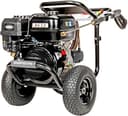
Simpson PowerShot PS60843 (Best Commercial)
Professional cleaners and homeowners with the largest, toughest cleaning jobs
A pressure washer turns a weekend-long scrubbing project into an hour of satisfying work. Mildew on siding, grime on driveways, moss on decks, mud on vehicles. These are all jobs that a garden hose can't handle but a pressure washer devours. In my opinion, owning the best pressure washer is one of the smartest investments a homeowner can make. The right model saves you hundreds in professional cleaning costs every year and keeps your property looking maintained without the backbreaking effort.
Here's the truth most buyers miss: PSI alone does not determine cleaning power. The real metric is cleaning units (CU), which is PSI multiplied by GPM (gallons per minute). A 3000 PSI washer at 1.1 GPM produces 3,300 CU, while a 2500 PSI model at 1.76 GPM delivers 4,400 CU. That second machine actually cleans faster because it moves more water across the surface. When shopping for the best pressure washer, always check both numbers.
This roundup covers eight pressure washers (sometimes called power washers) across electric and gas categories, from compact units for car washing to commercial-grade machines for the toughest cleaning jobs.
Quick Picks: Best Pressure Washers at a Glance
- Best Overall: Greenworks Pro GPW3000. I'd pick this for most homeowners. 3000 PSI electric with brushless motor and commercial-grade cleaning power.
- Best Value: Sun Joe SPX3000. Reliable 2030 PSI electric with dual soap tanks at a budget-friendly price.
- Best Compact: Westinghouse ePX3500. Only 19 lbs with 2500 PSI, perfect for easy storage and quick jobs.
- Best Mid-Range Electric: DeWalt DWPW2400. 2400 PSI with a 3-year warranty and jobsite-tough build quality.
- Best for Beginners: Karcher K1700. nothing is easier to start with. Lightweight 1700 PSI with a simple plug-and-spray design.
- Best Gas for Homeowners: Westinghouse WPX3200. 3200 PSI gas with 8,000 CU for heavy-duty residential cleaning.
- Best Gas Value: Simpson MegaShot MS61222. 3100 PSI with a CRX engine and welded steel frame under $300.
- Best Commercial: Simpson PowerShot PS60843. 4400 PSI at 4.0 GPM for the most demanding cleaning jobs.
What to Look for in a Pressure Washer
Before diving into the reviews, understanding a few key specs will save you from buying the wrong machine.
PSI and GPM: The Two Numbers That Matter
PSI (pounds per square inch) measures the force of the water stream. Higher PSI strips stubborn stains, old paint, and embedded grime. GPM (gallons per minute) measures the volume of water flowing through the nozzle. Higher GPM rinses surfaces faster by covering more area per pass.
Multiply PSI by GPM to get cleaning units (CU), the single best measure of overall cleaning power. Here's a practical breakdown:
- Under 2,000 CU: Cars, patio furniture, light cleaning
- 2,000 to 4,000 CU: Decks, fences, sidewalks, siding
- 4,000 to 6,000 CU: Driveways, concrete, paint stripping
- Over 6,000 CU: Commercial work, heavy equipment, large concrete areas
Electric vs Gas
Electric pressure washers are lighter, quieter, start instantly, and require almost zero maintenance. They plug into a standard outlet and produce no exhaust, making them safe for enclosed spaces like garages. Most electric models fall between 1,300 and 3,000 PSI with 1.1 to 2.0 GPM. They're ideal for homeowners who clean vehicles, patios, and siding a few times per year.
Gas pressure washers deliver significantly more power, typically 2,700 to 4,400+ PSI with 2.3 to 4.0 GPM. They're not tethered to an outlet, so you can clean anywhere on your property. The trade-offs: they're louder, heavier, require fuel and oil changes, and produce exhaust. Gas models make sense when you're cleaning large concrete areas, stripping paint, or have a property big enough that extension cords become impractical.
Pump Type
Axial cam pumps are standard on residential models. They're affordable, reliable, and adequate for occasional use. Most handle 100 to 200 hours of runtime before showing wear.
Triplex plunger pumps are found on commercial and high-end residential models. They run cooler, last longer (500+ hours), and are rebuildable. If you pressure wash frequently or professionally, a triplex pump pays for itself in longevity.
Hose Length and Nozzles
A 25-foot high-pressure hose is standard. If you're cleaning a two-story home or large driveway, look for a 30 to 50 foot hose to avoid constantly moving the unit. Quick-connect nozzles (0, 15, 25, 40 degrees, and soap) are now standard on virtually every model. The 0-degree nozzle concentrates maximum force for stripping and etching. The 25-degree nozzle is the workhorse for general cleaning. The 40-degree nozzle is for delicate surfaces like windows and vehicles.
Safety Considerations
Pressure washers are not toys. A 3000 PSI stream can cut skin, shatter windows, and damage wood siding if used carelessly. Always wear closed-toe shoes and safety glasses. Never aim at people, pets, or electrical outlets. Start with a wider nozzle (40 degrees) and work toward narrower angles as needed. Keep the nozzle 12 to 18 inches from the surface until you know how the material responds.
Our Top Picks
Greenworks Pro GPW3000 (Best Overall)
Greenworks Pro GPW3000 (Best Overall)
Homeowners who want the strongest electric cleaning power without dealing with gas
Pros
- Highest PSI in an electric model at this price point
- Brushless motor for longer life and quieter operation
- Steel frame construction outlasts plastic competitors
- No gas, oil, or engine maintenance required
Cons
- At 47 lbs, heavier than most electric models
- 120V cord limits you to outlet proximity
- Flow rate drops to 1.1 GPM at rated pressure
I think the Greenworks Pro GPW3000 delivers what most electric pressure washers cannot: genuine gas-level cleaning performance. At 3000 PSI and up to 2.0 GPM, it produces cleaning units that rival many entry-level gas models. The brushless induction motor runs cooler and lasts longer than brushed alternatives, which is a meaningful difference if you plan to use this machine regularly.
The rugged steel frame sets this apart from the plastic-bodied competition. It holds up to bumps, drops, and years of garage storage without cracking or warping. The 25-foot kink-resistant hose and 35-foot GFCI power cord give you a 60-foot working radius from the outlet, enough to reach most areas of a typical home without relocating the unit.
Five quick-connect nozzles (turbo, soap, 15, 25, and 40 degrees) cover every cleaning scenario. The turbo nozzle is particularly effective on concrete, rotating the water stream to combine the intensity of a 0-degree nozzle with the coverage of a wider angle. What I like most about this model is the versatility. If you want one pressure washer that handles everything from car washing to driveway restoration without the hassle of gas, oil, and pull-starts, this is the one to buy.
Sun Joe SPX3000 (Best Value)
Sun Joe SPX3000 (Best Value)
Budget-conscious homeowners who need reliable cleaning for cars, decks, and patio furniture
Pros
- Exceptional value at around $170
- Dual detergent tanks for easy soap switching
- Lightweight at 31 lbs for easy portability
- PWMA-certified pressure and flow ratings
Cons
- 2030 PSI won't tackle the toughest concrete stains
- 20-foot hose is shorter than competitors
- Plastic body is less durable than steel-framed models
the Sun Joe SPX3000 has been the best-selling electric pressure washer on Amazon for years, and for good reason. At roughly $170, it delivers 2030 PSI and 1.2 GPM of PWMA-certified cleaning power. That's enough to strip grime from driveways, clean siding, and blast mildew off decks. It won't match the intensity of a gas model, but it handles 90% of what a typical homeowner needs.
The standout feature is the dual detergent tank system. Two 0.9-liter onboard soap tanks let you load different cleaning solutions (one for vehicles, one for concrete, for example) and switch between them without stopping to refill or swap containers. It's a small convenience that makes a big difference during longer cleaning sessions.
Five quick-connect spray nozzles (0, 15, 25, 40 degrees, and soap) give you the full range of cleaning angles. The 20-foot high-pressure hose and 35-foot power cord provide a solid 55-foot reach. The 13-amp motor is adequate for residential tasks without tripping standard 15-amp breakers. At 31 lbs, it's light enough to carry up stairs or load into a vehicle for off-site cleaning.
Westinghouse ePX3500 (Best Compact)
Westinghouse ePX3500 (Best Compact)
Anyone who needs a powerful but ultra-portable pressure washer for quick jobs and tight storage
Pros
- Only 19 lbs, lightest in this roundup by far
- Anti-tipping design stays upright on uneven surfaces
- Compact enough to store on a shelf or in a closet
- 2500 max PSI punches above its weight class
Cons
- Rated PSI (2000) is lower than the max (2500) suggests
- No wheels (carry handle instead, which is fine at 19 lbs)
- Not built for all-day heavy-duty use
The Westinghouse ePX3500 weighs 19 pounds. That's less than a case of water. Yet it delivers 2500 max PSI and 1.76 max GPM, producing cleaning units that compete with pressure washers three times its size. If storage space is your biggest constraint, or if you need to carry a washer up stairs, across a yard, or in a car trunk, nothing else in this roundup comes close to this portability.
The anti-tipping technology is engineered around a low center of gravity that keeps the unit upright during operation. Traditional tall, narrow pressure washers topple over constantly, especially on uneven ground. The ePX3500 stays planted. At just 16.5 inches tall, it tucks into a closet, hangs on a garage wall hook, or sits on a shelf.
Five quick-connect nozzles (including a turbo nozzle) and an onboard soap tank cover the standard cleaning scenarios. The 25-foot hose and pro-style steel wand feel more substantial than what you'd expect from a unit this compact. For apartment dwellers, condo owners, or anyone who cleans vehicles and small patios regularly, the ePX3500 removes the biggest barrier to ownership: finding a place to put it.
DeWalt DWPW2400 (Best Mid-Range Electric)
DeWalt DWPW2400 (Best Mid-Range Electric)
Homeowners who value durability, warranty coverage, and a trusted brand
Pros
- 3-year warranty plus 1-year free service, best coverage on this list
- Pneumatic tires roll over any terrain
- Solid build quality consistent with the DeWalt brand
- Turbo nozzle adds extra punch for stubborn stains
Cons
- 1.1 GPM limits rinsing speed compared to higher-flow models
- At $299, costs more than similarly powered competitors
- At 45 lbs, it's on the heavier side for an electric
The DeWalt DWPW2400 is the pressure washer for people who already trust DeWalt's yellow-and-black build quality. The 13-amp induction motor and axial cam pump deliver 2400 PSI at 1.1 GPM, placing it solidly in the mid-range for electric models. What justifies the higher price compared to budget electrics is the construction quality and warranty: 3-year warranty, 1-year free service agreement, and 90-day money-back guarantee.
The 10-inch pneumatic tires (not the hard plastic wheels on cheaper models) roll smoothly over gravel, grass, and uneven concrete. The 25-foot kink-free hose and 35-foot power cord give you a 60-foot working radius. Five nozzles, including a turbo nozzle, cover everything from gentle rinsing to aggressive concrete cleaning.
Built-in nozzle storage, onboard hose wrap, and a sturdy upright design keep everything organized. If you already own DeWalt power tools and appreciate their approach to durability, this fits right in. The cleaning power is modest compared to the Greenworks GPW3000, but the overall package (build quality, wheels, warranty) makes it a confident mid-range choice. For cleaning vehicles, decks, siding, and outdoor furniture, 2400 PSI is more than enough.
Karcher K1700 (Best for Beginners)
Karcher K1700 (Best for Beginners)
First-time pressure washer buyers who want simplicity and low risk
Pros
- Simplest setup in this roundup: three nozzles, one detergent tank
- 1700 PSI is powerful enough for light jobs, gentle enough to avoid damage
- Water-cooled motor for longer life and quieter operation
- Lightweight at 20.7 lbs with compact storage footprint
Cons
- 1700 PSI won't handle heavily stained concrete or driveways
- Only three nozzles (no 0-degree or 40-degree options)
- Short warranty at 2 years compared to some competitors
The Karcher K1700 is the pressure washer I recommend to people who have never used one before. At 1700 PSI and 1.2 GPM, it's powerful enough to clean cars, patio furniture, decks, and light siding work, but forgiving enough that you're unlikely to damage wood, paint, or delicate surfaces. That lower PSI ceiling is actually a feature for beginners, not a limitation.
Karcher's water-cooled induction motor runs quieter and cooler than universal motors, extending the unit's lifespan. The three included nozzles (15-degree, turbo, and 65-degree soap) simplify the decision. You don't need to figure out which of five nozzles to use. The turbo nozzle handles tough spots, the 15-degree is your everyday cleaner, and the soap nozzle applies detergent. That's it.
At 20.7 lbs and with a compact footprint, storage is simple. The built-in detergent tank eliminates the need for an external soap bucket. Plug it in, connect the garden hose, pick a nozzle, and start cleaning. If you upgrade to a more powerful washer later, the K1700 still works perfectly as a dedicated car wash or quick-task machine.
Westinghouse WPX3200 (Best Gas for Homeowners)
Westinghouse WPX3200 (Best Gas for Homeowners)
Homeowners with large properties who need gas-powered cleaning without professional pricing
Pros
- 8,000 cleaning units, the highest residential-grade performance in this roundup
- 4-stroke engine requires no fuel mixing
- Never-flat 12" wheels handle any terrain
- Excellent value at around $350 for a gas model
Cons
- At 63 lbs, significantly heavier than any electric option
- Gas engine requires oil changes and seasonal maintenance
- Loud operation (hearing protection recommended)
In my opinion, the Westinghouse WPX3200 is where things get serious. It delivers 8,000 cleaning units (3200 PSI x 2.5 GPM), which places it in a completely different category from every electric model on this list. That kind of power strips oil stains from concrete driveways, removes years of grime from brick walls, and strips old deck stain in a single pass. If you've tried an electric pressure washer and found it too slow for big jobs, this is the upgrade that changes everything.
The 212cc 4-stroke OHV engine runs on straight gasoline (no mixing required, unlike 2-stroke engines). The 0.9-gallon fuel tank and 0.5-gallon onboard soap tank give you extended runtime without refueling or stopping to refill detergent. Five quick-connect nozzles cover every scenario. The 12-inch never-flat wheels handle rough terrain, gravel driveways, and uneven ground without issue.
The 25-foot abrasion-resistant hose is flexible enough to maneuver around obstacles but tough enough to handle the higher pressures that destroy flimsy hoses. At $350, this undercuts many competing gas models by $100 or more while delivering comparable cleaning performance. If you own a home with a large driveway, extensive fencing, or multiple outdoor surfaces that need regular cleaning, the WPX3200 pays for itself quickly.
Simpson MegaShot MS61222 (Best Gas Value)
Simpson MegaShot MS61222 (Best Gas Value)
Budget-conscious buyers who want gas pressure washer performance under $300
Pros
- Under $300 for genuine gas pressure washer performance
- Welded steel frame with powder-coated finish for durability
- MorFlex hose stays flexible in cold weather
- Thermal relief pump protection prevents overheating
Cons
- CRX engine is less proven than Honda alternatives
- Only four nozzle tips (no turbo nozzle included)
- Axial cam pump has a shorter lifespan than triplex pumps
The Simpson MegaShot MS61222 is the gas pressure washer that proves you don't need to spend $500+ to get serious cleaning power. At 3100 PSI and 2.3 GPM, it produces 7,130 cleaning units, which is more than double what most electric models deliver. The CRX165 engine starts reliably and runs smoothly, and the OEM Technologies axial cam pump includes thermal relief protection to prevent damage during extended use.
Simpson has been building pressure washers for decades, and their welded steel frame construction reflects that experience. The powder-coated finish resists corrosion. The 12-inch never-flat wheels move the unit across gravel, grass, and uneven ground without issues. The 25-foot MorFlex high-pressure hose is flexible in cold weather, which is something cheaper hoses can't claim.
Four quick-connect nozzle tips (0, 15, 40 degrees, and soap) cover the essential cleaning angles. The ergonomic spray gun and 16-inch steel wand feel solid in hand. At 54 lbs, it's lighter than many gas competitors, making it easier to load into a truck or move around a large property. If you need gas-powered cleaning but your budget caps at $300, this is the Simpson to buy.
Simpson PowerShot PS60843 (Best Commercial)
Simpson PowerShot PS60843 (Best Commercial)
Professional cleaners and homeowners with the largest, toughest cleaning jobs
Pros
- 17,600 cleaning units for the most demanding cleaning jobs
- AAA triplex plunger pump is rebuildable and long-lasting
- 50-foot hose for maximum working radius
- Commercial-grade construction built for frequent use
Cons
- At 135 lbs, requires two people to move or load
- $850 price is overkill for casual homeowner use
- Gas engine maintenance is more involved on a larger powerplant
- Very high PSI can damage surfaces if not used carefully
The Simpson PowerShot PS60843 is not for casual users. At 4400 PSI and 4.0 GPM, it generates 17,600 cleaning units, which is more than four times the output of most electric models and double the residential gas options on this list. This is a commercial-grade machine designed for professional pressure washing businesses, property managers, and homeowners who have seriously demanding cleaning needs.
The AAA triplex plunger pump is the key difference between this and the residential MegaShot. Triplex pumps run cooler, last significantly longer, and can be rebuilt when they eventually wear out. Where an axial cam pump might last 200 hours, a well-maintained triplex pump can run 500+ hours. For anyone who uses a pressure washer regularly (weekly or more), this pump pays for itself in longevity.
The 50-foot hose is twice the length of most residential models, giving you a 75-foot+ working radius from the unit. Five quick-connect nozzles cover every application. At 135 lbs, this is a substantial machine that stays put during operation. The CRX420 engine provides the horsepower needed to maintain pressure and flow at full output. You won't run out of power on this machine. You'll run out of things to clean first.
Electric vs Gas: Which Type Should You Buy?
The choice comes down to how much you'll use it and what you're cleaning.
Choose electric if you clean your car, patio, deck, and outdoor furniture a few times per season. Electric washers require zero maintenance between uses. Leave it in the garage for six months, plug it in, and it works. No stale fuel, no oil checks, no pull-cord frustration. For most homeowners, an electric model between 2000 and 3000 PSI covers every realistic need.
Choose gas if you have a large property with extensive concrete, multiple vehicles, commercial needs, or surfaces that haven't been cleaned in years. Gas models deliver the cleaning power and portability needed for large-scale jobs. They're also the right choice if you don't have convenient outdoor electrical outlets.
If you're also looking to upgrade your outdoor tool collection, check out our roundup of the best leaf blowers for keeping your yard clean after pressure washing season. For hedge maintenance, our guide to the best hedge trimmers covers both gas and electric options.
Common Pressure Washing Mistakes
Using too narrow a nozzle. The 0-degree nozzle is for stripping paint and cutting through the toughest buildup. Using it on wood, siding, or vehicles will gouge, etch, or strip paint instantly. Start with the 25 or 40-degree nozzle and work narrower only if needed.
Standing too close. Hold the nozzle 12 to 18 inches from the surface. At 6 inches, even a modest 2000 PSI can damage wood grain, strip automotive clear coat, or push water behind siding into your walls.
Ignoring the detergent step. Detergent loosens grime before high-pressure rinsing, making the process faster and more effective. Apply soap with the low-pressure soap nozzle first, let it dwell for 5 to 10 minutes (don't let it dry), then rinse with a 25-degree nozzle.
Pressure washing everything. Not every surface benefits from pressure washing. Stucco, old brick with deteriorating mortar, painted surfaces with lead paint, and asphalt shingles can all be damaged by pressure washing. When in doubt, test an inconspicuous area first.
Skipping safety gear. At minimum, wear closed-toe shoes and safety glasses. The spray kicks up debris, chemicals, and small rocks. A 3000+ PSI stream can penetrate skin and cause serious injury. This is a power tool, not a garden hose.
Pressure Washer Maintenance Tips
Electric models need almost nothing: rinse the pump after each use by running clean water through the system for 30 seconds, store indoors or in a dry space, and winterize the pump with antifreeze if temperatures drop below freezing.
Gas models require more attention. Change the oil after the first 5 hours of use, then every 50 hours or once per season. Use fresh fuel (add stabilizer if storing more than 30 days). Clean or replace the air filter annually. Run the pump dry at the end of each season, or use pump-saver antifreeze to prevent freeze damage.
For both types, inspect the high-pressure hose for cracks, kinks, and abrasion before each use. A burst hose at 3000 PSI is dangerous. Replace hoses that show wear. Similarly, clean the inlet filter screen to prevent debris from entering the pump.
If you're looking for a reliable air compressor to power other cleaning accessories, check our dedicated roundup for recommendations that pair well with your pressure washing setup.
Final Thoughts
The best pressure washer depends entirely on what you're cleaning and how often. After researching all of these models, I'd pick the Greenworks Pro GPW3000 for most homeowners because it offers the best combination of electric convenience and genuine cleaning power. If budget matters more, the Sun Joe SPX3000 handles everyday jobs at roughly half the price. For storage-challenged spaces, the Westinghouse ePX3500 packs surprising power into a 19-pound package.
If you need gas-powered performance, the Westinghouse WPX3200 delivers 8,000 cleaning units at a fair price, and the Simpson MegaShot MS61222 gets you into gas territory for under $300. Professionals and heavy-duty users should look directly at the Simpson PowerShot PS60843 with its rebuildable triplex pump and commercial-grade output.
Whatever you choose, remember that technique matters as much as PSI. The right nozzle, the right distance, and proper detergent use will get more out of a 2000 PSI electric washer than a 4000 PSI gas model used carelessly. Start with less pressure, work up gradually, and let the machine do the work.
Affiliate Disclosure
This post contains affiliate links. As an Amazon Associate, HomeBuildLab earns from qualifying purchases at no additional cost to you. Learn more
Looking for the right tools and products?
Check out our product reviews and buying guides to find the best gear for your project.
Browse Reviews