What to Look for in a Sump Pump: A Practical Buying Guide
Quick Comparison
| Product | Best For | Buy |
|---|---|---|
 Zoeller M53 Mighty-Mate (Best Overall) Zoeller · Corded · 22 lbs | Homeowners who want a reliable, set-it-and-forget-it sump pump | |
 Superior Pump 92341 (Best Value) Superior Pump · Corded · 19 lbs | Budget-conscious buyers who still want cast iron quality |
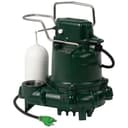
Zoeller M53 Mighty-Mate (Best Overall)
Homeowners who want a reliable, set-it-and-forget-it sump pump
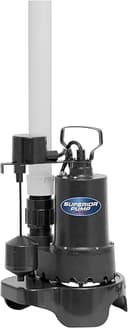
Superior Pump 92341 (Best Value)
Budget-conscious buyers who still want cast iron quality
If you are wondering what to look for in a sump pump, I think the stakes are worth understanding first. A flooded basement can cause $10,000 or more in damage. Ruined drywall, warped flooring, destroyed furniture, mold remediation. It adds up fast. A sump pump is the single most important defense against basement water damage, and picking the wrong one is almost as bad as not having one at all.
here's the truth about what to look for in a sump pump: most homeowners overthink horsepower and underthink everything else. The switch type, build material, and flow rate at your actual head pressure matter just as much as the motor. A 1/2 HP pump with a cheap tethered float switch in a narrow pit will jam and fail when you need it most. A properly sized 1/3 HP pump with a vertical float switch and cast iron housing will run reliably for a decade.
This guide walks you through every spec that matters so you can choose a sump pump that actually protects your home. No fluff, no filler, just the details that make the difference between a dry basement and a disaster.
Submersible vs. Pedestal: Which Type Do You Need?
The first decision is the pump type. There are two main options, and they work very differently.
Submersible Sump Pumps
A submersible pump sits inside the sump pit, fully submerged in water. The motor is sealed in a waterproof housing, and the entire unit is covered by an airtight lid.
Why most homeowners should choose submersible: The water cools the motor, which extends its lifespan. The sealed lid keeps debris out of the pit, reduces noise, and prevents humid air from entering your basement. Submersible pumps are also more powerful, making them the right choice for areas with moderate to heavy water intrusion.
The trade-off is maintenance access. When something goes wrong, you have to pull the pump out of the pit. That said, modern submersible pumps are designed for easy removal, and most homeowners only need to do this once every few years for cleaning.
Pedestal Sump Pumps
A pedestal pump sits above the pit on a column. Only the intake pipe reaches into the water. The motor stays dry and accessible.
Pedestal pumps cost less upfront and are easier to service since the motor is right there. But they are noisier, less powerful, and the exposed motor runs hotter because it lacks water cooling. They are best suited for homes with minimal water intrusion and narrow pits where a submersible unit won't fit.
My recommendation: I'd suggest going submersible unless your pit diameter is too small (under 10 inches) or your water issues are very mild. The noise reduction and reliability advantage are worth the slightly higher cost.
Horsepower: How Much Is Enough?
Horsepower is the spec everyone fixates on, but in my opinion, bigger is not always better. An oversized pump cycles on and off too quickly, which increases wear and shortens the motor's lifespan.
1/3 HP
The standard for most average-sized homes with a typical water table. A 1/3 HP submersible pump typically moves 2,500 to 3,400 GPH at low head heights. If your sump pit fills slowly during moderate rain and your discharge pipe has a short run, 1/3 HP handles the job without breaking a sweat.
1/2 HP
The sweet spot for homes with above-average water tables, longer discharge runs, or pits that fill quickly during heavy storms. A 1/2 HP pump pushes 3,000 to 4,400 GPH and handles greater vertical lift without losing significant flow. If you are unsure whether 1/3 HP is enough, I'd suggest stepping up to 1/2 HP. The price difference is usually $30 to $60, and the extra headroom is cheap insurance.
3/4 HP and Above
Reserve these for serious water problems: homes in flood plains, high water tables, deep basements, or properties where the discharge pipe runs a long distance or needs significant vertical lift. If your pit fills in minutes rather than hours, you need this much power. Otherwise, you are paying more and wearing out the pump faster with unnecessary short cycling.
Flow Rate (GPH) and Head Pressure
Flow rate tells you how many gallons per hour the pump can move. But here is the critical detail that most shoppers miss: the advertised GPH is measured at zero feet of lift. Your actual flow rate depends on head pressure.
What Is Head Pressure?
Head pressure is the total resistance the pump must overcome to push water out of your home. It has two components.
Static head is the vertical distance from the bottom of the sump pit to the point where the discharge pipe exits horizontally. If your pit is 3 feet deep and the pipe exits at ground level, that is about 3 feet of static head.
Friction head comes from the pipe itself. Longer runs, narrower pipes, elbows, check valves, and fittings all add friction. A standard rule of thumb: each 90-degree elbow adds about 1 foot of equivalent head, and every 10 feet of horizontal pipe adds roughly 1 foot.
Why This Matters
A pump rated at 3,400 GPH at 0 feet might only deliver 2,000 GPH at 10 feet of total head. Always check the manufacturer's performance curve, not just the headline GPH number. For most residential setups with 8 to 12 feet of total head, a 1/3 HP pump delivers 1,500 to 2,500 GPH, and a 1/2 HP pump delivers 2,500 to 3,500 GPH.
If you are not sure about your total head pressure, measure the vertical distance from your pit to the discharge point, add 1 foot for each elbow and check valve, and add 1 foot for every 10 feet of horizontal pipe. That total tells you exactly where to look on the performance chart.
Sump Pump Switch Types: The Part That Fails First
The float switch is the most failure-prone component in any sump pump. It determines when the pump turns on and off, and a stuck switch means either a flooded basement or a burned-out motor. Choosing the right switch type matters more than most people realize.
Tethered Float Switch
A tethered float hangs from a cord and swings up as water rises. These are reliable in large pits (14 inches or wider) where the float has room to move freely. In narrow pits, the float can catch on the pit wall or the discharge pipe and fail to activate. If your pit is small, avoid tethered floats entirely.
Vertical Float Switch
A vertical float rides up and down on a rod directly attached to the pump. Because it moves in a straight line, it works well in pits of all sizes, including narrow ones. Vertical floats are less prone to tangling or catching on debris. For most homeowners, this is the most reliable mechanical switch option.
Electronic Switch
Electronic switches use sensors (often pressure-based or conductivity-based) instead of a physical float. They have no moving parts, which eliminates the most common failure point. Electronic switches are the most reliable option, but they cost more and are typically found on higher-end pumps.
My recommendation: I'd go with a vertical float for most homeowners. Electronic if your budget allows and you want the highest reliability. Avoid tethered floats unless your pit is at least 14 inches in diameter.
Build Materials: Thermoplastic vs. Cast Iron
The housing material affects durability, heat dissipation, and long-term cost.
Thermoplastic (Plastic)
Thermoplastic pumps are lighter and cheaper. They will not rust. But plastic housings do not dissipate heat as effectively as metal, which means the motor runs hotter over time. Plastic impellers are also more vulnerable to damage from rocks or debris that get pulled into the pump. Thermoplastic housings can yellow, crack, and warp after years of use.
For light-duty applications or backup pumps, thermoplastic is fine. For your primary sump pump in a home with real water issues, it is worth spending more on cast iron.
Cast Iron
Cast iron is heavier, more expensive, and better in almost every performance category. The metal housing acts as a heat sink, pulling heat away from the motor and extending its lifespan significantly. Cast iron impellers handle debris better and resist stripping. A well-maintained cast iron pump can last 10 to 15 years or longer.
The one downside is that cast iron can corrode over time, though most modern pumps use epoxy coatings or stainless steel fasteners to combat this.
My recommendation: I think cast iron is the clear winner for your primary pump. The extra $30 to $80 pays for itself in longevity. Think of it this way: replacing a pump costs $150 to $400, plus your time and the risk of flooding while you are without one. Buy the pump that lasts.
Battery Backup: Do You Need One?
Power outages and sump pump failures tend to happen at the same time. Heavy storms knock out power lines while simultaneously dumping water into your foundation. If your pump cannot run without electricity, your basement is vulnerable exactly when the risk is highest.
Battery Backup Systems
A battery backup sump pump is a separate unit that kicks in when the primary pump loses power or fails. Most systems use a marine-grade deep-cycle battery or a maintenance-free AGM battery that charges continuously while the power is on.
Expect to pay $200 to $600 for the backup unit itself, plus installation costs if you are not doing it yourself. The battery typically needs replacement every 3 to 5 years (about $100 to $150 per battery).
Water-Powered Backup Pumps
If your home is on municipal water (not a well), a water-powered backup uses your home's water pressure to operate. No battery needed, no electricity required, and it runs indefinitely. The downside: it uses about 1 gallon of city water for every 2 gallons it pumps out, which can add up on your water bill during extended use.
Who Needs a Backup?
If you answer "yes" to any of these, get a battery backup:
- Your area experiences frequent power outages
- You have finished living space in the basement
- You store valuable items below grade
- You travel or are away from home frequently
- Your home is in a flood-prone area
What I find most important is this: a battery backup costs a fraction of what a single flooding event would. For most homeowners with a finished basement, I consider it non-negotiable.
Common Questions
How long do sump pumps last?
A quality submersible sump pump with a cast iron housing typically lasts 7 to 10 years with proper maintenance. Some last 15 years or more. Pedestal pumps can last longer (up to 25 years) since the motor stays dry, but they are less powerful. Thermoplastic pumps tend to have shorter lifespans, often 5 to 7 years.
What size sump pit do I need?
Most building codes require a minimum 18-inch diameter, 24-inch deep pit for submersible pumps. A larger pit gives the pump more water volume to work with per cycle, which reduces short cycling and motor wear. If you are installing a new pit, go with 24 inches in diameter if possible.
How often should I test my sump pump?
Test it every 3 to 4 months by pouring a bucket of water into the pit. The pump should activate, remove the water, and shut off cleanly. Before storm season is the most important time to test. Also check that the discharge pipe is clear and not frozen.
Can I install a sump pump myself?
Replacing an existing pump is a straightforward DIY project for most homeowners. Installing a new sump pit from scratch involves breaking concrete, digging, and connecting to drainage. That job usually warrants a professional. For a simple pump swap, budget about 30 to 60 minutes.
Our Top Recommendation
If you are in the market for a specific sump pump, check out our best sump pumps roundup, where we compare the top-rated models across every price point and use case.
For homes with plumbing upgrades on the agenda, our best tankless water heaters guide covers another high-impact home investment. And if you are thinking about protecting your pump and other basement electronics from voltage spikes, take a look at our best surge protectors picks.
Recommended Products
Ready to buy? These are the top picks from our best sump pump guide.
Zoeller M53 Mighty-Mate (Best Overall)
Zoeller M53 Mighty-Mate (Best Overall)
Homeowners who want a reliable, set-it-and-forget-it sump pump
Pros
- Industry-leading reliability backed by decades of plumber recommendations
- Integrated snap-action float switch eliminates tethered switch failures
- Cast iron construction dissipates heat and extends motor life
- LED power indicator on the plug for quick status checks
Cons
- 3/10 HP may not keep up in extreme flooding situations
- 9-foot cord can be short for some installations
- Higher price than budget alternatives for a 1/3 HP class pump
Superior Pump 92341 (Best Value)
Superior Pump 92341 (Best Value)
Budget-conscious buyers who still want cast iron quality
Pros
- Cast iron construction at a budget-friendly price
- Upgraded stainless steel impeller for improved durability
- 10-foot cord is longer than most competitors
- Fits in smaller sump pits thanks to vertical float design
Cons
- Float switch is not as refined as the Zoeller snap-action design
- Less established warranty support compared to Zoeller or Wayne
- Piggyback plug design adds bulk to the cord connection
Final Thoughts
Knowing what to look for in a sump pump comes down to six decisions: pump type, horsepower, flow rate at your actual head pressure, switch type, housing material, and whether you need a battery backup. Get those right, and your pump will run quietly in the background for years, doing its job without drama.
I'd say the ideal setup for most homes is a 1/3 HP or 1/2 HP submersible pump with a cast iron housing, a vertical float switch, and a battery backup. Do not overbuy on horsepower or underbuy on materials. That setup will cost $250 to $500 total, which is nothing compared to the cost of a single basement flood.
Start with the specs that match your actual water conditions, not the biggest, most expensive pump on the shelf. Your basement (and your wallet) will thank you.
Affiliate Disclosure
This post contains affiliate links. As an Amazon Associate, HomeBuildLab earns from qualifying purchases at no additional cost to you. Learn more
Looking for the right tools and products?
Check out our product reviews and buying guides to find the best gear for your project.
Browse Reviews