Tankless vs Tank Water Heater: Full Breakdown for 2026
Quick Comparison
| Product | Best For | Buy |
|---|---|---|
 Rinnai RU199iN (Best Overall) Rinnai · Natural Gas (120V electrical for ignition) · 64 lbs | Whole-house applications in homes with 2 to 4 bathrooms | |
 EcoSmart ECOS 27 (Best Electric, Whole House) EcoSmart · Electric (240V, 112.5 amps) · 10.9 lbs | Whole-house electric heating in moderate to warm climates |
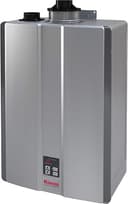
Rinnai RU199iN (Best Overall)
Whole-house applications in homes with 2 to 4 bathrooms
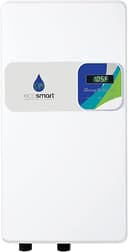
EcoSmart ECOS 27 (Best Electric, Whole House)
Whole-house electric heating in moderate to warm climates
The tankless vs tank water heater debate comes down to one honest question: how much are you willing to spend upfront to save money over time? Tankless units cost two to three times more to install, but they last twice as long and use 24-34% less energy. Tank heaters cost less to buy, less to install, and work reliably in every climate without sizing headaches.
Here's what most guides won't tell you. A tankless water heater doesn't always save you money. If you live in a cold climate, have a large household running multiple fixtures at once, or plan to move within five years, a traditional tank may actually be the smarter investment. In my opinion, the math only favors tankless when you stay in the home long enough to recoup the installation premium through energy savings.
I compared both systems across every factor that matters: energy efficiency, upfront cost, lifespan, maintenance, hot water delivery, and installation complexity. Here's the full tankless vs tank water heater breakdown.
Quick Answer: Tankless vs Tank Water Heater
Get tankless if you plan to stay in your home 10+ years, want endless hot water for one to two fixtures at a time, and can absorb a $3,000-$5,500 installation cost. Get a tank if you need lower upfront cost ($1,000-$2,000 installed), want reliable simultaneous hot water to multiple fixtures, or live in a cold climate where tankless GPM drops significantly. If I had to give one answer for the average homeowner, I'd say go tankless, but only if you plan to stay put.
Key Differences at a Glance
Factor: Upfront Cost (Installed) | Tank Water Heater: $1,000-$2,400 | Tankless Water Heater: $3,000-$5,500
Factor: Annual Energy Cost | Tank Water Heater: $400-$600 | Tankless Water Heater: $250-$400
Factor: Lifespan | Tank Water Heater: 8-12 years | Tankless Water Heater: 15-20 years
Factor: Energy Efficiency | Tank Water Heater: 58-65% (gas), 90-95% (electric) | Tankless Water Heater: 80-99% (gas condensing), 98-99% (electric)
Factor: Hot Water Delivery | Tank Water Heater: 40-80 gallons stored, then recovery wait | Tankless Water Heater: Unlimited, but limited by flow rate (GPM)
Factor: Space Footprint | Tank Water Heater: Large (60" tall, 24" diameter typical) | Tankless Water Heater: Compact (wall-mounted, about the size of a suitcase)
Factor: Maintenance | Tank Water Heater: Annual flush, anode rod every 3-5 years | Tankless Water Heater: Annual flush, descaling (more in hard water areas)
Factor: Installation Complexity | Tank Water Heater: Simple replacement | Tankless Water Heater: May require gas line upgrade, new venting, or electrical panel upgrade
Factor: Best For | Tank Water Heater: Budget-conscious homes, cold climates, high simultaneous demand | Tankless Water Heater: Long-term savings, small to mid-size homes, endless hot water for 1-2 fixtures
Tankless Water Heaters: When to Choose
Tankless water heaters heat water on demand as it flows through the unit. There is no storage tank, so there is no standby heat loss. That core difference drives every advantage (and limitation) of going tankless.
You want to stay in your home long-term. The break-even point for tankless is roughly 8-12 years, depending on your energy costs and usage. If you plan to live in the home for a decade or more, the energy savings and extended lifespan make the higher upfront cost worthwhile. If you're selling in five years, you probably won't recoup the investment. I think a tank heater is the better financial call for short-term ownership.
You want endless hot water for targeted use. A tankless system never runs out of hot water because it heats on demand. That's ideal for back-to-back showers, filling a soaking tub, or running a dishwasher cycle right after a shower. The catch is flow rate. Most whole-house gas tankless units deliver 5-8 GPM, which covers one to two simultaneous fixtures comfortably. If three people are showering while the dishwasher runs, you will notice a temperature drop.
You want to reclaim floor space. Tankless units mount on a wall and are roughly the size of a carry-on suitcase. If you're finishing a basement, converting a utility closet, or working with a tight mechanical room, the space savings are real. A traditional 50-gallon tank stands about 5 feet tall and 2 feet in diameter. That's significant square footage in a small home.
You prioritize long-term efficiency. According to the U.S. Department of Energy, tankless water heaters are 24-34% more efficient than tank models in homes that use 41 gallons or less of hot water daily. Even in high-use homes (86+ gallons per day), they still come in 8-14% more efficient. Over 15-20 years of operation, those savings compound.
Looking for specific models? Check our best tankless water heaters roundup for top picks across gas, electric, and point-of-use units. the Rinnai RU199iN and Rheem RTGH-95DVLN are the standout gas condensing models right now.
Tank Water Heaters: When to Choose
Tank water heaters store 40-80 gallons of preheated water and maintain it at temperature around the clock. They have been the standard in American homes for over a century, and there are several scenarios where they remain the better choice.
You need reliable simultaneous demand. A 50-gallon tank can deliver its full stored volume at any flow rate across multiple fixtures without temperature drops. Running two showers, the kitchen faucet, and the dishwasher at the same time? A tank handles that without hesitation. A tankless unit would struggle to maintain temperature across that many simultaneous draws.
You live in a cold climate. This is the factor most tankless advocates downplay, and it's what convinced me that tankless is not a universal answer. Incoming groundwater temperature directly affects tankless performance. In northern states, groundwater can drop to 40-50 degrees Fahrenheit in winter. A tankless unit rated for 8 GPM in Florida (where groundwater is 70-75 degrees) may only deliver 4-5 GPM in Minnesota. That means fewer simultaneous fixtures and potential temperature fluctuations during peak demand. Tank heaters are largely unaffected by incoming water temperature because the water is preheated and stored.
You want lower upfront and installation costs. A standard 50-gallon gas tank water heater costs $800-$1,500 for the unit and $500-$1,000 for installation, totaling $1,000-$2,400. A tankless system costs $1,000-$2,500 for the unit and $1,500-$3,000 for installation (often requiring gas line upgrades, new venting, or electrical panel work), totaling $3,000-$5,500. That's a $2,000-$3,000 premium for tankless.
You want simple, predictable replacement. When a tank heater fails, any plumber can replace it in a few hours with minimal modifications. Tankless replacement can involve more specialized labor, especially if your home was originally plumbed for a tank system.
Your home already has a tank setup. Switching from tank to tankless often requires upgrading your gas line (from 1/2" to 3/4"), installing new venting (direct vent or power vent), or upgrading your electrical panel for electric tankless models. These modifications can add $1,000-$2,000 to the installation cost. Replacing tank with tank avoids all of these expenses.
Tankless vs Tank Water Heater: Head-to-Head Breakdown
Energy Efficiency
Tankless wins on efficiency, and the gap is substantial. I'd call this the single strongest argument for going tankless. Traditional gas tank heaters operate at 58-65% efficiency (meaning 35-42% of the energy is wasted). Gas condensing tankless units achieve 90-98% efficiency. Electric tankless units hit 98-99% efficiency.
The biggest reason for the gap is standby heat loss. A tank heater maintains 40-80 gallons at 120 degrees around the clock, even when nobody is using hot water. That constant reheating accounts for a significant portion of your energy bill. Tankless units only fire when you open a hot water tap, so there is no standby loss.
In dollar terms, expect to save $100-$200 per year with a tankless system. That adds up over 15-20 years, but it takes 8-12 years to offset the higher installation cost.
Upfront Cost
Tank wins decisively on initial investment. A gas tank water heater runs $1,000-$2,400 installed. A tankless system runs $3,000-$5,500 installed. Electric tankless models are somewhat cheaper ($1,800-$4,200 installed), but they require significant amperage that many homes don't have without a panel upgrade.
Keep in mind that these costs assume a straightforward installation. If your home needs gas line upgrades, new venting, or electrical work to accommodate tankless, the price can climb higher. Tank replacements rarely involve these additional expenses because the infrastructure is already in place.
Lifespan
Tankless wins here, and this is one of its strongest arguments. A well-maintained tankless water heater lasts 15-20 years. Some manufacturers rate their units for 20+ years with proper maintenance. A traditional tank heater lasts 8-12 years before corrosion, sediment buildup, or anode rod failure leads to leaks and replacement.
Over a 20-year window, you will likely replace a tank heater twice while a single tankless unit keeps running. That second tank replacement ($1,000-$2,400) narrows the cost gap significantly. This is the detail that shifts the tankless vs tank water heater math most dramatically. When you factor in two tank replacements versus one tankless installation, the lifetime cost difference shrinks to a few hundred dollars in many scenarios.
Maintenance
Both systems require annual maintenance, but the tasks differ.
Tank maintenance involves an annual flush to remove sediment buildup, checking and replacing the anode rod every 3-5 years ($20-$50 for the rod, or $150-$250 if a plumber does it), and inspecting the temperature and pressure relief valve. Most homeowners can handle the annual flush themselves with a garden hose and 30 minutes. Neglecting these tasks shortens the tank's lifespan significantly.
Tankless maintenance involves an annual descaling flush using vinegar or a commercial descaling solution. This is especially important in hard water areas, where mineral buildup can reduce efficiency and damage the heat exchanger. The process takes about an hour and requires a flush kit ($100-$150 for the kit, or $150-$300 for professional service). Some manufacturers void the warranty if you skip annual descaling.
Neither system is maintenance-free. But if you live in a hard water area, tankless maintenance is more involved and more critical.
Hot Water Capacity
This comparison is less straightforward than it seems.
Tank heaters give you a fixed volume of hot water at full temperature. A 50-gallon tank provides roughly 35-40 gallons of usable hot water before it starts mixing in cold water (known as the first-hour rating). Once depleted, recovery takes 30-60 minutes for gas and 60-90 minutes for electric. If your household regularly empties the tank (large families, back-to-back showers), you know the frustration of running out of hot water.
Tankless heaters provide unlimited duration but limited flow. A gas tankless unit typically delivers 5-8 GPM, which means you can shower indefinitely, but you cannot run unlimited fixtures simultaneously. If your household's peak demand exceeds the unit's GPM capacity, water temperature drops across all fixtures.
For a household of two to three people with staggered usage patterns, tankless is ideal. For a large family where everyone showers in the same 30-minute window, a large tank (or even two) may be more practical.
Installation Complexity
Tank heaters are straightforward to install and even more straightforward to replace. The existing plumbing, gas line, and venting from the old unit typically work for the new one. Most installations take 2-4 hours.
Tankless installation is more involved. Gas tankless units often require a larger gas line (3/4" instead of 1/2"), a new venting configuration (category III stainless steel venting), and potentially a condensate drain for condensing units. Electric tankless units may require a 200-amp electrical panel (many older homes have 100-150 amp panels) and multiple dedicated circuits. These upgrades add time and cost.
If your home was built with tankless in mind (or if you're building new), the installation complexity is minimal. Retrofitting an older home is where costs and complications multiply.
Which System Saves More Money Over 20 Years?
Let's run the numbers on a typical scenario.
Tank (gas, 50-gallon):
- Initial install: $1,800
- Annual energy cost: $500
- Replacement at year 10: $1,800
- Total over 20 years: $13,600 ($1,800 + $10,000 energy + $1,800 replacement)
Tankless (gas condensing):
- Initial install: $4,500
- Annual energy cost: $350
- No replacement needed
- Total over 20 years: $11,500 ($4,500 + $7,000 energy)
In this scenario, tankless saves roughly $2,100 over 20 years. But change the variables (shorter ownership period, lower energy costs, higher tankless installation due to retrofitting) and the savings shrink or disappear. I've run this comparison multiple ways, and the math is not as dramatic as tankless marketing suggests. The tankless vs tank water heater cost gap narrows quickly when real-world variables shift.
My Recommendation
For most homeowners who plan to stay in their home 10+ years: I recommend going tankless. The combination of 15-20 year lifespan, 24-34% energy savings, endless hot water, and compact size makes it the better long-term investment. Budget $3,000-$5,500 for a quality gas condensing unit professionally installed.
For homeowners on a budget, in cold climates, or planning to move within 5-7 years: I'd go with a tank. The lower upfront cost ($1,000-$2,400), reliable simultaneous demand, and simpler installation make it the smarter choice when long-term savings aren't in the picture.
For new construction: I always recommend tankless here. When the gas lines, venting, and electrical are being installed from scratch, you eliminate the biggest cost penalty of tankless (retrofitting). The incremental cost over tank in new construction is much smaller, and you get the full lifespan and efficiency benefits.
Upgrading your bathroom alongside a new water heater? A quality shower head can make a noticeable difference in both water pressure perception and water consumption. And if you're tackling a broader plumbing renovation, our best toilets roundup covers water-efficient models that pair well with either system.
Recommended Products
Ready to buy? These are the top picks from our best tankless water heater guide.
Rinnai RU199iN (Best Overall)
Rinnai RU199iN (Best Overall)
Whole-house applications in homes with 2 to 4 bathrooms
Pros
- 11 GPM handles large households with multiple simultaneous fixtures
- Condensing design allows affordable PVC/CPVC venting
- Circ-Logic recirculation reduces wait time for hot water
- 15-year heat exchanger warranty with strong parts ecosystem
Cons
- Premium price point around $1,550 (unit only, installation extra)
- Wi-Fi module sold separately
- Requires condensate neutralizer kit (sometimes sold separately)
EcoSmart ECOS 27 (Best Electric, Whole House)
EcoSmart ECOS 27 (Best Electric, Whole House)
Whole-house electric heating in moderate to warm climates
Pros
- 96% thermal energy efficiency (no combustion or venting losses)
- Self-modulating technology reduces energy waste
- Compact, lightweight wall-mount design (10.9 lbs, 4.25" deep)
- Holds output within 1 degree of the set temperature
Cons
- GPM drops significantly in cold climates (as low as 2.7 GPM with cold inlet water)
- Draws 112.5 amps, so most homes need 200-amp service and dedicated circuits
- Short warranty (5 years on leaks, 1 year on parts) and few user reviews so far
Final Thoughts on Tankless vs Tank Water Heaters
The tankless vs tank water heater decision is ultimately a math problem shaped by your specific situation. Tankless systems are more efficient, last longer, and provide endless hot water. But they cost significantly more to install, especially in older homes, and their flow rate limitations matter in cold climates and high-demand households.
I think the biggest mistake people make in the tankless vs tank water heater debate is assuming one option is universally better. A tank water heater is not an inferior product. It is a proven, affordable, and effective system that works well for millions of homes. And a tankless water heater is not a luxury upgrade. It is a long-term investment that pays off under the right conditions.
Run the numbers for your home. Consider your climate, your household size, your ownership timeline, and your budget. the right answer is always the one that matches your actual situation, not the one that sounds more modern. If you're leaning toward tankless, start with our best tankless water heater picks. If a tank makes more sense, a quality 50-gallon gas model from Rheem or A.O. Smith will serve you well for a decade.
Affiliate Disclosure
This post contains affiliate links. As an Amazon Associate, HomeBuildLab earns from qualifying purchases at no additional cost to you. Learn more
Looking for the right tools and products?
Check out our product reviews and buying guides to find the best gear for your project.
Browse Reviews