One-Piece vs Two-Piece Toilet: Which Design Is Worth Your Money?
Quick Comparison
| Product | Best For | Buy |
|---|---|---|
 TOTO UltraMax II MS604124CEFG (Best One-Piece) TOTO · ~99 lbs | Buyers who want the Drake's performance in a sleek, easy-to-clean one-piece body | |
 TOTO Drake MS776124CEFG (Best Overall) TOTO · ~94 lbs (assembled) | Anyone who wants a reliable, proven toilet that plumbers consistently recommend |
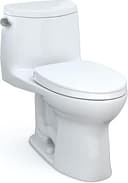
TOTO UltraMax II MS604124CEFG (Best One-Piece)
Buyers who want the Drake's performance in a sleek, easy-to-clean one-piece body
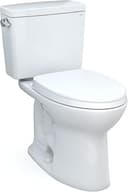
TOTO Drake MS776124CEFG (Best Overall)
Anyone who wants a reliable, proven toilet that plumbers consistently recommend
The one-piece vs two-piece toilet debate sounds like a minor decision. It's not. I've spent a lot of time researching this comparison, and the design you pick affects how easy the toilet is to clean, how much you'll spend, how simple the installation is, and how long the unit lasts before you need repairs.
Here's the truth: neither design is objectively better. They use the same flushing mechanisms, the same water consumption (1.28 or 1.6 GPF), and the same trapway designs. The real differences come down to form factor, maintenance, and budget. Once you understand those tradeoffs, the right choice becomes obvious for your situation.
If you're in the middle of a full bathroom remodel, you'll also want to check our picks for the best bathroom faucet and best shower head to round out the project.
Quick Answer: One-Piece vs Two-Piece Toilet
Get a one-piece toilet if you want easier cleaning, a sleeker look, and you're willing to pay more upfront for a toilet that has no tank-to-bowl seam to leak or collect grime.
Get a two-piece toilet if you want to save $100 to $300, need easier transport up stairs or through tight doorways, and prefer the widest selection of replacement parts. I think the two-piece is the better value for most people.
Key Differences at a Glance
Feature: Design | One-Piece: Tank and bowl fused into a single unit | Two-Piece: Separate tank bolted onto the bowl
Feature: Typical Price | One-Piece: $300 to $800+ | Two-Piece: $150 to $400
Feature: Weight | One-Piece: 80 to 120 lbs (one heavy piece) | Two-Piece: 60 to 100 lbs (split across two pieces)
Feature: Cleaning | One-Piece: Easier, no seam between tank and bowl | Two-Piece: Harder, grime collects at the tank-to-bowl joint
Feature: Installation | One-Piece: Heavier to lift, but fewer assembly steps | Two-Piece: Lighter per piece, but requires bolting tank to bowl
Feature: Leak Risk | One-Piece: Lower (no tank-to-bowl gasket) | Two-Piece: Higher (gasket between tank and bowl can fail)
Feature: Repair | One-Piece: Harder to find individual components | Two-Piece: Easier, can replace tank or bowl separately
Feature: Style | One-Piece: Sleek, modern, low-profile | Two-Piece: Traditional, taller profile
Feature: Selection | One-Piece: Fewer models available | Two-Piece: Widest variety of brands, heights, and styles
One-Piece Toilets: When to Choose
A one-piece toilet fuses the tank and bowl into a single unit during manufacturing. There's no seam, no joint, and no bolts connecting two separate parts. That simple structural difference creates several practical advantages.
Easier Cleaning
This is the biggest selling point, and it's legitimate. In my opinion, it's the single strongest reason to go one-piece. The junction where the tank meets the bowl on a two-piece toilet is a magnet for dust, mold, and grime. You can't wipe it easily, and over time it discolors. A one-piece toilet eliminates that seam entirely. One smooth surface from the back of the tank down to the base means a quick wipe handles the entire exterior.
If you've ever spent ten minutes with a toothbrush scrubbing the crevice behind a two-piece tank, you already understand why people switch to one-piece.
No Tank-to-Bowl Leak
Two-piece toilets rely on a rubber gasket and bolts to seal the tank to the bowl. That gasket degrades over time. When it fails, water leaks onto your bathroom floor, often without you noticing until there's water damage. I've researched enough plumber forums to know this is one of the most common toilet repair calls. One-piece toilets eliminate this failure point completely. The tank and bowl are a single casting, so there's nothing to seal and nothing to leak.
Sleeker Appearance
One-piece toilets sit lower and have a more streamlined profile. The smooth, continuous shape looks modern and fits well in contemporary bathroom designs. If aesthetics matter to your remodel, the one-piece wins on visual appeal.
Slightly Smaller Footprint
Because the tank and bowl are integrated, many one-piece models have a slightly more compact overall footprint. The difference is typically an inch or two, not dramatic, but it can matter in a tight half-bath.
Two-Piece Toilets: When to Choose
Two-piece toilets have been the standard design for over a century. The tank and bowl are manufactured separately, shipped separately, and bolted together during installation. That traditional approach has real advantages that keep two-piece models dominant in the market.
Significantly Cheaper
This is the strongest argument for two-piece toilets, and I think it's the one that should carry the most weight for budget-conscious homeowners. A quality two-piece from TOTO, American Standard, or Kohler runs $150 to $400. A comparable one-piece from the same brands runs $300 to $800 or more. You're paying $100 to $300 extra for the one-piece design, and that money doesn't buy you better flushing performance. It buys you easier cleaning and aesthetics.
If you're outfitting multiple bathrooms, the savings add up fast. Three two-piece toilets at $200 each versus three one-piece toilets at $500 each is a $900 difference.
Easier to Transport and Maneuver
A one-piece toilet weighs 80 to 120 pounds in a single, awkward-shaped unit. Carrying it up a flight of stairs or through a narrow hallway is a two-person job, and even then it's unpleasant. A two-piece toilet splits that weight into two manageable boxes. The bowl weighs roughly 40 to 60 pounds, and the tank weighs 20 to 35 pounds. One person can carry each piece separately.
For second-floor bathrooms or homes with tight doorways, this practical advantage matters more than any style consideration.
More Replacement Options
If the tank cracks on a two-piece toilet, you replace the tank. If the bowl cracks, you replace the bowl. Parts are widely available, and tanks from the same manufacturer are often interchangeable across models. With a one-piece toilet, a crack in either the tank or bowl section means replacing the entire unit. That's a $300 to $800 expense versus a $50 to $150 part swap.
Internal components (flappers, fill valves, flush valves) are identical between one-piece and two-piece toilets. The repair difference only matters for the porcelain itself.
Widest Variety Available
Two-piece toilets come in more heights, more rough-in sizes, more bowl shapes, and more price points than one-piece models. If you need a specific rough-in measurement (10-inch or 14-inch instead of the standard 12-inch) or want a chair-height bowl with a particular flush rating, you'll find more options in two-piece designs.
One-Piece vs Two-Piece Toilet: Head-to-Head Breakdown
Price
Winner: Two-piece. Expect to pay $150 to $400 for a quality two-piece toilet, compared to $300 to $800+ for a one-piece. The flushing performance at a given price point is essentially identical. The premium you pay for one-piece goes toward the seamless construction and cleaner appearance.
Cleaning and Maintenance
Winner: One-piece. No contest. The absence of a tank-to-bowl seam makes routine cleaning faster and more thorough. Over the life of the toilet, you'll spend less time scrubbing and never deal with grime buildup in that hard-to-reach joint.
Durability
Winner: Tie. Both designs use the same vitreous china construction and the same internal components. The one-piece has a slight edge because there's no gasket to degrade, but the actual porcelain durability is equivalent. A well-maintained toilet of either design lasts 25 to 50 years.
Installation
Winner: Depends. One-piece toilets have fewer assembly steps (no tank-to-bowl bolting), but the sheer weight makes them harder to position over the flange. Two-piece toilets require more steps (mount the bowl, then attach the tank), but each step involves less weight. I'd pick two-piece every time for a solo DIY install. For a plumber with a helper, one-piece is faster.
Repair
Winner: Two-piece. The ability to replace just the tank or just the bowl independently is a genuine advantage. Internal components (fill valve, flush valve, flapper) are the same for both designs and equally easy to replace. But if porcelain cracks or chips, two-piece toilets are far cheaper to fix.
Style and Aesthetics
Winner: One-piece. What I like most about one-piece toilets is the streamlined, low-profile look. They fit modern bathroom designs better than the taller, segmented profile of a two-piece. If you're investing in a bathroom remodel where design matters, the one-piece looks the part.
Our Recommendation
For most homeowners, I'd recommend a two-piece toilet as the smarter buy. The savings are real, the performance is identical, and the wider parts availability gives you long-term flexibility. Brands like TOTO, American Standard, and Kohler offer excellent two-piece models in the $200 to $350 range that will last decades. Check our best toilet roundup for specific models I recommend.
Choose a one-piece toilet if you're remodeling a primary bathroom where aesthetics matter, you value easy cleaning, and the $100 to $300 premium fits your budget. the TOTO Ultramax II and Kohler Santa Rosa are two of the most popular one-piece models for good reason: they combine the seamless design with strong flushing performance.
For a powder room or guest bath that gets cleaned less frequently but doesn't need to impress, the two-piece saves money without sacrificing anything you'll notice during daily use.
Recommended Products
Ready to buy? These are the top picks from our best toilet guide.
TOTO UltraMax II MS604124CEFG (Best One-Piece)
TOTO UltraMax II MS604124CEFG (Best One-Piece)
Buyers who want the Drake's performance in a sleek, easy-to-clean one-piece body
Pros
- Seamless one-piece design is significantly easier to clean
- Same proven Tornado Flush and CEFIONTECT technology as the Drake
- SoftClose seat included
- WASHLET+ ready for bidet seat upgrades
Cons
- Heavier than two-piece models (around 99 lbs), making solo installation difficult
- Premium price point at roughly $530
- More expensive to replace if the bowl or tank area cracks (entire unit must be swapped)
TOTO Drake MS776124CEFG (Best Overall)
TOTO Drake MS776124CEFG (Best Overall)
Anyone who wants a reliable, proven toilet that plumbers consistently recommend
Pros
- Tornado Flush provides thorough, powerful bowl cleaning in a single flush
- CEFIONTECT glaze keeps the bowl cleaner between scrubs
- SoftClose seat included in the box
- WASHLET+ compatible for future bidet seat upgrades
Cons
- Higher price point than budget options (around $475)
- Two-piece design requires more cleaning around the tank-to-bowl junction
- Universal height may not suit very short users or young children
Final Thoughts
The one-piece vs two-piece toilet decision comes down to three honest questions. How much do you want to spend? How much do you care about cleaning convenience? And how important is the visual design in your bathroom?
If budget is your priority, two-piece toilets deliver the same flushing power for significantly less money. If easy cleaning and modern style are worth paying extra, one-piece toilets earn their premium. I think most people overthink this choice. Neither design flushes better, uses less water, or lasts longer than the other. The core plumbing performance is identical.
Pick the design that matches your budget and your bathroom goals, pair it with the right faucet and shower head, and your bathroom upgrade will serve you well for decades.
Affiliate Disclosure
This post contains affiliate links. As an Amazon Associate, HomeBuildLab earns from qualifying purchases at no additional cost to you. Learn more
Looking for the right tools and products?
Check out our product reviews and buying guides to find the best gear for your project.
Browse Reviews