How Tankless Water Heaters Work: The Science Behind On-Demand Hot Water
Quick Comparison
| Product | Best For | Buy |
|---|---|---|
 Rinnai RU199iN (Best Overall) Rinnai · Natural Gas (120V electrical for ignition) · 64 lbs | Whole-house applications in homes with 2 to 4 bathrooms | |
 EcoSmart ECOS 27 (Best Electric, Whole House) EcoSmart · Electric (240V, 112.5 amps) · 10.9 lbs | Whole-house electric heating in moderate to warm climates |
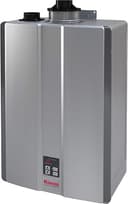
Rinnai RU199iN (Best Overall)
Whole-house applications in homes with 2 to 4 bathrooms
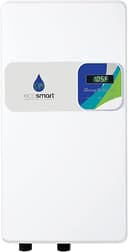
EcoSmart ECOS 27 (Best Electric, Whole House)
Whole-house electric heating in moderate to warm climates
If you have ever run out of hot water mid-shower, you have wondered whether a tankless water heater could solve the problem. I think understanding how tankless water heaters work is the first step toward deciding if one belongs in your home. The short version: instead of storing 40 to 80 gallons of preheated water in a tank, a tankless unit heats water the instant you turn on the faucet. No tank, no standby heat loss, no waiting for a reservoir to refill.
But "instant hot water" is a simplification that glosses over some important details. tankless water heaters have real limitations around flow rate, temperature rise, and simultaneous demand. Before you invest $1,000 to $3,000 in a unit (plus installation), you should understand exactly what is happening inside the box on your wall.
How Tankless Water Heaters Work: The Basic Principle
A traditional tank water heater keeps a large volume of water hot around the clock, whether you need it or not. A tankless unit takes the opposite approach. It only fires up when water is flowing.
Here is the sequence of events when you open a hot water faucet:
- Water flow is detected. A flow sensor inside the unit registers that water is moving through the pipe. Most units activate at a minimum flow rate of around 0.5 GPM.
- The burner or heating element ignites. In a gas unit, an electronic ignition lights the burner. In an electric unit, heating elements energize instantly.
- Water passes through the heat exchanger. This is the core component. The heat exchanger is a series of copper or stainless steel coils (in gas models) or chambers with embedded heating elements (in electric models). Cold water enters one side and exits the other side hot. The large surface area of the coils allows rapid heat transfer.
- A mixing valve regulates output temperature. A thermistor measures the outgoing water temperature and adjusts the flame intensity or element power to maintain your set point, typically 120 degrees Fahrenheit.
- You close the faucet, and the unit shuts off. No flame, no electricity draw (beyond a small standby current), no energy wasted keeping water hot.
The entire process takes just a few seconds from the moment water starts flowing. What I find most important is the heat exchanger, the true hero of the system. Its compact, high-surface-area design is what makes it possible to raise water temperature by 50 to 70 degrees Fahrenheit in the time it takes water to travel through a few feet of coiled tubing. Once you understand how tankless water heaters work at this level, the rest of the technology clicks into place.
Gas vs Electric Tankless: How Each Type Heats Water
Both types accomplish the same goal, but the mechanics differ significantly. In my opinion, understanding these differences is essential before you choose one over the other.
Gas Tankless Water Heaters
Gas units use a burner (natural gas or propane) positioned below the heat exchanger. When the flow sensor triggers, the electronic ignition sparks the burner. Hot combustion gases rise through the heat exchanger coils, transferring energy to the water inside. Exhaust gases vent through a dedicated flue.
Gas models are powerful. Most residential units produce between 150,000 and 199,000 BTU per hour. That translates to flow rates of 8 to 10 GPM in warm climates and 5 to 7 GPM in cold climates. They require a gas line, proper venting (either direct vent or power vent), and adequate combustion air supply.
Condensing gas models take efficiency a step further. They use a secondary heat exchanger to capture heat from exhaust gases before they leave the unit, pushing efficiency from the standard 80 to 85 percent up to 90 to 98 percent. The trade-off is a higher purchase price and the need for a condensate drain.
Electric Tankless Water Heaters
Electric units use thick copper heating elements immersed directly in the water path. When flow is detected, the elements heat up almost instantly. There is no combustion, no venting, and no exhaust. I'd suggest looking at electric models first if your home already has a 200-amp panel and you want a simpler installation.
Electric models are simpler to install but less powerful. A whole-house electric unit typically draws 18 to 36 kilowatts, which requires a 200-amp electrical panel and dedicated circuits. Flow rates for electric models range from 2 to 5 GPM depending on the required temperature rise. That makes them a better fit for smaller homes, single-application use (one shower at a time), or point-of-use installations under a sink.
The upside is near-perfect efficiency. Electric tankless units convert virtually 99 percent of their energy input into heated water, compared to 80 to 98 percent for gas models.
Flow Rate and Temperature Rise: The Two Numbers That Matter
If you take away one thing from this article, let it be this: a tankless water heater's capacity is not a fixed number. It depends on two variables that change constantly. I think this is the most misunderstood aspect of how tankless water heaters work, and it trips up more buyers than anything else.
Flow rate (GPM) is how much water you are drawing at any given moment. Common fixture flow rates include:
- Bathroom faucet: 0.5 to 1.5 GPM
- Kitchen faucet: 1.5 to 2.2 GPM
- Shower: 2.0 to 2.5 GPM
- Dishwasher: 1.0 to 1.5 GPM
- Washing machine: 1.5 to 3.0 GPM
Temperature rise is the difference between the incoming cold water temperature and your desired output temperature. If your groundwater enters at 50 degrees Fahrenheit and you want 120-degree water at the tap, the unit needs to produce a 70-degree temperature rise.
Here is why this matters: the higher the required temperature rise, the lower the maximum flow rate. A gas unit rated at 10 GPM with a 35-degree rise might only deliver 5 GPM at a 70-degree rise. The math is straightforward:
BTU required = Flow Rate (GPM) x Temperature Rise (degrees F) x 500
For example, delivering 5 GPM at a 70-degree rise requires 175,000 BTU per hour. That is near the upper limit of most residential gas tankless units.
This is also why geography matters. From manufacturer specs and user feedback, the same tankless unit that comfortably serves a household in Florida (where groundwater enters at 72 degrees Fahrenheit, requiring only a 48-degree rise) may struggle to keep up in Minnesota (where groundwater can be as cold as 37 degrees, demanding an 83-degree rise).
What Happens When You Open Multiple Faucets?
This is where tankless water heaters reveal their biggest limitation, and I think it is the number one source of buyer disappointment. Every fixture you open adds to the total flow rate demand.
Say you are running a shower at 2.5 GPM while someone starts the dishwasher at 1.5 GPM. That is 4.0 GPM of simultaneous demand. If your unit maxes out at 5 GPM (at your local temperature rise), you still have about 1 GPM of headroom. Add a second shower and you are asking for 6.5 GPM or more, which exceeds capacity.
When demand exceeds capacity, one of two things happens:
- The water temperature drops. The unit cannot heat water fast enough at that flow rate, so the output temperature falls below your set point.
- The unit shuts off entirely. Some models have a safety cutoff if they cannot maintain minimum temperature thresholds.
This is why sizing a tankless water heater correctly is critical. You need to estimate your household's peak simultaneous demand and match it to a unit that can handle that flow rate at your local groundwater temperature.
For large households that regularly run multiple hot water fixtures at once, some installers recommend running two tankless units in parallel. I'd suggest also considering a hybrid approach: a tankless unit paired with a small buffer tank to handle demand spikes. Knowing how tankless water heaters work under heavy load helps you plan for these scenarios.
Pros and Cons of Tankless Water Heaters
Advantages
- No standby heat loss. Tank water heaters lose heat continuously through the tank walls, even with insulation. According to the U.S. Department of Energy, tankless units are 24 to 34 percent more energy efficient for homes using 41 gallons or less per day, and 8 to 14 percent more efficient for high-usage homes.
- Continuous hot water. As long as you stay within the unit's flow rate capacity, you will never run out of hot water. There is no tank to deplete.
- Longer lifespan. Tank water heaters typically last 8 to 12 years. Tankless units commonly last 20 years or more with proper maintenance.
- Compact size. A tankless unit mounts on a wall and takes up roughly the space of a carry-on suitcase, freeing up the floor space a 60-gallon tank would occupy.
- ENERGY STAR savings. Certified gas tankless units save a typical family of four approximately $95 per year in energy costs compared to a standard tank, adding up to $1,800 over the unit's lifetime.
Disadvantages
- Higher upfront cost. A quality tankless unit costs $1,000 to $2,000 for the unit alone, plus $500 to $1,500 for installation (more if you need to upgrade your gas line or electrical panel).
- Flow rate limitations. Running three showers simultaneously will overwhelm most single tankless units, something a large tank water heater handles without issue.
- Cold water sandwich effect. If you turn off a faucet and turn it back on quickly, you may get a brief burst of hot water (left in the pipes) followed by cold water (before the unit re-fires), then hot again. This is annoying but not a dealbreaker.
- Maintenance requirements. In areas with hard water, mineral buildup inside the heat exchanger requires annual flushing with vinegar or a descaling solution. Skip this and efficiency drops, eventually leading to failure.
- Minimum flow rate threshold. If you barely crack a faucet below the unit's activation threshold (usually around 0.5 GPM), the heater will not fire. Low-flow fixtures can sometimes trigger this issue.
Common Misconceptions
"Tankless means instant hot water." Not exactly. The unit heats water almost instantly once flow is detected, but you still have to wait for the hot water to travel through your pipes from the heater to the faucet. If your best shower head is 50 feet of pipe away from the unit, you will wait just as long as you would with a tank heater. A recirculation pump (built into some models, or added separately) can solve this by keeping hot water in the loop.
"A tankless heater uses zero energy on standby." Almost, but not quite. Gas models with an electronic ignition draw a small amount of electricity for the control board, typically 3 to 5 watts. That is negligible, but it is not zero. Some older models with standing pilot lights burn gas continuously, though most modern units have eliminated this.
"Tankless heaters work for every home." They work well for many homes, but not all. If your household regularly demands high simultaneous flow (large family, multiple bathrooms in use at once), a single tankless unit may not cut it. Homes with very hard water face higher maintenance demands. And if your electrical panel is already maxed out, installing a whole-house electric tankless unit may require an expensive panel upgrade.
"You will save a fortune on energy bills." The savings are real but modest. For a family of four, expect around $95 per year in gas savings over a standard tank, according to ENERGY STAR data. That does not offset the higher purchase and installation cost for many years. The bigger financial argument for tankless is the longer lifespan (20 years vs 10 to 12), which means fewer replacement cycles over the life of your home.
Is a Tankless Water Heater Right for Your Home?
Consider a tankless water heater if:
- Your household uses less than 41 gallons per day. This is where the energy savings are most significant (24 to 34 percent over a tank).
- You rarely run more than two hot water fixtures at once. A single gas tankless unit handles a shower plus a kitchen faucet without breaking a sweat.
- You plan to stay in the home long-term. The payback period on the higher upfront cost typically takes 6 to 12 years, but the unit should last 20 years or more.
- You are replacing an aging tank heater anyway. If your current tank is nearing the end of its life, switching to tankless is easier to justify financially.
- Space is a constraint. Apartments, tiny homes, and finished basements benefit from the compact wall-mount design.
Stick with a tank water heater if:
- Your household has heavy simultaneous demand. Five people getting ready for work in the morning, all needing showers, plus a running dishwasher and laundry, will push past a single tankless unit's limits.
- You have very hard water and no softener. Annual descaling is non-negotiable with tankless, and hard water accelerates the need.
- Your budget is tight. A quality tank water heater costs $400 to $800 installed, roughly half the cost of a tankless setup.
For a side-by-side breakdown of costs, efficiency, and performance, check out our tankless vs tank water heater comparison. And if you have already decided to go tankless, our best tankless water heater roundup covers the top models across gas and electric.
Recommended Products
Ready to buy? These are the top picks from our best tankless water heater guide.
Rinnai RU199iN (Best Overall)
Rinnai RU199iN (Best Overall)
Whole-house applications in homes with 2 to 4 bathrooms
Pros
- 11 GPM handles large households with multiple simultaneous fixtures
- Condensing design allows affordable PVC/CPVC venting
- Circ-Logic recirculation reduces wait time for hot water
- 15-year heat exchanger warranty with strong parts ecosystem
Cons
- Premium price point around $1,550 (unit only, installation extra)
- Wi-Fi module sold separately
- Requires condensate neutralizer kit (sometimes sold separately)
EcoSmart ECOS 27 (Best Electric, Whole House)
EcoSmart ECOS 27 (Best Electric, Whole House)
Whole-house electric heating in moderate to warm climates
Pros
- 96% thermal energy efficiency (no combustion or venting losses)
- Self-modulating technology reduces energy waste
- Compact, lightweight wall-mount design (10.9 lbs, 4.25" deep)
- Holds output within 1 degree of the set temperature
Cons
- GPM drops significantly in cold climates (as low as 2.7 GPM with cold inlet water)
- Draws 112.5 amps, so most homes need 200-amp service and dedicated circuits
- Short warranty (5 years on leaks, 1 year on parts) and few user reviews so far
Final Thoughts
Now that you understand how tankless water heaters work, the decision comes down to matching the technology to your household's hot water habits. The heat exchanger, flow sensor, and modulating burner (or electric elements) combine to deliver hot water on demand, but only within the constraints of flow rate and temperature rise. There is no magic. Just smart engineering with clear trade-offs.
In my opinion, the single most important step is sizing the unit to your peak demand. Factor in your local groundwater temperature and budget for professional installation. If you do the homework, a tankless water heater can deliver decades of efficient, uninterrupted hot water. If you skip it, you will end up with lukewarm showers and a pricey regret mounted on your wall. I researched dozens of models and owner experiences while putting this guide together, and the pattern is clear: the homeowners who take time to learn how tankless water heaters work before buying are the ones who end up satisfied.
Affiliate Disclosure
This post contains affiliate links. As an Amazon Associate, HomeBuildLab earns from qualifying purchases at no additional cost to you. Learn more
Looking for the right tools and products?
Check out our product reviews and buying guides to find the best gear for your project.
Browse Reviews