Best Tankless Water Heaters: Endless Hot Water, Lower Energy Bills
Quick Comparison
| Product | Best For | Buy |
|---|---|---|
 Rinnai RU199iN (Best Overall) Rinnai · Natural Gas (120V electrical for ignition) · 64 lbs | Whole-house applications in homes with 2 to 4 bathrooms | |
 EcoSmart ECOS 27 (Best Electric, Whole House) EcoSmart · Electric (240V, 112.5 amps) · 10.9 lbs | Whole-house electric heating in moderate to warm climates | |
 Rheem RTGH-95DVLN-3 (Best Gas Value) Rheem · Natural Gas (120V electrical for ignition) · 53 lbs | Mid-size to large homes wanting condensing efficiency at a competitive price | |
Navien NPE-240A2 (Best Premium Gas) Navien · Natural Gas (120V electrical) · 77 lbs | Homeowners who want the highest efficiency and fastest hot water delivery | |
 Rinnai V65iN (Best Budget Gas) Rinnai · Natural Gas (120V electrical for ignition) · 45.6 lbs | Small to medium homes (1 to 2 bathrooms) or tank-to-tankless upgrades on a budget | |
 Stiebel Eltron Tempra 29 Plus (Best Electric, Premium) Stiebel Eltron · Electric (3x 40-amp breakers) · 19 lbs | Households wanting the most precise electric temperature control available | |
 Noritz EZ111-DV-NG (Best for Durability) Noritz · Natural Gas (120V electrical) · 76 lbs | Buy-it-once homeowners who want the longest warranty and easiest tank replacement |
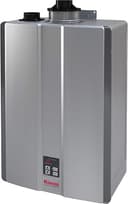
Rinnai RU199iN (Best Overall)
Whole-house applications in homes with 2 to 4 bathrooms
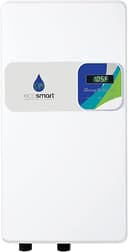
EcoSmart ECOS 27 (Best Electric, Whole House)
Whole-house electric heating in moderate to warm climates
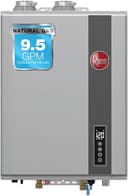
Rheem RTGH-95DVLN-3 (Best Gas Value)
Mid-size to large homes wanting condensing efficiency at a competitive price
Navien NPE-240A2 (Best Premium Gas)
Homeowners who want the highest efficiency and fastest hot water delivery
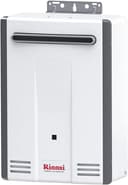
Rinnai V65iN (Best Budget Gas)
Small to medium homes (1 to 2 bathrooms) or tank-to-tankless upgrades on a budget
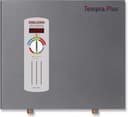
Stiebel Eltron Tempra 29 Plus (Best Electric, Premium)
Households wanting the most precise electric temperature control available
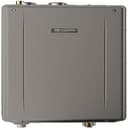
Noritz EZ111-DV-NG (Best for Durability)
Buy-it-once homeowners who want the longest warranty and easiest tank replacement
If you have ever run out of hot water mid-shower, you already understand the appeal of finding the best tankless water heater for your home. These compact, wall-mounted units heat water on demand rather than storing 40 or 50 gallons in a tank that slowly loses heat around the clock. The result is lower energy bills, unlimited hot water, and a unit that lasts 20 years instead of 10.
But choosing the right tankless water heater is not as simple as picking the one with the highest GPM rating on the box. Gas and electric models serve completely different situations. A high-flow gas unit that powers a four-bathroom house is overkill (and a waste of money) for a small condo. An electric point-of-use heater that works perfectly under a bathroom sink will leave you freezing if you try to run two showers at once.
I compared seven tankless water heaters across gas and electric, whole-house and point-of-use, budget and premium categories. Whether you are replacing an old tank or building new, this guide covers the models I think are worth your money and the ones to skip.
Quick Picks: Best Tankless Water Heaters at a Glance
- Best Overall: Rinnai RU199iN. I'd pick this for most homes. Condensing gas, 11 GPM, 0.93 UEF, and a 15-year heat exchanger warranty.
- Best Electric (Whole House): EcoSmart ECOS 27. 27 kW with self-modulating technology, up to 6.6 GPM, and a slim 4.25-inch-deep wall-mount body.
- Best Gas Value: Rheem RTGH-95DVLN-3. My value pick. Condensing design, 9.5 GPM, Wi-Fi built in, and a solid 12-year heat exchanger warranty.
- Best Premium Gas: Navien NPE-240A2. Built-in recirculation pump, 0.95 UEF, and the quietest operation in this roundup.
- Best Budget Gas: Rinnai V65iN. Reliable non-condensing unit at 6.5 GPM for smaller homes on a budget.
- Best Electric (Premium): Stiebel Eltron Tempra 29 Plus. German engineering, Advanced Flow Control, and the most precise temperature regulation I found.
- Best for Durability: Noritz EZ111-DV-NG. 25-year heat exchanger warranty and dual stainless steel heat exchangers.
Gas vs. Electric Tankless Water Heaters: Which Do You Need?
This is the first decision you need to make, and it matters more than brand or model. Gas and electric tankless heaters are not interchangeable.
Gas tankless water heaters (natural gas or propane) produce significantly more BTUs than electric models. A gas unit rated at 199,000 BTU can deliver 8 to 11 GPM, enough to run multiple showers, a dishwasher, and a washing machine simultaneously. They require venting (either direct vent through a wall or power vent through a roof) and a gas line sized for the unit's BTU demand. Installation costs run higher because of the venting and gas line requirements, but the per-gallon operating cost is typically lower than electric, especially in areas with cheap natural gas.
Electric tankless water heaters are simpler to install (no venting, no gas line) and achieve 96 to 99% thermal efficiency since there is no combustion exhaust. However, they require serious electrical capacity. A whole-house electric unit like the EcoSmart ECOS 27 draws 112.5 amps at 240 volts, which means multiple dedicated double-pole breakers and heavy-gauge wire. Many older homes need a panel upgrade to handle this load. Electric units also produce fewer GPM than gas models, particularly in cold climates where the incoming water temperature drops below 50 degrees.
Choose gas if: You have an existing gas line, need high GPM for a large household, or live in a cold climate where incoming water is below 50 degrees.
Choose electric if: You do not have a gas line, want simpler installation, need a point-of-use solution, or are heating water for a smaller household in a mild climate.
For a deeper dive into the differences, check out our tankless vs. tank water heater comparison.
Our Top Picks
Rinnai RU199iN (Best Overall)
Rinnai RU199iN (Best Overall)
Whole-house applications in homes with 2 to 4 bathrooms
Pros
- 11 GPM handles large households with multiple simultaneous fixtures
- Condensing design allows affordable PVC/CPVC venting
- Circ-Logic recirculation reduces wait time for hot water
- 15-year heat exchanger warranty with strong parts ecosystem
Cons
- Premium price point around $1,550 (unit only, installation extra)
- Wi-Fi module sold separately
- Requires condensate neutralizer kit (sometimes sold separately)
The Rinnai RU199iN earns my top spot because it combines class-leading flow rate, high efficiency, and Rinnai's reputation for long-term reliability. At 11 GPM maximum flow and 199,000 BTU input, this unit comfortably handles a four-bathroom home running multiple fixtures simultaneously. The condensing design captures heat from exhaust gases that non-condensing units waste, pushing the Uniform Energy Factor to 0.93.
What I like most about the Rinnai is the Circ-Logic recirculation technology. You can program recirculation patterns that match your household's schedule, so hot water arrives at the tap faster without running a dedicated recirculation pump 24/7. The unit is also Wi-Fi capable (with the optional control-r module), letting you adjust temperature, monitor usage, and receive maintenance alerts from your phone.
The RU199iN uses PVC or CPVC venting thanks to its condensing design, which simplifies installation compared to non-condensing models that require expensive stainless steel vent pipe. The 15-year heat exchanger warranty is among the best in the industry, and Rinnai's parts availability is excellent years after purchase.
EcoSmart ECOS 27 (Best Electric, Whole House)
EcoSmart ECOS 27 (Best Electric, Whole House)
Whole-house electric heating in moderate to warm climates
Pros
- 96% thermal energy efficiency (no combustion or venting losses)
- Self-modulating technology reduces energy waste
- Compact, lightweight wall-mount design (10.9 lbs, 4.25" deep)
- Holds output within 1 degree of the set temperature
Cons
- GPM drops significantly in cold climates (as low as 2.7 GPM with cold inlet water)
- Draws 112.5 amps, so most homes need 200-amp service and dedicated circuits
- Short warranty (5 years on leaks, 1 year on parts) and few user reviews so far
The EcoSmart ECOS 27 is the updated version of EcoSmart's long-running 27 kW whole-house model, and it delivers the best combination of capacity and affordability in the electric category. At 27 kW, EcoSmart rates it for between 2.7 and 6.6 GPM depending on your incoming water temperature. In practice, that is roughly two simultaneous showers in a warm southern climate, but closer to one shower at a time where the incoming water is very cold.
The self-modulating technology is the standout feature here. The ECOS 27 continuously monitors water temperature and adjusts power based on how much hot water you are drawing, so you are never paying to heat water you do not need. EcoSmart says it holds output within 1 degree of the temperature you select (up to 140 degrees), a level of consistency that tank water heaters cannot match.
At 10.9 pounds and just 4.25 inches deep, this unit mounts on a wall and takes up almost no space. No venting is required. The trade-off is the electrical demand: it draws 112.5 amps at 240 volts, which means multiple dedicated double-pole breakers and heavy-gauge wire (follow the installation manual for exact sizes). Most homes need 200-amp service to support it, so if you have an older 100-amp or 150-amp panel, factor in the cost of an electrical panel upgrade.
One more thing to know: this listing is newer, so user feedback is still thin. It averages 4.1 out of 5 stars, but from only 14 ratings so far. The warranty is also modest at 5 years on leaks and 1 year on parts, so buy from a seller that makes returns easy.
Rheem RTGH-95DVLN-3 (Best Gas Value)
Rheem RTGH-95DVLN-3 (Best Gas Value)
Mid-size to large homes wanting condensing efficiency at a competitive price
Pros
- Built-in Wi-Fi and EcoNet app integration at no extra cost
- 9.5 GPM handles most three-bathroom homes easily
- Water-saving mode reduces waste while water heats up
- Condensing design allows PVC venting
Cons
- 12-year heat exchanger warranty is shorter than Rinnai (15 years) and Noritz (25 years)
- 9.5 GPM may fall short for very large homes running 4+ fixtures
- EcoNet app has mixed user reviews for reliability
The Rheem RTGH-95DVLN-3 delivers 95% of the Rinnai's performance at a lower price point. With 9.5 GPM and 199,900 BTU input, it handles three to four simultaneous fixtures without breaking a sweat. The condensing design with a stainless steel heat exchanger captures waste heat for a 0.93 UEF, matching the Rinnai on efficiency.
What gives the Rheem an edge in the value category is built-in Wi-Fi. While the Rinnai charges extra for its Wi-Fi module, the Rheem RTGH-95DVLN-3 includes EcoNet connectivity out of the box. You can monitor hot water usage, adjust temperature, and receive diagnostic alerts from the Rheem app. The water-saving mode reduces flow at the tap until the set temperature is reached, which Rheem estimates saves up to 1,100 gallons of water per year.
The 12-year heat exchanger warranty is shorter than Rinnai's 15-year coverage, which is the main trade-off. But for most households, 12 years of warranty coverage is more than adequate, especially considering the lower upfront cost. If you want condensing gas performance without paying premium-tier prices, I think the Rheem is the smartest pick in this lineup.
Navien NPE-240A2 (Best Premium Gas)
Navien NPE-240A2 (Best Premium Gas)
Homeowners who want the highest efficiency and fastest hot water delivery
Pros
- Built-in recirculation pump eliminates wait time for hot water
- 0.95 UEF is the highest gas efficiency in this roundup
- ComfortFlow buffer tank prevents cold water sandwich
- 11.2 GPM handles even the largest homes
Cons
- Only available through licensed dealers (not sold on Amazon)
- Higher purchase and installation cost than competitors
- Heavier at 77 lbs, which makes wall mounting more demanding
The Navien NPE-240A2 is the efficiency king of this roundup at 0.95 UEF, and in my opinion, it earns the premium label with features no other unit here matches. The built-in recirculation pump is the headline feature. Unlike the Rinnai (which supports recirculation but requires compatible plumbing), the Navien includes the pump inside the unit. This means hot water reaches your farthest fixture faster, reducing the wait-and-waste cycle that frustrates most tankless owners.
The ComfortFlow technology pairs the internal pump with a small buffer tank (0.5 gallons) that eliminates the "cold water sandwich" problem common to tankless heaters. If you have ever experienced a burst of cold water between hot water draws, the Navien solves it. The 2-inch PVC venting keeps installation costs reasonable, and the unit supports both indoor and outdoor mounting (with an optional outdoor vent kit).
At 11.2 GPM maximum flow rate, the Navien slightly edges out the Rinnai for raw capacity. The 15-year heat exchanger warranty matches Rinnai's coverage. The main downside is availability: Navien restricts online retail sales, so you will need to purchase through a licensed plumber or HVAC dealer. This typically means a higher installed price than units you can buy on Amazon and hire a contractor to install.
Rinnai V65iN (Best Budget Gas)
Rinnai V65iN (Best Budget Gas)
Small to medium homes (1 to 2 bathrooms) or tank-to-tankless upgrades on a budget
Pros
- Lowest gas tankless price in this roundup
- Proven Rinnai reliability at a budget-friendly price
- Compact size fits tight utility closets
- 10-year heat exchanger warranty is strong for this price tier
Cons
- Non-condensing design requires more expensive stainless steel venting
- 6.5 GPM is not enough for large households (3+ bathrooms)
- Lower 0.81 UEF means higher operating costs over time
- No Wi-Fi connectivity without purchasing the optional module
The Rinnai V65iN is proof that you do not need a $1,500+ condensing unit to enjoy the benefits of tankless hot water. This non-condensing Value Series model delivers 6.5 GPM at 150,000 BTU, which comfortably handles a one or two-bathroom home running a shower and a kitchen sink at the same time.
At roughly half the price of the RU199iN, the V65iN sacrifices efficiency (0.81 UEF vs. 0.93) and maximum flow rate (6.5 vs. 11 GPM). The non-condensing design means you need Category III stainless steel venting instead of PVC, which adds to installation cost. But if you are replacing an old tank water heater in a smaller home, the total project cost with the V65iN will still be significantly lower than a premium condensing model.
Rinnai's reliability carries across price tiers. The V65iN uses the same electronic ignition system and heat exchanger design philosophy as the premium Sensei line. The 10-year heat exchanger warranty is solid for a budget unit. For monitoring, the optional control-r module provides smartphone temperature adjustment and diagnostic alerts, the same app platform used by Rinnai's premium models.
Stiebel Eltron Tempra 29 Plus (Best Electric, Premium)
Stiebel Eltron Tempra 29 Plus (Best Electric, Premium)
Households wanting the most precise electric temperature control available
Pros
- Advanced Flow Control maintains temperature even at high demand
- Solid copper heat exchanger for consistent heating
- 99% thermal efficiency with zero standby losses
- German engineering with exceptional build quality
Cons
- 5.66 GPM maximum limits it to smaller households in cold climates
- Higher price than the EcoSmart ECOS 27 for similar capacity
The Stiebel Eltron Tempra 29 Plus is the electric category's equivalent of buying a German luxury car. the build quality, temperature precision, and engineering are a clear step above the competition. The Tempra 29 Plus holds its set temperature with remarkable consistency thanks to the solid copper heat exchanger and advanced microprocessor controls.
The Advanced Flow Control feature is unique to the Tempra Plus line. When hot water demand exceeds the unit's capacity (for example, someone turns on a third fixture), the Tempra automatically reduces flow to maintain the set temperature rather than delivering lukewarm water. You get less volume, but the water stays hot. This is a smarter approach than what cheaper units do, which is simply let the temperature drop.
The digital display shows real-time water temperature, and the dial selector lets you set output between 68 and 140 degrees. At 99% thermal efficiency and under 19 pounds, the Tempra 29 Plus is a compact powerhouse. The 7-year warranty against leaks is the best in the electric category.
Noritz EZ111-DV-NG (Best for Durability)
Noritz EZ111-DV-NG (Best for Durability)
Buy-it-once homeowners who want the longest warranty and easiest tank replacement
Pros
- Industry-leading 25-year heat exchanger warranty
- Dual stainless steel heat exchangers resist corrosion and scale
- Top-mounted connections simplify tank-to-tankless replacement
- 0.97 UEF is the highest gas efficiency in this roundup
Cons
- Less brand recognition means fewer specialized installers in some areas
- 76 lbs makes wall mounting a two-person job
- Bluetooth only (no Wi-Fi without additional accessories)
If you plan to stay in your home for decades, I believe the Noritz EZ111 makes the most compelling case of any unit here. The 25-year heat exchanger warranty is the longest in this roundup by a wide margin, more than double what most competitors offer. Noritz backs this up with dual stainless steel heat exchangers that resist corrosion and scale buildup far better than single copper heat exchangers.
The "EZ" in the name refers to the installation design. Noritz specifically engineered this unit with top-mounted hot and cold water connections to simplify replacing an old tank water heater. The connections line up where a traditional tank's plumbing typically sits, reducing the amount of pipe rework needed during installation. This can save several hundred dollars in labor costs.
At 11.1 GPM and 0.97 UEF, the Noritz matches or beats the Rinnai and Navien on both flow rate and efficiency. The condensing design allows PVC venting, and the unit supports Bluetooth connectivity for diagnostics. The main drawback is brand recognition: Noritz is less well known than Rinnai or Rheem in the U.S., which can make finding a familiar installer more challenging in some areas.
Sizing Guide: How Many GPM Do You Need?
Choosing the right size tankless water heater comes down to two numbers: the total GPM of fixtures you will run simultaneously, and the temperature rise required based on your incoming water temperature.
Step 1: Add Up Your Simultaneous Fixtures
Every hot water fixture in your home has a flow rate. Here are the common ones:
Fixture: Shower | Typical GPM: 2.0 to 2.5
Fixture: Bathroom faucet | Typical GPM: 1.0 to 1.5
Fixture: Kitchen faucet | Typical GPM: 1.5 to 2.0
Fixture: Dishwasher | Typical GPM: 1.0 to 1.5
Fixture: Washing machine | Typical GPM: 2.0 to 3.0
Add up the flow rates of every fixture you expect to run at the same time. If you typically run two showers (5.0 GPM) and a kitchen faucet (1.5 GPM) simultaneously, you need at least 6.5 GPM of capacity.
Step 2: Factor in Your Climate
The GPM rating on a tankless water heater assumes a specific temperature rise. A unit rated at 11 GPM at a 35-degree rise delivers far fewer GPM at a 60-degree rise.
Region: Southern U.S. | Typical Incoming Water Temp: 65 to 75 degrees | Required Temp Rise (to 120 degrees): 45 to 55 degrees
Region: Mid-Atlantic / Midwest | Typical Incoming Water Temp: 45 to 55 degrees | Required Temp Rise (to 120 degrees): 65 to 75 degrees
Region: Northern U.S. / Canada | Typical Incoming Water Temp: 35 to 45 degrees | Required Temp Rise (to 120 degrees): 75 to 85 degrees
If you live in Minnesota with 40-degree incoming water, a gas unit rated at 11 GPM will deliver closer to 5 to 6 GPM at the temperature rise you need. Size accordingly.
Quick Sizing Recommendations
Household Size: 1 bathroom | Simultaneous Fixtures: 1 to 2 | Recommended GPM: 4 to 6 GPM | Suggested Models: Rinnai V65iN, EcoSmart ECOS 27
Household Size: 2 bathrooms | Simultaneous Fixtures: 2 to 3 | Recommended GPM: 6 to 8 GPM | Suggested Models: Rheem RTGH-95DVLN-3, EcoSmart ECOS 27
Household Size: 3 bathrooms | Simultaneous Fixtures: 3 to 4 | Recommended GPM: 8 to 10 GPM | Suggested Models: Rheem RTGH-95DVLN-3, Rinnai RU199iN
Household Size: 4+ bathrooms | Simultaneous Fixtures: 4+ | Recommended GPM: 10+ GPM | Suggested Models: Rinnai RU199iN, Navien NPE-240A2, Noritz EZ111
For more details on how these systems work, read our guide on how tankless water heaters work.
Installation Considerations
Gas Units
Gas tankless water heaters require professional installation. The main requirements include a properly sized gas line (many homes need a gas line upgrade from 1/2" to 3/4"), appropriate venting (PVC for condensing, stainless steel for non-condensing), a condensate drain for condensing models, and a 120V outlet for the electronic ignition. Budget $1,000 to $2,000 for installation depending on your home's existing infrastructure.
Electric Units
Electric models are simpler to install but still require an electrician in most cases. You will need a panel with enough capacity (200 amps for whole-house units), dedicated circuits with the correct breaker size (typically two to three 40-amp double-pole breakers for whole-house models), and the correct wire gauge run to the unit location. Installation typically runs $500 to $1,000.
Permits
Most jurisdictions require a plumbing and/or electrical permit for tankless water heater installation. Your installer should pull the appropriate permits. Skipping permits can void your warranty and create problems when you sell your home.
Common Questions About Tankless Water Heaters
How long do tankless water heaters last?
Gas tankless water heaters typically last 20 years with proper maintenance, roughly double the lifespan of a tank water heater. Electric models last 15 to 20 years. Annual descaling (flushing with vinegar) extends the life of the heat exchanger, especially in areas with hard water.
Do tankless water heaters really save money?
Yes, but the savings depend on your usage patterns. The U.S. Department of Energy estimates that tankless water heaters are 24 to 34% more energy efficient than tank heaters for households using 41 gallons or less per day. For high-use households (86+ gallons per day), the savings drop to 8 to 14%. The higher upfront cost means payback typically takes 6 to 12 years.
What is the "cold water sandwich" problem?
When you turn on hot water shortly after a previous use, the pipe may contain a slug of heated water followed by cold water, then hot water from the heater. This creates an uncomfortable temperature fluctuation. Units with recirculation pumps (like the Navien NPE-240A2) or buffer tanks minimize this issue.
Can I install a tankless water heater myself?
Electric point-of-use models are within reach for experienced DIYers. Whole-house electric and all gas models should be installed by licensed professionals. Gas installations involve venting, gas line sizing, and combustion safety that require expertise and code compliance.
Do tankless water heaters work in cold climates?
Yes, but you need to size appropriately. In northern climates, incoming water temperatures drop to 35 to 45 degrees, which means the heater works harder and delivers fewer GPM. A gas unit rated at 199,000 BTU is strongly recommended for cold-climate whole-house applications. Electric units struggle to deliver adequate flow rates when the temperature rise exceeds 70 degrees.
Final Thoughts
The best tankless water heater for your home depends on three factors: your fuel source (gas vs. electric), your household size (how many fixtures run simultaneously), and your climate (which determines the required temperature rise).
For most homes with a gas line, I'd recommend the Rinnai RU199iN as the best combination of flow rate, efficiency, and long-term reliability. If you want the absolute highest efficiency and fastest hot water delivery, the Navien NPE-240A2 justifies its premium. For a more budget-friendly gas option, the Rheem RTGH-95DVLN-3 gives you condensing performance and Wi-Fi at a lower price.
On the electric side, the EcoSmart ECOS 27 is the value leader for warm-climate whole-house applications, while the Stiebel Eltron Tempra 29 Plus is worth the upgrade if you want the most precise temperature control and Advanced Flow Control technology.
No matter which model you choose, proper sizing is the most critical step. Use the GPM sizing guide above, account for your climate, and hire a qualified installer. I can not stress this enough: a well-sized tankless water heater will deliver endless hot water for 20 years. A poorly sized one will frustrate you every day.
For a full breakdown of whether tankless is right for your situation, check out our tankless vs. tank water heater comparison.
Affiliate Disclosure
This post contains affiliate links. As an Amazon Associate, HomeBuildLab earns from qualifying purchases at no additional cost to you. Learn more
Looking for the right tools and products?
Check out our product reviews and buying guides to find the best gear for your project.
Browse Reviews