Best Stud Finders in 2026: Find What's Behind Your Walls, Fast
Quick Comparison
| Product | Best For | Buy |
|---|---|---|
 Franklin Sensors ProSensor M210 (Best Overall) Franklin Sensors · Battery (2 AA, not included) · 7.2 oz (without batteries) | Anyone who wants the most accurate, easiest-to-use stud finder available | |
 Ryobi ESF5002 Whole Stud Finder (Best Value) Ryobi · Battery (2 AAA, included) · 5.3 oz | DIYers who want full-width stud detection without spending $50+ | |
 CH Hanson 03040 Magnetic Stud Finder (Best Budget) CH Hanson · None (rare earth magnets) · 0.24 lbs (3.8 oz) | Quick stud-finding for picture hanging and light-duty mounting | |
 Bosch GMS120 Digital Multi-Scanner (Best for Pros) Bosch · Battery (9V, included) · 1.7 lbs | Contractors and serious DIYers who need to scan through concrete, tile, and thick walls | |
 Franklin Sensors ProSensor 710 (Best Multi-Sensor) Franklin Sensors · Battery (2 AA, not included) · 6.4 oz (without batteries) | Homeowners who want reliable, instant stud detection without the complexity of multi-mode scanners | |
 Zircon StudSensor e50 (Best Entry-Level Electronic) Zircon · Battery (9V, not included) · 4.3 oz (without battery) | Budget-conscious homeowners who want basic electronic scanning with wire detection | |
 Walabot DIY 2 (Best Radar / Advanced) Walabot · Built-in rechargeable lithium-ion battery · 5.6 oz | Professionals and advanced DIYers who need to see everything behind a wall before cutting or drilling |
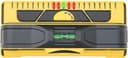
Franklin Sensors ProSensor M210 (Best Overall)
Anyone who wants the most accurate, easiest-to-use stud finder available
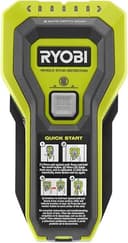
Ryobi ESF5002 Whole Stud Finder (Best Value)
DIYers who want full-width stud detection without spending $50+
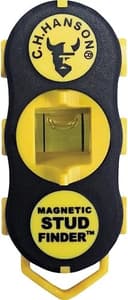
CH Hanson 03040 Magnetic Stud Finder (Best Budget)
Quick stud-finding for picture hanging and light-duty mounting
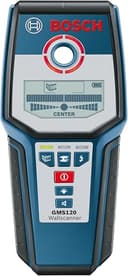
Bosch GMS120 Digital Multi-Scanner (Best for Pros)
Contractors and serious DIYers who need to scan through concrete, tile, and thick walls
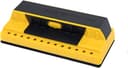
Franklin Sensors ProSensor 710 (Best Multi-Sensor)
Homeowners who want reliable, instant stud detection without the complexity of multi-mode scanners
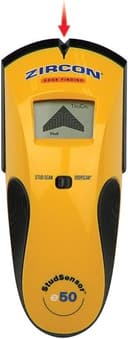
Zircon StudSensor e50 (Best Entry-Level Electronic)
Budget-conscious homeowners who want basic electronic scanning with wire detection
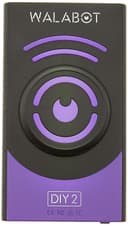
Walabot DIY 2 (Best Radar / Advanced)
Professionals and advanced DIYers who need to see everything behind a wall before cutting or drilling
Finding the best stud finder is one of those tasks you only think about when you need it. You're hanging a TV mount, installing floating shelves, or mounting a ceiling fan, and suddenly everything depends on hitting wood behind drywall instead of hollow space. Miss the stud, and your 65-inch TV is headed for the floor.
Here's the truth about stud finders: the technology has split into three distinct categories (magnetic, electronic, and radar), and each one excels in different situations. A $10 magnetic finder works great for simple picture-hanging, but it won't help you trace a pipe before drilling. Meanwhile, a $200 radar scanner is overkill if you just need to find a stud for a curtain rod. matching the right technology to your wall type matters more than buying the most expensive option.
I compared scanning depth, accuracy, AC wire detection, display quality, and real user feedback across dozens of models to find the best stud finder for every budget and wall type. Whether you're a weekend DIYer or a contractor scanning commercial walls daily, one of these seven picks will match your needs.
Quick Picks: Best Stud Finders at a Glance
- Best Overall: Franklin Sensors ProSensor M210. I'd pick this for most people: 13 sensors show the full stud width instantly with zero calibration.
- Best Value: Ryobi ESF5002 Whole Stud Finder. Full-width LED display and built-in marker for under $30.
- Best Budget: CH Hanson 03040 Magnetic Stud Finder. No batteries, no calibration, no nonsense. In my opinion, it's the best "toss in the junk drawer" stud detector you can buy.
- Best for Pros: Bosch GMS120 Digital Multi-Scanner. Detects wood, metal, and live wires up to 4.75 inches deep in concrete.
- Best Multi-Sensor: Franklin Sensors ProSensor 710. The original 13-sensor design that changed the stud finder game.
- Best Entry-Level Electronic: Zircon StudSensor e50. Simple edge-finding with WireWarning detection at a fair price.
- Best Radar (Advanced): Walabot DIY 2. Produces a visual image of studs, pipes, and wires on your phone screen.
What to Look For in a Stud Finder
Before you buy, understanding the three main technologies will save you from returning a tool that doesn't match your walls.
Magnetic vs. Electronic vs. Radar
Magnetic stud finders use rare earth magnets to detect metal fasteners (nails and screws) embedded in studs. They never need batteries, never need calibration, and never give false readings from textured walls. The catch? They only locate fasteners, not the stud itself, so you have to infer the stud's position. They also struggle with deeper walls or walls with few fasteners.
Electronic stud finders detect density changes in the wall. They scan for the difference between hollow drywall and solid wood (or metal) behind it. Most models show stud edges, centers, or both. Higher-end units add modes for metal scanning and live AC wire detection. These work well on standard 1/2-inch and 5/8-inch drywall but can struggle with textured walls, plaster over lath, and walls with multiple layers.
Radar stud finders use RF (radio frequency) imaging to see through walls. They connect to your smartphone and display a visual map of what's behind the surface. They detect studs, pipes, wires, and even movement (pests). They offer the deepest scanning depth, but they cost significantly more and require a compatible phone and app.
Scanning Depth
Standard drywall is 1/2 inch thick, so even basic stud finders work fine. But if you have 5/8-inch drywall, double layers, or plaster over lath, you need a scanner rated for at least 1.5 inches. For concrete or masonry, only commercial-grade models like the Bosch GMS120 or radar scanners will reach deep enough.
AC Wire Detection
Any stud finder worth buying should warn you about live electrical wires before you drill into them. Most electronic models include this feature, but magnetic models do not. If you're planning to drill or cut into walls, AC wire detection isn't optional.
Display Type
Simple magnetic finders have no display at all. Basic electronic models use LED indicators or a small LCD screen. The best electronic stud finders use multi-LED arrays that light up across the full width of the stud, giving you a much clearer picture of exactly where to drill. Radar models display everything on your smartphone.
Accuracy and Calibration
Some electronic stud finders require you to calibrate against a blank section of wall before every scan. If the calibration point happens to sit over a stud, pipe, or wire, you'll get inaccurate readings. The best models either auto-calibrate or skip calibration entirely (like the Franklin sensors).
Our Top Picks
Franklin Sensors ProSensor M210 (Best Overall)
Franklin Sensors ProSensor M210 (Best Overall)
Anyone who wants the most accurate, easiest-to-use stud finder available
Pros
- 13 sensors show the full width of studs instantly, no calibration needed
- Live wire detection meter adds a genuine safety feature
- Built-in bubble level and center indicator for precise marking
- Made in the USA with consistent build quality
Cons
- No metal-specific scanning mode (detects metal studs, but can't distinguish metal from wood)
- Batteries not included
- Costs roughly double the price of basic electronic stud finders
I think the Franklin ProSensor M210 is the best stud finder you can buy right now, and the reason is simple: it shows you the entire stud, not just an edge or a center point. With 13 sensors spread across a 7-inch scanning bed, the M210 lights up LEDs across the full width of whatever it detects. You can see a single stud, a double stud, or a header at a glance.
No calibration is required. You place it on the wall, and it reads instantly. What I like most about the M210 is that it eliminates the most common frustration with electronic stud finders: the repeated failed calibrations on textured or painted walls. The M210 adds a live wire detection meter to warn you about electrical hazards before you drill, which is a meaningful upgrade over the older ProSensor 710.
The built-in bubble level and center indicator (the middle LED turns green when you're centered on a stud) make one-handed marking fast and precise. For hanging heavy items like TV mounts, shelving, and cabinetry, the M210 removes the guesswork that plagues cheaper stud finders.
Ryobi ESF5002 Whole Stud Finder (Best Value)
Ryobi ESF5002 Whole Stud Finder (Best Value)
DIYers who want full-width stud detection without spending $50+
Pros
- Full-width LED display shows the entire stud, not just edges
- Built-in stud marker eliminates the need for a separate pencil
- Auto Depth Scan adjusts for different wall thicknesses automatically
- Batteries included in the box
Cons
- No AC wire detection (a significant omission for anyone drilling into walls)
- Limited to 1.5 inches of scanning depth
- Cannot detect pipes or other non-stud objects
The Ryobi Whole Stud Finder borrows the best idea from premium stud finders (showing the full width of the stud with multiple LEDs) and packages it at a price that makes upgrading from a basic edge-finder a no-brainer. Instead of guessing where the center is based on two edge readings, you see the stud lit up across multiple LEDs and mark accordingly.
The Auto Depth Scan technology automatically adjusts for wall thickness up to 1.5 inches, so it handles both standard 1/2-inch and thicker 5/8-inch drywall without manual mode switching. The built-in stud marker is a clever touch: flip out the integrated pencil tip and mark the center of the stud without reaching for a separate pencil.
One-handed operation feels natural, and the felt pads on the bottom glide smoothly across walls without scuffing paint. From user feedback, this wall scanner punches well above its weight at this price point, and I'd recommend it to anyone who wants stud detection without breaking the bank.
CH Hanson 03040 Magnetic Stud Finder (Best Budget)
CH Hanson 03040 Magnetic Stud Finder (Best Budget)
Quick stud-finding for picture hanging and light-duty mounting
Pros
- No batteries, no calibration, no electronics to malfunction
- Strong rare earth magnets stick to the wall hands-free for easy marking
- Built-in bubble level for alignment
- Compact enough to fit in a pocket
Cons
- Cannot detect studs directly, only the metal fasteners in them
- No AC wire detection (will not warn about electrical hazards)
- Struggles with deeper walls or walls with few fasteners
The CH Hanson 03040 proves that the simplest approach is sometimes the best one. Two powerful rare earth magnets pull toward the metal fasteners (screws and nails) in your wall studs. When the magnet grabs, you've found a stud. No batteries to die, no calibration to fail, no false readings from textured drywall.
The magnets are strong enough that the unit sticks to the wall hands-free once it locks onto a fastener. That's useful for marking: leave the CH Hanson attached, grab a pencil, and mark both sides. The built-in bubble level helps you confirm horizontal and vertical alignment for hanging pictures or mounting brackets.
At roughly $12, the CH Hanson is cheap enough to keep one in every toolbox, junk drawer, and workbench in your house. In my opinion, it won't replace an electronic stud finder for serious renovation work, but for the homeowner who hangs a shelf twice a year, this is all you need.
Bosch GMS120 Digital Multi-Scanner (Best for Pros)
Bosch GMS120 Digital Multi-Scanner (Best for Pros)
Contractors and serious DIYers who need to scan through concrete, tile, and thick walls
Pros
- Detects wood, metal, and live wires with dedicated modes for each
- Deepest scanning depth in its price class (up to 4.75" for ferrous metal)
- Color-coded illuminated ring provides instant visual feedback
- Includes 9V battery, hand strap, and carrying pouch
Cons
- Heavier and bulkier than single-purpose stud finders (1.7 lbs)
- Requires calibration on a clear section of wall before each scan
- Higher price than basic stud finders
The Bosch GMS120 is the stud finder you reach for when standard drywall isn't the only thing you're scanning through. With dedicated modes for wood, metal, and live AC wiring, it handles situations that single-purpose stud finders simply cannot. The metal mode detects ferrous objects (rebar, steel studs) up to 4.75 inches deep and non-ferrous metals (copper pipes) up to 3.125 inches, making it invaluable for scanning concrete walls, floors, and ceilings before drilling.
The illuminated detection ring around the display changes color to communicate results: green means clear, yellow means you're approaching an object, and red means you're directly over it. The automatic center-finding feature pinpoints the center of detected wood or metal objects, so you don't have to manually calculate the midpoint between two edges.
This is the heaviest stud finder on our list at 1.7 pounds, and it's noticeably larger than pocket-sized models. That bulk is the tradeoff for scanning capability that reaches far deeper than anything else at this price. If you're a contractor scanning commercial walls or a homeowner dealing with concrete, lath and plaster, or tile backsplash, I think the GMS120 earns its premium.
Franklin Sensors ProSensor 710 (Best Multi-Sensor)
Franklin Sensors ProSensor 710 (Best Multi-Sensor)
Homeowners who want reliable, instant stud detection without the complexity of multi-mode scanners
Pros
- 13 sensors display the full width of studs instantly
- Zero calibration required, works immediately on any wall surface
- Detects double studs and headers that single-point finders miss
- Made in the USA with a proven track record
Cons
- No live wire detection (a safety gap for drilling applications)
- No built-in level (unlike the M210)
- Batteries not included
The Franklin ProSensor 710 is the model that put multi-sensor stud finders on the map. Like its newer sibling the M210, it uses 13 sensors across a 7-inch scanning bed to illuminate the full width of studs through 13 LEDs. No calibration is required. Place it flat on the wall, and the LEDs light up over any stud beneath the sensors.
The 710 excels at detecting double studs, headers above doorways, and other non-standard framing that trips up single-point stud finders. Because the sensors span such a wide area, you can see whether the framing beneath is a single 2x4, a doubled stud at a corner, or a wide header. That information is invaluable when you're planning to mount heavy items or cut into a wall for remodeling.
The main difference between the 710 and the newer M210 is the absence of live wire detection and the green center indicator LED. If AC wire detection matters to you (and it should if you're drilling into walls), step up to the M210. But if you primarily need fast, accurate stud location for mounting and hanging, the 710 delivers the same core experience for about $10 less.
Zircon StudSensor e50 (Best Entry-Level Electronic)
Zircon StudSensor e50 (Best Entry-Level Electronic)
Budget-conscious homeowners who want basic electronic scanning with wire detection
Pros
- WireWarning detection alerts you to live electrical wires up to 2 inches deep
- Dual-mode scanning covers standard and thick drywall
- SpotLite pointer makes marking easy in low-light conditions
- Compact and lightweight (4.3 oz)
Cons
- Edge-finding only (you must mark two edges and calculate the center yourself)
- Requires calibration on a stud-free section of wall before each scan
- 9V battery not included
The Zircon StudSensor e50 is the classic entry point into electronic stud finding. It uses edge-detection technology to locate the edges of wood and metal studs, then you mark both edges and measure to the center. The dual-mode scanning (StudScan for standard walls, DeepScan for thicker surfaces) covers both 1/2-inch and 5/8-inch drywall without issue.
The standout feature at this price is WireWarning detection, which alerts you to the presence of live, unshielded electrical wires up to 2 inches deep. That's a genuine safety feature that magnetic stud finders and some pricier electronic models lack entirely. The SpotLite pointer shines a beam of light on the wall at the detection point, making it easy to mark precisely even in dim lighting.
The Zircon's patented pivot-pinch grip is comfortable for extended scanning sessions, and the contoured shape fits naturally in either hand. For a first stud finder or a reliable backup to a fancier model, the e50 has been a steady performer for years.
Walabot DIY 2 (Best Radar / Advanced)
Walabot DIY 2 (Best Radar / Advanced)
Professionals and advanced DIYers who need to see everything behind a wall before cutting or drilling
Pros
- Visual display shows studs, pipes, wires, and movement on your phone screen
- 4-inch scanning depth is the deepest on this list for drywall
- Built-in rechargeable battery won't drain your phone
- Wi-Fi connectivity works from a distance for hard-to-reach areas
Cons
- Does not work on lath and plaster, concrete, tile, brick, or stucco
- Requires a smartphone and the Walabot app to function
- At ~$200, it costs 3-4x more than excellent electronic stud finders
- Initial setup requires registration and app pairing
The Walabot DIY 2 is the most capable wall scanner on this list, and it's in a completely different category from traditional stud finders. Using RF radar technology, it connects to your smartphone via Wi-Fi and displays a real-time visual image of what's behind your drywall. You don't just find studs. You see studs, pipes, wires, and even movement (useful for detecting pests in walls).
Two scanning modes give you flexibility. Image Mode shows a clean graphical representation of wood studs, metal studs, pipes, and wires. Expert Mode displays the raw radar data, revealing overlapping and intersecting objects that simplified views might miss. The built-in rechargeable battery means the Walabot won't drain your phone during long scanning sessions, and Wi-Fi connectivity lets you position the scanner in hard-to-reach spots while viewing results on your phone from a comfortable distance.
The significant limitation: the Walabot DIY 2 works only on drywall and plywood. It does not work on lath and plaster, concrete, tile, brick, metal-backed walls, or stucco. If your home has any of these wall types, you'll need a different tool. For standard drywall construction, though, I haven't found another consumer device that gives you this level of visibility into your walls.
How to Use a Stud Finder (And Avoid False Readings)
Even the best stud finder gives bad results if you use it wrong. Here are the most common mistakes and how to avoid them.
Calibrate on a clear wall section. If your stud finder requires calibration, start it over an area you're confident has no studs, pipes, or wires. The middle of a large wall (away from outlets, switches, and corners) is your safest bet. If you calibrate over a stud, every subsequent reading will be off.
Move slowly and steadily. Jerky, fast movements cause electronic stud finders to skip or misread. Slide the unit across the wall at a smooth, consistent pace. Most models need 1-2 seconds of continuous contact to register a reading.
Scan horizontally at multiple heights. A single pass at one height tells you where a stud is, but not whether it runs the full height of the wall. Scan at the height where you plan to drill, then scan a foot above and below to confirm the stud continues.
Verify with multiple passes. Make two or three passes in the same area. If the stud finder gives the same reading each time, you can trust it. If the readings jump around, the wall may have interference (old paint layers, foil-backed insulation, or metal lath) that's confusing the sensor.
Use the 16-inch rule. In most residential construction, studs are spaced 16 inches apart (measured center to center). Once you find one stud, measure 16 inches in either direction to predict where the next ones should be, then verify with your stud finder. If your stud finder found a stud at an unexpected location, it may have locked onto a pipe or electrical conduit instead.
Stud Finder Buying Guide: Which Type Do You Need?
Choosing the right stud finder depends on what you're actually doing with it.
For picture hanging and light shelving: A magnetic stud finder like the CH Hanson 03040 is all you need. Quick, reliable, and costs less than a fast-food meal.
For TV mounting and heavy shelving: Step up to an electronic multi-sensor model like the Franklin ProSensor 710 or M210. Full-width stud detection ensures you're drilling into solid wood, not the edge of a stud. If the item you're mounting is heavy, consider using your cordless drill with the right bit and a confirmed center-of-stud location.
For general home improvement: The Zircon StudSensor e50 or Ryobi ESF5002 covers most jobs. The Zircon adds wire detection for safety. The Ryobi adds full-width stud visibility for precision. Pick whichever feature matters more to you.
For renovation and remodeling: The Bosch GMS120 handles the widest range of wall types and detects wood, metal, and live wires. If you're opening walls, moving outlets, or working on older homes, the extra scanning depth and dedicated metal mode are worth the investment.
For plumbing and electrical work: The Walabot DIY 2 shows you pipe paths and wire runs before you cut. If you're doing significant work behind walls, seeing exactly where utilities run prevents expensive mistakes. Pair it with a reliable impact driver to make quick work of mounting and fastening once you've mapped your walls.
Common Questions About Stud Finders
Do magnetic stud finders actually work?
Yes, and they're more reliable than many people expect. They detect the metal fasteners (nails and screws) used to attach drywall to studs. On standard drywall construction with screws every 12-16 inches along each stud, a magnetic finder locates studs consistently. They only fail when walls have very few fasteners or when the drywall is unusually thick.
Why does my stud finder keep giving false readings?
The most common causes are: calibrating over a stud or pipe, moving too fast, low battery, textured or painted walls that create uneven surfaces, and foil-backed insulation or metal lath behind the drywall. Try a fresh battery, calibrate on a confirmed clear section, and move slowly.
Can a stud finder detect pipes and wires?
Basic models cannot. Mid-range electronic stud finders (like the Zircon A200 and Bosch GMS120) detect live AC wiring. Only advanced radar scanners like the Walabot DIY 2 visually trace pipe and wire paths. If you need to locate plumbing before drilling, a radar scanner or a dedicated pipe locator is the right tool.
How deep can a stud finder scan?
It varies by technology. Magnetic stud finders work through about 0.75 inches of drywall. Basic electronic models scan 0.75 to 1.5 inches. Advanced electronic models like the Bosch GMS120 reach up to 4.75 inches for metal detection. Radar scanners like the Walabot DIY 2 scan up to 4 inches through drywall.
Final Thoughts
The best stud finder is the one that matches both your wall type and your ambition level. For most homeowners, I'd pick the Franklin Sensors ProSensor M210 because it strikes the ideal balance: instant full-width stud detection, live wire warning, no calibration hassle, and a price that won't make you flinch. It's the stud finder I'd recommend to anyone who asks.
If budget is tight, the Ryobi ESF5002 delivers impressive full-width detection for under $30, and the CH Hanson 03040 magnetic finder costs less than lunch and never needs batteries. For contractors scanning commercial buildings or homeowners tackling major renovations, the Bosch GMS120 earns its premium with unmatched scanning depth and multi-mode detection.
The stud finder market has genuinely improved in the last few years. Multi-sensor technology from Franklin, full-width LED displays from Ryobi, and radar imaging from Walabot have all made it dramatically easier to locate studs and find what's hiding behind your walls. Pick the stud detector that fits your projects, and you'll never have to knock on drywall and guess again.
Affiliate Disclosure
This post contains affiliate links. As an Amazon Associate, HomeBuildLab earns from qualifying purchases at no additional cost to you. Learn more
Looking for the right tools and products?
Check out our product reviews and buying guides to find the best gear for your project.
Browse Reviews