Corded vs Cordless Drill: Which One Should You Actually Buy in 2026?
Quick Comparison
| Product | Best For | Buy |
|---|---|---|
 DeWalt DCD791D2 20V MAX XR Brushless Drill/Driver (Best Overall) DeWalt · Cordless · 3.4 lbs (with battery) | The all-around performer for serious DIYers and contractors | |
 Craftsman CMCD720D2 V20 Brushless Drill/Driver (Best Value) Craftsman · Cordless · 3.5 lbs (with battery) | Budget-conscious buyers who want brushless performance and two batteries |
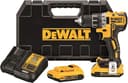
DeWalt DCD791D2 20V MAX XR Brushless Drill/Driver (Best Overall)
The all-around performer for serious DIYers and contractors
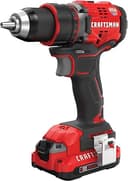
Craftsman CMCD720D2 V20 Brushless Drill/Driver (Best Value)
Budget-conscious buyers who want brushless performance and two batteries
The corded vs cordless drill debate used to be simple. Corded meant more power. Cordless meant more convenience. You picked based on priority and lived with the trade-offs.
That equation has shifted. modern 20V brushless cordless drills deliver 500 to 700 inch-pounds of torque, matching or exceeding what most corded drills produce. Battery technology has improved to the point where a 4.0Ah lithium-ion pack runs for two hours of intermittent drilling before needing a recharge. And prices have dropped enough that a quality cordless drill kit (with battery and charger) starts around $100.
But corded drills haven't become irrelevant. They still offer advantages that matter for specific situations. I kept a corded drill on my bench for years even after going cordless, and there are still days when I grab it. If you're trying to decide between the two, the answer depends on your projects, your workspace, and whether you already own batteries. Here's an honest breakdown to help you choose.
Quick Answer
For most people in 2026, I'd pick a cordless drill as the better buy. The portability advantage is massive, battery life is no longer a dealbreaker, and brushless motors have closed the power gap. If you already own batteries in a major platform (DeWalt 20V, Milwaukee M18, Ryobi ONE+), a bare-tool cordless drill costs $60 to $150 and plugs right into your existing setup.
I recommend a corded drill if you do heavy-duty drilling for extended periods, work exclusively near outlets, or want to spend as little as possible. A quality corded drill costs $40 to $80 and never needs a battery swap.
Key Differences at a Glance
Feature: Power (Torque) | Corded Drill: 300 to 600 in-lbs (consistent) | Cordless Drill: 300 to 700 in-lbs (varies by battery charge)
Feature: Runtime | Corded Drill: Unlimited | Cordless Drill: 30 to 120 min per charge (task dependent)
Feature: Weight | Corded Drill: 4.5 to 5.5 lbs | Cordless Drill: 3 to 4.5 lbs (bare), 4 to 6 lbs (with battery)
Feature: Tool Price | Corded Drill: $35 to $120 | Cordless Drill: $50 to $200 (bare tool)
Feature: Total Cost | Corded Drill: $35 to $120 (plug in and go) | Cordless Drill: $100 to $300+ (with battery and charger)
Feature: Portability | Corded Drill: Limited by cord and outlet | Cordless Drill: Work anywhere, no cord
Feature: Power Consistency | Corded Drill: Same output from start to finish | Cordless Drill: Slight decline as battery drains
Feature: Maintenance | Corded Drill: Minimal (brushes on brushed models) | Cordless Drill: Battery replacement every 3 to 5 years
Feature: Speed (RPM) | Corded Drill: Up to 3,100 RPM | Cordless Drill: Up to 2,000 RPM (most 20V models)
When a Corded Drill Makes Sense
Sustained Heavy-Duty Drilling
Corded drills pull continuous power from the wall. That means consistent torque on every hole, whether it's the first or the hundredth. If you're drilling through hardwood, masonry, or metal for hours at a time, a corded drill won't slow down as you work. Cordless drills maintain strong performance through most of a charge, but torque drops noticeably in the last 10 to 15 percent of battery life.
For jobs like installing a full deck's worth of lag bolts or boring dozens of holes through concrete with a hammer drill, that unlimited runtime matters. I think this is the single strongest argument for corded drills in 2026. You won't stop to swap batteries or wait 30 to 45 minutes for a recharge.
Lower Upfront Cost
Corded drills are cheaper, period. A reliable corded drill like the DeWalt DWD112 (8-amp, variable speed) runs about $60. A comparable cordless drill kit with a battery and charger starts at $100 to $150 for a quality brand. If you're working with a tight budget and your projects happen near outlets, the corded drill saves you $50 to $100 with no real performance sacrifice.
Even at the professional level, corded drills undercut cordless. A pro-grade corded hammer drill costs $100 to $150. A comparable cordless hammer drill kit runs $200 to $350.
Lighter Weight (Sometimes)
This one surprises people. While compact cordless drills can be very light (some weigh under 3 lbs bare), most full-size cordless drills weigh 4 to 6 lbs with the battery attached. A corded drill in the same power class weighs 4.5 to 5.5 lbs, with no battery pack hanging off the handle. For overhead drilling or extended use, that battery weight contributes to fatigue.
When a Cordless Drill Wins
Portability Is Transformative
I'll be honest: once you've used a cordless drill, going back to managing a power cord feels like a step backward. No hunting for outlets. No tripping over extension cords. No reaching the end of your cord length right when you need three more feet.
Cordless drills go wherever you go: up a ladder, onto a roof, into a crawl space, out to a fence line. That freedom isn't just convenient. It's safer. Extension cords are a tripping hazard, and managing cord slack while drilling overhead or in tight spaces is genuinely frustrating.
Modern Batteries Have Caught Up
This is the biggest shift in the corded vs cordless drill conversation. Today's 20V lithium-ion batteries paired with brushless motors deliver serious performance. A mid-range cordless drill like the DeWalt DCD794D1 produces 550 inch-pounds of torque, which handles everything from driving deck screws to boring holes with spade bits.
In my opinion, battery life is no longer the weak link it used to be. A 2.0Ah battery handles light tasks for about 45 to 60 minutes of intermittent use. A 4.0Ah or 5.0Ah battery pushes that to two hours or more. And with a second battery and a fast charger, you can rotate and drill nearly continuously. Most homeowners never drain a single battery during a weekend project.
You Probably Already Own Batteries
If you own any cordless power tool from a major brand, you likely already have batteries and a charger. DeWalt 20V MAX, Milwaukee M18, Makita 18V LXT, and Ryobi ONE+ all use shared battery platforms across dozens of tools. What I like most about these ecosystems is that buying a bare-tool cordless drill costs $50 to $150, often less than a comparable corded drill. The battery investment you've already made turns the cost argument on its head.
Compact Models for Tight Spaces
Cordless drills come in compact and subcompact versions that corded drills simply can't match. A subcompact 12V drill weighs under 2.5 lbs and fits into spaces where a corded drill (with its power cord adding bulk and resistance) can't reach. For working inside cabinets, behind appliances, or in electrical boxes, compact cordless drills are the only practical option.
Corded vs Cordless Drill: Head-to-Head Breakdown
Power
Modern cordless drills have largely closed the torque gap. I compared specs across dozens of models, and a quality 20V brushless cordless drill delivers 500 to 700 inch-pounds of torque. Most corded drills produce 300 to 600 inch-pounds. On paper, the specs are comparable, and for everyday drilling and driving tasks, you won't feel a difference.
The gap appears during sustained, demanding work. A corded drill maintains peak torque indefinitely because it draws from a constant power source. A cordless drill's effective torque decreases as the battery depletes. For typical home projects (hanging shelves, assembling furniture, driving screws into framing), this is irrelevant. For a full day of production drilling in hardwood or masonry, corded is more consistent.
Winner: Tie for most users. Corded for all-day heavy drilling.
Portability
Not even close. Cordless drills work anywhere, on ladders, on rooftops, in crawl spaces, and in the middle of your yard. A corded drill tethers you to an outlet. Even with a 25-foot extension cord, your effective range is limited, and cord management becomes part of every task.
Winner: Cordless, decisively.
Cost
Total cost of ownership is where corded pulls ahead. A solid corded drill costs $50 to $80 with everything you need. A cordless kit with a battery and charger runs $100 to $200 for a comparable tool.
But if you already own batteries and a charger, a bare-tool cordless drill costs $50 to $150. At that point, cordless is price-competitive or even cheaper than a premium corded model.
Winner: Corded on upfront cost. Cordless if you already own compatible batteries.
Weight and Ergonomics
Compact cordless drills (especially 12V models) are the lightest drills available, some under 2.5 lbs. Full-size cordless drills with a battery attached weigh 4 to 6 lbs, roughly the same as corded drills in the same power class.
The ergonomic difference is real, though. Cordless drills distribute weight around the battery and motor. Corded drills are lighter at the tool but drag a stiff power cord that adds resistance during use, especially when drilling overhead or at awkward angles.
Winner: Compact cordless for light weight. Full-size models are roughly equal.
Maintenance
Corded drills with brushed motors may eventually need carbon brush replacement (a $5 to $10 fix). Otherwise, they require zero maintenance and last for decades.
Cordless drills are also low-maintenance, but batteries degrade over time. Expect to replace battery packs every 3 to 5 years depending on use and storage habits. Replacement batteries cost $30 to $100, which is an ongoing cost that corded drills avoid entirely. On the flip side, brushless cordless motors outlast brushed corded motors since there are no brushes to wear down.
Winner: Corded for long-term simplicity. Cordless brushless motors last longer, but battery replacement adds cost.
My Recommendation
For the vast majority of homeowners and weekend project builders, I believe a cordless drill is the right choice in 2026. The combination of portability, modern battery performance, and shared platform ecosystems makes cordless the more practical and versatile option. If you own DeWalt, Milwaukee, Makita, or Ryobi batteries, buying a bare-tool cordless drill is the obvious move.
If you do heavy-duty, stationary drilling near outlets, or if budget is your primary concern and you don't own any cordless batteries, a corded drill still delivers excellent value. Pair it with a good set of drill bits and you'll have a setup that lasts years without thinking about charge levels.
For driving fasteners rather than drilling holes, consider whether an impact driver might be a better fit. Impact drivers excel at driving screws and bolts with less wrist strain than a drill. Many experienced users keep both: a drill for boring holes and an impact driver for fasteners.
If precision drilling is your focus (for woodworking, metalworking, or repetitive hole placement), a drill press offers accuracy that no handheld drill, corded or cordless, can match.
If you've already decided on cordless, my cordless drill buying guide walks you through voltage, brushless vs brushed motors, and battery ecosystems. And if you're still deciding between a drill and an impact driver, my impact driver vs drill comparison breaks down exactly when each tool makes sense.
Recommended Tools
Ready to buy? These are the top picks from our best cordless drill guide.
DeWalt DCD791D2 20V MAX XR Brushless Drill/Driver (Best Overall)
DeWalt DCD791D2 20V MAX XR Brushless Drill/Driver (Best Overall)
The all-around performer for serious DIYers and contractors
Pros
- 620 in-lbs of torque handles demanding tasks without stalling
- Compact design at 7.52 inches front to back
- LED light with 20-second trigger release delay
- Two 2.0 Ah batteries and hard case included
Cons
- The 2.0 Ah batteries drain quickly on sustained heavy drilling
- Higher price point than comparable single-battery kits
- No hammer drill function for masonry
Craftsman CMCD720D2 V20 Brushless Drill/Driver (Best Value)
Craftsman CMCD720D2 V20 Brushless Drill/Driver (Best Value)
Budget-conscious buyers who want brushless performance and two batteries
Pros
- Two 2.0 Ah batteries included at a sub-$120 price
- Brushless motor with up to 60% more runtime than brushed
- 2,100 RPM top speed is the fastest in this roundup
- Assembled in the USA
Cons
- V20 platform has fewer tools than DeWalt 20V MAX or Milwaukee M18
- Slightly heavier at 3.5 lbs than compact competitors
- Clutch feel is not as refined as DeWalt or Milwaukee
Final Thoughts
The corded vs cordless drill debate has a clear winner for most people in 2026: go cordless. Battery technology, brushless motors, and competitive pricing have eliminated most of the traditional advantages that corded drills held. You get plenty of power for home projects, the freedom to drill anywhere without cord management, and access to a shared battery ecosystem that makes every additional tool cheaper.
Corded drills still earn their place for budget-conscious buyers and heavy-duty stationary work. They're simpler, cheaper, and deliver unlimited runtime. Personally, I prefer having both in my shop, but if you can only pick one, there's no shame in choosing the tool that plugs into the wall if that's what fits your projects and your budget.
If I were starting my tool collection from scratch today, I'd go cordless without hesitation. The best drill is the one that matches how you actually work. If you're constantly moving between tasks around the house and yard, cordless is the clear pick. If you drill at a workbench near an outlet all day, corded saves you money without sacrificing performance. Either way, you're buying a tool that will handle thousands of projects over its lifetime.
Affiliate Disclosure
This post contains affiliate links. As an Amazon Associate, HomeBuildLab earns from qualifying purchases at no additional cost to you. Learn more
Looking for the right tools and products?
Check out our product reviews and buying guides to find the best gear for your project.
Browse Reviews