Rotary Tool vs Oscillating Tool: Same Aisle, Completely Different Jobs
Rotary tool vs oscillating tool: I compare motion type, precision, versatility, and best uses so you can pick the right multi-tool for your next project.
Reader-supported: we may earn a commission when you buy through links on this page, at no extra cost to you. How we research
We don't run a test lab. For each guide we compare manufacturer specs, warranty terms and owner reviews, then match models to specific jobs and budgets. We say when a pick is a trade-off, and every product has cons listed.
As an Amazon Associate, HomeBuildLab earns from qualifying purchases. Read our full affiliate disclosure.

If you're comparing a rotary tool vs oscillating tool, you're looking at two of the most versatile handheld tools in any workshop. I've spent a lot of time researching both, and the confusion makes sense: they're both called "multi-tools," they both accept dozens of attachments, and they both handle cutting, sanding, and grinding. But they do those jobs in completely different ways, and buying the wrong one means frustration.
Here's the short answer: a rotary tool spins its bit at high speed (up to 35,000 RPM) for fine detail work like engraving, polishing, and precision grinding. An oscillating tool vibrates its blade side to side at up to 20,000 oscillations per minute (OPM) for flush cutting, sanding large surfaces, and scraping. One is a precision instrument. The other is a renovation workhorse.
They're not interchangeable, and most serious workshops eventually own both. I own both, and they live in completely different parts of my shop for good reason. But if you're buying your first one, the right choice depends entirely on what you're building. Let's break down the differences so you can make the right call.
Key Differences at a Glance
| Feature | Rotary Tool | Oscillating Tool |
|---|---|---|
| Motion Type | High-speed rotation (spinning) | Rapid side-to-side oscillation (vibrating arc) |
| Speed Range | 5,000 to 35,000 RPM | 10,000 to 20,000 OPM |
| Precision Level | Extremely high (detail work) | Moderate (controlled cuts and sanding) |
| Best For | Engraving, polishing, grinding, carving | Flush cutting, sanding, scraping, grout removal |
| Typical Accessory Count | 25 to 64+ bits and attachments | 5 to 15 blades and pads |
| Material Compatibility | Wood, metal, glass, ceramic, plastic | Wood, metal, drywall, tile, grout |
| Typical Weight | 1 to 2 lbs | 3 to 5 lbs |
| Price Range | $35 to $200 | $50 to $250 |
| Dust Production | Minimal (small contact area) | Low to moderate (larger contact area) |
| Noise Level | Moderate to high (high RPM whine) | Low to moderate |
What Is a Rotary Tool?
A rotary tool (the Dremel is the most recognized brand) is a compact, pen-shaped power tool that spins interchangeable bits at very high speeds. Think of it as a tiny, precise grinder that fits in one hand.
The motor drives a collet that accepts small-shank bits: cutting wheels, grinding stones, sanding drums, wire brushes, engraving points, polishing pads, and more. Most rotary tools come with 25 to 64 accessories out of the box, and aftermarket options number in the hundreds. Changing between tasks takes seconds.
Where rotary tools excel:
- Engraving and etching. Personalize tools, etch glass, carve designs into wood or metal. The high RPM and tiny bit size allow freehand detail that no other power tool can match.
- Precision grinding and shaping. Deburr metal edges, sharpen garden tools, smooth rough welds, or shape wood with carbide burrs. The small contact area gives you total control.
- Polishing and cleaning. Felt wheels with polishing compound bring brass hardware back to life. Wire brushes remove rust from small parts. These are detailed cleanup tasks that larger tools can't reach.
- Small-scale cutting. Cut-off wheels slice through bolts, screws, thin sheet metal, and small PVC pipes. You're not ripping lumber here. You're making precise, controlled cuts on small workpieces.
- Sanding tight spots. Small sanding drums reach into grooves, slots, and contoured surfaces where no other sander fits.
The trade-off is clear: rotary tools are precision instruments, not power tools. They work on small areas with extreme control. What I like most about a rotary tool is the sheer range of detail operations you can do with one compact device. But if you need to cut a 2x4 or sand a tabletop, look elsewhere.
What Is an Oscillating Tool?
An oscillating tool (also called an oscillating multi-tool or OMT) uses a completely different motion. Instead of spinning, the tool head vibrates back and forth in a tiny 3-degree arc at speeds between 10,000 and 20,000 oscillations per minute. The blade barely moves, but it moves incredibly fast.
This oscillating action gives the tool a unique advantage: it cuts, sands, and scrapes without grabbing the workpiece or producing dangerous kickback. That makes it one of the safest power tools you can own, and it's a favorite among remodelers for good reason.
Where oscillating tools excel:
- Flush cutting. This is the oscillating tool's signature move. Trim a door casing to fit new flooring, cut a nail or pipe flush against a wall, or remove a section of baseboard without disturbing the surrounding trim. No other handheld tool makes flush cuts this cleanly.
- Sanding in tight spaces. The triangular sanding pad reaches into corners, edges, and awkward angles that orbital sanders can't access. It's perfect for refinishing window frames, stair spindles, and cabinet interiors.
- Scraping. Rigid scraper blades peel off old adhesive, dried caulk, paint, and thin-set mortar. This is faster and less messy than chemical strippers, and it won't gouge the underlying surface when you use a controlled hand.
- Grout removal. Swap in a carbide-grit blade and an oscillating tool turns a grueling hand-scraping job into a manageable one. It's the preferred method for removing grout between tiles before re-grouting.
- Plunge cutting. Need to cut an opening in drywall for an outlet box? The oscillating tool plunges straight into the material without a starter hole. Try that with a circular saw.
The oscillating tool handles bigger jobs than a rotary tool, but it's not a substitute for a dedicated saw, sander, or grinder. I think of it as the "gap filler" in a tool collection: it handles tasks that are too awkward, too tight, or too delicate for full-size power tools. In my opinion, every homeowner who does any renovation work should have one in the toolbox.
Rotary Tool vs Oscillating Tool: Head-to-Head Comparison
Precision Detail Work
Winner: Rotary tool. This isn't close, and I don't think anyone who's used both would disagree. A rotary tool spinning a fine engraving bit at 30,000 RPM can carve letters into a ring. An oscillating tool's vibrating motion is too coarse for that kind of detail. If your work involves engraving, etching, intricate carving, or polishing small components, the rotary tool is your only option.
Flush Cutting
Winner: Oscillating tool. A rotary tool with a cutting wheel makes small cuts, but it can't make a controlled flush cut along a surface. The oscillating tool's flat blade design was specifically engineered for this. Trimming door casings, cutting nails flush, and removing sections of trim are oscillating tool territory, full stop.
Sanding
Winner: Depends on scale. For sanding a contoured groove or an inside corner on a small jewelry box, the rotary tool's tiny sanding drum is ideal. For sanding a window frame, stair tread, or cabinet interior, the oscillating tool's triangular pad covers more area and reaches corners that even a detail sander misses. Most sanding tasks around the house favor the oscillating tool. Most sanding tasks in a craft or hobby shop favor the rotary tool.
Versatility
Winner: Tie (different kinds of versatility). Both tools accept a wide range of accessories, but they serve different categories of work. A rotary tool's versatility is about the variety of detail operations: cut, grind, polish, sand, carve, drill, and engrave, all at a small scale. An oscillating tool's versatility is about handling multiple renovation tasks: cut wood, cut metal, sand surfaces, scrape adhesive, and remove grout, all at a practical jobsite scale.
Neither tool replaces the other. I'd compare it to owning a scalpel and a utility knife: both cut, but you'd never swap one for the other. They're versatile in completely different directions.
Ease of Use
Winner: Oscillating tool. The oscillating tool is one of the most beginner-friendly power tools available. The side-to-side motion produces almost no kickback, the blade won't grab and twist in your hand, and the low vibration keeps fatigue manageable during longer sessions. Variable speed control lets you dial things down for delicate work.
A rotary tool has a steeper learning curve. The high RPM means a light touch is critical. Press too hard and you'll break bits, burn material, or lose control. Personally, I prefer to start at lower speeds and work up when I'm using a rotary tool on a new material. It takes practice to develop the right feel, especially for freehand engraving and carving.
Price
Winner: Rotary tool (slightly). Entry-level rotary tool kits with 25+ accessories start around $35 to $75. A quality mid-range kit like the Dremel 3000 typically lands under $100 with attachments and a case. The flagship Dremel 4300 sits in the $100 to $200 range depending on the accessory count.
Oscillating tools start around $50 for bare corded models, but a useful cordless kit with a battery, charger, and a few blades typically runs $100 to $200. Individual replacement blades add $10 to $40 per set, and you'll go through blades faster than rotary tool bits. Over time, the oscillating tool's consumable cost is higher.
Which Should You Buy?
Buy a rotary tool if:
- You do craft, hobby, or jewelry work that requires fine detail
- You need to engrave, etch, carve, or polish small items
- You sharpen tools, deburr metal, or clean small parts regularly
- You want a compact tool for precision tasks at your workbench
- Your budget is tight and you want maximum accessory variety for under $80
Buy an oscillating tool if:
- You're doing home renovation, remodeling, or repair work
- You need to make flush cuts against walls, floors, or existing trim
- You sand in tight corners, refinish window frames, or prep surfaces
- You remove grout, old adhesive, caulk, or dried thinset
- You want a safe, beginner-friendly tool that handles a range of practical tasks
Buy both if:
- You have an active workshop and tackle both detail work and home improvement projects. I recommend owning both if your budget allows. These tools complement each other perfectly. The rotary tool lives at your workbench for precision tasks. The oscillating tool lives in your tool bag for renovation and repair. There's almost no overlap between what they do best.
Recommended Tools
If you're ready to buy, check out our best rotary tools roundup for our top picks across every budget. For oscillating multi-tools, I'd pick the DeWalt or Milwaukee for most people, and our best oscillating tools guide covers the top models in detail.
If you're also weighing the oscillating tool against a grinder, our angle grinder vs oscillating tool comparison covers that matchup. For other cutting tools that complement either of these, take a look at our best jigsaws roundup. A jigsaw handles the mid-range cutting tasks (curved cuts in sheet goods, thicker stock) that sit between what a rotary tool and an oscillating tool can manage.
Compare our picks
2 picks- Best OverallDremel 4300-5/40
Dremel · Corded · 1.81 lbs
Serious hobbyists and frequent users who want top-tier power and the full Dremel accessory ecosystem
$129.00Amazon price as of Oct 7, 7:00 PM EDTProduct prices and availability are accurate as of the date/time indicated and are subject to change. Any price and availability information displayed on Amazon.com at the time of purchase will apply to the purchase of this product.
View on Amazon - Best OverallDeWalt DCS356B 20V MAX XR
DeWalt · Cordless (20V MAX, battery sold separately) · 2.3 lbs (bare tool)
Homeowners and contractors who want a reliable all-around oscillating tool with universal blade compatibility
$99.88Amazon price as of Oct 7, 7:00 PM EDTProduct prices and availability are accurate as of the date/time indicated and are subject to change. Any price and availability information displayed on Amazon.com at the time of purchase will apply to the purchase of this product.
View on Amazon
Recommended Tools
Ready to buy? These are the top picks from our best rotary tool and best oscillating tool guides.
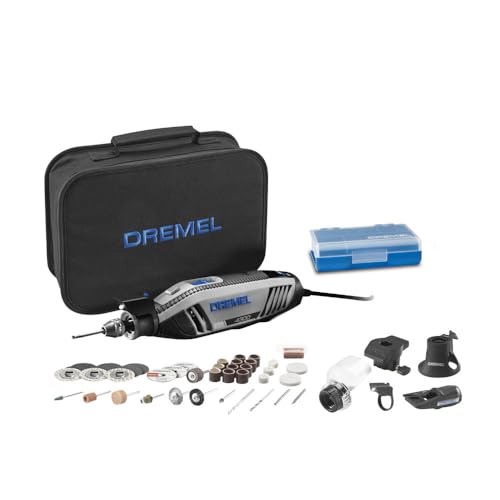
Dremel 4300-5/40
Best for: Serious hobbyists and frequent users who want top-tier power and the full Dremel accessory ecosystem
- Brand
- Dremel
- Type
- Rotary tool
- Power
- Corded
- Weight
- 1.81 lbs
$129.00Amazon price as of Oct 7, 7:00 PM EDTProduct prices and availability are accurate as of the date/time indicated and are subject to change. Any price and availability information displayed on Amazon.com at the time of purchase will apply to the purchase of this product.
What we like
- 1.8-amp motor with electronic feedback for consistent speed under load
- Universal three-jaw chuck accepts all Dremel shank sizes without collet changes
- Pivot light rotates to illuminate hard-to-see work areas
- Advanced airflow system runs cooler and quieter than previous Dremel models
Watch out for
- 6-foot cord limits mobility in larger workshops
- Heavier than the Dremel 3100 or budget alternatives
- The 5/40 kit is a mid-range package; the 9/64 kit with 64 accessories costs more

DeWalt DCS356B 20V MAX XR
Best for: Homeowners and contractors who want a reliable all-around oscillating tool with universal blade compatibility
- Brand
- DeWalt
- Type
- Oscillating multi-tool
- Power
- Cordless (20V MAX, battery sold separately)
- Voltage
- 20V MAX
- Weight
- 2.3 lbs (bare tool)
$99.88Amazon price as of Oct 7, 7:00 PM EDTProduct prices and availability are accurate as of the date/time indicated and are subject to change. Any price and availability information displayed on Amazon.com at the time of purchase will apply to the purchase of this product.
What we like
- 3-speed selector plus variable-speed trigger for precise control
- Universal blade compatibility with included adapter
- Brushless motor with 57% more runtime than brushed models
- Only 2.3 lbs bare for reduced fatigue
Watch out for
- Battery and charger sold separately
- Vibration control is adequate but not class-leading
- LED light placement could be better
Final Thoughts
The rotary tool vs oscillating tool debate comes down to scale and intent. A rotary tool is a precision instrument for small, detailed work at the bench. An oscillating tool is a practical problem-solver for renovation tasks in tight spaces. They sound similar on paper, but in practice they rarely compete for the same job.
If you're setting up a workshop for the first time and you mostly build things, I believe the rotary tool is your best starting point. If you're renovating a house and need a tool that handles the awkward in-between tasks, start with the oscillating tool. Personally, if I had to give one up, I'd keep the oscillating tool because it saves me on almost every renovation project. And if you can swing both, you should. I think they're two of the most useful tools you can own, and together they cover a remarkable range of work that no other single tool handles well.
Affiliate Disclosure
This post contains affiliate links. As an Amazon Associate, HomeBuildLab earns from qualifying purchases at no additional cost to you. Learn more
Prices shown are from Amazon at the time indicated and may change. The price and availability on Amazon.com at the time of purchase apply.
Sam Hartwell
Sam Hartwell edits HomeBuildLab's tool reviews and home improvement guides. Every pick starts with manufacturer spec sheets, warranty terms, parts availability and owner feedback, then gets matched to a specific job and budget. Guides list the trade-offs plainly and get updated when models change or go out of stock.
Keep reading: Grinders & Multi-Tools
All grinders & multi-tools guides → How-To
Grinders & Multi-Tools
What Is an Oscillating Tool Used For? 10 Jobs It Does Better Than Anything Else
What is an oscillating tool used for? From flush cuts to grout removal, here are 10 jobs where an oscillating multi-tool outperforms every other power tool.
Updated
 Comparison
Grinders & Multi-Tools
Angle Grinder vs Oscillating Tool: Two Tools That Solve Completely Different Problems
Angle grinder vs oscillating tool: one grinds through steel, the other makes precision flush cuts. Learn which tool fits your next project and why it matters.
Updated
 Top Picks
Grinders & Multi-Tools
Best Rotary Tools in 2026: Dremel and the Alternatives Worth Buying
Looking for the best rotary tool in 2026? I compared 7 models from budget kits to pro picks and chose the best for carving, cutting, grinding, and polishing.
Updated
 Top Picks
Grinders & Multi-Tools
Best Oscillating Tools (Multi-Tools): 7 Picks for Cutting, Sanding, and Scraping
I compared 7 oscillating multi-tools from budget to pro. Find the best oscillating tool for cutting, sanding, and scraping with honest picks and specs.
Updated
 How-To
Grinders & Multi-Tools
How to Use an Angle Grinder Safely: A Practical Guide for Beginners
Learn how to use an angle grinder safely with our step-by-step guide. Covers PPE, disc types, basic techniques, and the mistakes that cause most injuries.
Updated
 How-To
Grinders & Multi-Tools
How to Solder: A Beginner's Guide to Strong, Clean Joints
Learn how to solder with this step-by-step beginner's guide. Covers tools, solder types, technique, and how to fix mistakes for clean, reliable joints.
Updated
The HomeBuildLab newsletter
New guides and tool deals worth knowing about
One short email when we publish or update a buying guide. No spam, unsubscribe anytime.