Best Oscillating Tools (Multi-Tools): 7 Picks for Cutting, Sanding, and Scraping
I compared 7 oscillating multi-tools from budget to pro. Find the best oscillating tool for cutting, sanding, and scraping with honest picks and specs.
Reader-supported: we may earn a commission when you buy through links on this page, at no extra cost to you. How we research
We don't run a test lab. For each guide we compare manufacturer specs, warranty terms and owner reviews, then match models to specific jobs and budgets. We say when a pick is a trade-off, and every product has cons listed.
As an Amazon Associate, HomeBuildLab earns from qualifying purchases. Read our full affiliate disclosure.
Our top picks
Compare all 7 ↓- Best OverallDeWalt DCS356B 20V MAX XR
Homeowners and contractors who want a reliable all-around oscillating tool with universal blade compatibility
$99.88Amazon price as of Oct 6, 3:47 PM EDTProduct prices and availability are accurate as of the date/time indicated and are subject to change. Any price and availability information displayed on Amazon.com at the time of purchase will apply to the purchase of this product.
View on Amazon - Best for ProsMilwaukee 2836-20 M18 FUEL
Professional contractors and serious remodelers who need the fastest cutting and lowest vibration
$224.97Amazon price as of Oct 6, 3:47 PM EDTProduct prices and availability are accurate as of the date/time indicated and are subject to change. Any price and availability information displayed on Amazon.com at the time of purchase will apply to the purchase of this product.
View on Amazon - Best Blade SystemBosch GOP18V-28N StarlockPlus
Users who want the best blade-change experience and access to premium Starlock accessories
$179.99Amazon price as of Oct 6, 3:47 PM EDTProduct prices and availability are accurate as of the date/time indicated and are subject to change. Any price and availability information displayed on Amazon.com at the time of purchase will apply to the purchase of this product.
View on Amazon

If you could only own one power tool for home repair, the best oscillating tool would be a strong contender. I keep one in my go-to toolbox for every project, and it gets used more than I ever expected. No other tool cuts, sands, scrapes, grinds, and removes grout with a single body and a swap of accessories. An oscillating multi-tool reaches places that reciprocating saws, jigsaws, and angle grinders simply cannot.
Here's what most people get wrong about oscillating tools: they assume the brand name matters more than the blade interface and oscillation angle. In reality, those two specs determine how fast the tool cuts and how much it vibrates in your hand. A wider oscillation angle removes material faster. A better blade mount (like Starlock) transfers more torque to the accessory. The motor is only part of the equation.
I compared seven oscillating multi-tools across cordless and corded categories, evaluating blade change systems, vibration levels, speed controls, and real-world user feedback to find the right pick for every budget and use case.
Quick Picks: Best Oscillating Tools at a Glance
- Best Overall: DeWalt DCS356B 20V MAX XR. I think the 3-speed control, brushless motor, and universal blade compatibility make this the one to beat. Check price|Review
- Best for Pros: Milwaukee 2836-20 M18 FUEL. Fastest cutting speed with an aggressive 4.2-degree oscillation angle. Check price|Review
- Best Blade System: Bosch GOP18V-28N StarlockPlus. Snap-in blade changes and outstanding torque transfer. Check price|Review
- Best for Beginners: Ryobi PBLMT51B ONE+ HP. Affordable brushless performance on the ONE+ battery platform. Check price|Review
- Best Corded: Dremel MM50-01 Multi-Max. 5.0 amps, 30 accessories, and ready to work out of the box. Check price|Review
- Best Budget Corded: Genesis GMT35T. A 3.5-amp corded kit with 16 accessories at the lowest price on this list. Check price|Review
- Best Premium: Fein AMM 700 Max AS. The original oscillating tool brand, built for all-day professional use. Check price|Review
Compare our picks
7 picks- Best OverallDeWalt DCS356B 20V MAX XR
DeWalt · Cordless (20V MAX, battery sold separately) · 2.3 lbs (bare tool)
Homeowners and contractors who want a reliable all-around oscillating tool with universal blade compatibility
$99.88Amazon price as of Oct 6, 3:47 PM EDTProduct prices and availability are accurate as of the date/time indicated and are subject to change. Any price and availability information displayed on Amazon.com at the time of purchase will apply to the purchase of this product.
View on Amazon - Best for ProsMilwaukee 2836-20 M18 FUEL
Milwaukee · Cordless (M18 18V, battery sold separately) · 2.58 lbs (bare tool)
Professional contractors and serious remodelers who need the fastest cutting and lowest vibration
$224.97Amazon price as of Oct 6, 3:47 PM EDTProduct prices and availability are accurate as of the date/time indicated and are subject to change. Any price and availability information displayed on Amazon.com at the time of purchase will apply to the purchase of this product.
View on Amazon - Best Blade SystemBosch GOP18V-28N StarlockPlus
Bosch · Cordless (18V, battery sold separately) · 2.7 lbs (bare tool)
Users who want the best blade-change experience and access to premium Starlock accessories
$179.99Amazon price as of Oct 6, 3:47 PM EDTProduct prices and availability are accurate as of the date/time indicated and are subject to change. Any price and availability information displayed on Amazon.com at the time of purchase will apply to the purchase of this product.
View on Amazon - Best for BeginnersRyobi PBLMT51B ONE+ HP
Ryobi · Cordless (ONE+ 18V, battery sold separately) · 1.95 lbs (bare tool)
Budget-conscious homeowners who want brushless performance without paying contractor prices
$98.99Amazon price as of Oct 6, 3:47 PM EDTProduct prices and availability are accurate as of the date/time indicated and are subject to change. Any price and availability information displayed on Amazon.com at the time of purchase will apply to the purchase of this product.
View on Amazon - Best CordedDremel MM50-01 Multi-Max
Dremel · Corded · 3.6 lbs
Homeowners who want a corded oscillating tool with everything included and ready to use
$89.95Amazon price as of Oct 6, 3:47 PM EDTProduct prices and availability are accurate as of the date/time indicated and are subject to change. Any price and availability information displayed on Amazon.com at the time of purchase will apply to the purchase of this product.
View on Amazon - Best Budget CordedGenesis GMT35T
Genesis · Corded · 3.2 lbs
Budget-conscious buyers who want a capable corded oscillating tool for occasional projects
$59.27Amazon price as of Oct 6, 3:47 PM EDTProduct prices and availability are accurate as of the date/time indicated and are subject to change. Any price and availability information displayed on Amazon.com at the time of purchase will apply to the purchase of this product.
View on Amazon - Best PremiumFein AMM 700 Max AS
Fein · Cordless (18V AMPShare, battery sold separately) · 2.43 lbs (without battery)
Professional tradespeople who demand the highest build quality and longest tool life
$369.95Amazon price as of Oct 6, 3:47 PM EDTProduct prices and availability are accurate as of the date/time indicated and are subject to change. Any price and availability information displayed on Amazon.com at the time of purchase will apply to the purchase of this product.
View on Amazon
What Can an Oscillating Tool Do?
An oscillating multi-tool is the Swiss Army knife of power tools. The motor drives a small blade (or pad) back and forth in a rapid arc, typically between 2.8 and 4.2 degrees. That tight motion lets you make precise cuts in places no other tool can reach.
Flush cutting is the signature move. Need to trim a door jamb so laminate flooring slides underneath? An oscillating tool does it in seconds. A circular saw or jigsaw can't get close to the floor like that.
Plunge cutting lets you cut holes in drywall, plywood, or subfloor without drilling a starter hole. Position the blade tip, power on, and the tool bites straight in. This is invaluable for electrical box cutouts and plumbing access panels.
Sanding in tight corners is another major use. Swap the blade for a triangular sanding pad, and you can sand into corners that no orbital sander can reach. This is especially useful for refinishing furniture, window frames, and trim work.
Scraping removes old caulk, adhesive, thinset, and paint. A rigid scraper blade paired with the oscillating motion lifts material faster than hand scraping, with far less elbow strain. I once spent a full day scraping tile adhesive by hand before I owned an oscillating tool. Never again.
Grout removal between tiles is cleaner and more controlled with an oscillating tool than a rotary tool or manual grout saw. A diamond-grit blade cuts through grout without damaging adjacent tiles.
The versatility is the point. You buy one tool, invest in a few blade types, and cover tasks that would otherwise require four or five separate tools.
Our Top Picks

DeWalt DCS356B 20V MAX XR
Best for: Homeowners and contractors who want a reliable all-around oscillating tool with universal blade compatibility
- Brand
- DeWalt
- Type
- Oscillating multi-tool
- Power
- Cordless (20V MAX, battery sold separately)
- Voltage
- 20V MAX
- Weight
- 2.3 lbs (bare tool)
$99.88Amazon price as of Oct 6, 3:47 PM EDTProduct prices and availability are accurate as of the date/time indicated and are subject to change. Any price and availability information displayed on Amazon.com at the time of purchase will apply to the purchase of this product.
What we like
- 3-speed selector plus variable-speed trigger for precise control
- Universal blade compatibility with included adapter
- Brushless motor with 57% more runtime than brushed models
- Only 2.3 lbs bare for reduced fatigue
Watch out for
- Battery and charger sold separately
- Vibration control is adequate but not class-leading
- LED light placement could be better
The DeWalt DCS356B is the oscillating tool I recommend for most people. The brushless motor delivers up to 20,000 oscillations per minute and provides 57% more runtime compared to DeWalt's previous brushed models. At 2.3 lbs bare, it's light enough for overhead work and extended sanding sessions without fatigue.
The 3-speed selector is a standout feature that most competitors at this price lack. Low speed works best for scraping and detail sanding, medium handles general-purpose cutting, and high speed tears through wood and soft metals. You also get a variable-speed trigger on top of the 3-speed dial, giving you fine control within each range.
DeWalt's Quick-Change accessory system lets you swap blades without tools, and the included universal adapter makes it compatible with virtually every oscillating tool blade on the market. If you're already in the DeWalt 20V MAX ecosystem (one of the broadest battery platforms available), this tool shares batteries with your cordless drill, impact driver, and everything else.
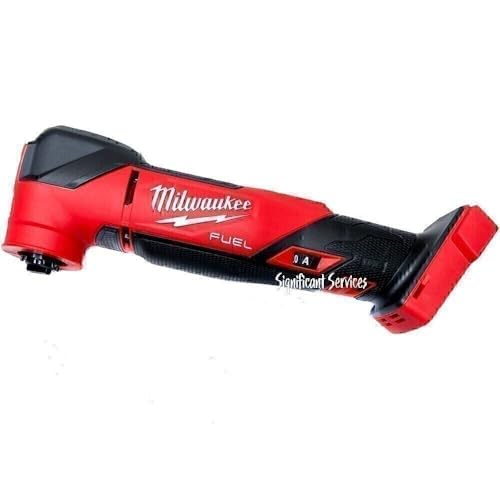
Milwaukee 2836-20 M18 FUEL
Best for: Professional contractors and serious remodelers who need the fastest cutting and lowest vibration
- Brand
- Milwaukee
- Type
- Oscillating multi-tool
- Power
- Cordless (M18 18V, battery sold separately)
- Voltage
- 18V
- Weight
- 2.58 lbs (bare tool)
$224.97Amazon price as of Oct 6, 3:47 PM EDTProduct prices and availability are accurate as of the date/time indicated and are subject to change. Any price and availability information displayed on Amazon.com at the time of purchase will apply to the purchase of this product.
What we like
- Widest oscillation angle (4.2 degrees) for the fastest cutting
- Auto-load speed adjustment responds to cutting pressure
- Industry-leading vibration dampening for all-day comfort
- REDLINK PLUS electronics protect tool and battery
Watch out for
- Pricier than most cordless options here, even as a bare tool
- Battery and charger sold separately (M18 batteries are pricey)
- Heavier than the DeWalt at 2.58 lbs
The Milwaukee 2836-20 is the most powerful cordless oscillating tool you can buy, and it's not particularly close. The POWERSTATE brushless motor paired with a 4.2-degree oscillation angle (the widest in its class) means this tool removes material faster per stroke than anything else on the market. In user comparisons, it consistently delivers faster cut times through 2x lumber, PVC, and even nail-embedded wood.
What I like most about the Milwaukee is the combination of speed and vibration control. Despite the aggressive oscillation angle, the vibration dampening system delivers some of the lowest full-tool vibration readings available. That matters during a full day of remodeling work. The 10-setting speed dial includes an auto-load feature that automatically increases speed as you apply more pressure, so the tool responds to the work rather than forcing you to constantly adjust.
The integrated 180-degree LED light provides excellent visibility in enclosed spaces like wall cavities and under cabinets. REDLINK PLUS electronics protect the motor and battery from overload. If you need the fastest, smoothest oscillating tool and you're already in the M18 platform, this is the one.

Bosch GOP18V-28N StarlockPlus
Best for: Users who want the best blade-change experience and access to premium Starlock accessories
- Brand
- Bosch
- Type
- Oscillating multi-tool
- Power
- Cordless (18V, battery sold separately)
- Voltage
- 18V
- Weight
- 2.7 lbs (bare tool)
$179.99Amazon price as of Oct 6, 3:47 PM EDTProduct prices and availability are accurate as of the date/time indicated and are subject to change. Any price and availability information displayed on Amazon.com at the time of purchase will apply to the purchase of this product.
What we like
- StarlockPlus snap-in blade system is the best on the market
- Superior torque transfer reduces blade slippage
- Constant Response circuitry maintains speed under load
- Wide speed range (8,000-20,000 OPM) for delicate to aggressive work
Watch out for
- Only accepts Starlock/StarlockPlus blades natively (no universal without adapter)
- Narrower oscillation angle (2.8 degrees) than Milwaukee
- Battery and charger sold separately
The Bosch GOP18V-28N is the best oscillating tool for anyone who prioritizes blade quality and the blade-change experience. The StarlockPlus 3-D interface is a snap-in system co-developed by Bosch and Fein. Instead of clamping a flat blade with a bolt or lever, the Starlock system uses a three-dimensional engagement that transfers significantly more torque to the accessory. In practice, this means less blade slippage and cleaner cuts, especially under heavy load.
Changing blades is genuinely effortless. Push the release lever, pull off the old blade, snap on the new one. No wiggling, no aligning holes, no frustration. From user feedback, the Starlock system gets more praise for blade changes than any other interface on the market. If you use your oscillating tool frequently and swap blades often, this system alone justifies the price.
The brushless motor with Constant Response circuitry maintains your selected speed under load, so the tool doesn't bog down mid-cut. The 2.8-degree oscillation angle is narrower than the Milwaukee, which means slightly slower cutting but also lower vibration. At 2.7 lbs, it's compact and comfortable for overhead work. The variable-speed dial ranges from 8,000 to 20,000 OPM, with the lower floor being useful for delicate scraping and sanding tasks.
The trade-off is blade ecosystem lock-in. While Starlock blades are widely available and backwards-compatible with universal-mount tools, the Bosch tool itself only accepts Starlock and StarlockPlus blades natively. You cannot use standard universal blades without an adapter.

Ryobi PBLMT51B ONE+ HP
Best for: Budget-conscious homeowners who want brushless performance without paying contractor prices
- Brand
- Ryobi
- Type
- Oscillating multi-tool
- Power
- Cordless (ONE+ 18V, battery sold separately)
- Voltage
- 18V
- Weight
- 1.95 lbs (bare tool)
$98.99Amazon price as of Oct 6, 3:47 PM EDTProduct prices and availability are accurate as of the date/time indicated and are subject to change. Any price and availability information displayed on Amazon.com at the time of purchase will apply to the purchase of this product.
What we like
- Lightest in our roundup at just 1.95 lbs bare
- Wide 3.8-degree oscillation angle for fast cutting
- Brushless motor with significantly improved runtime and speed
- Compatible with the massive Ryobi ONE+ 18V battery platform (300+ tools)
Watch out for
- Build quality and durability trail pro-grade options
- Variable speed dial feels less precise than Milwaukee or DeWalt
- Blade change mechanism is functional but not as smooth as Starlock
The Ryobi PBLMT51B is the best oscillating tool for anyone who wants solid performance without spending $200 or more. Ryobi's HP (High Performance) line uses brushless motors, and it shows: the PBLMT51B delivers up to 80% faster cutting and 2.5x more cuts per charge compared to Ryobi's previous brushed models.
At 1.95 lbs bare, this is the lightest tool in our roundup by a significant margin. For extended sanding sessions, overhead cutting, or anyone with smaller hands, that weight advantage is real. The 3.8-degree oscillation angle is actually wider than both the Bosch and the DeWalt, which translates to aggressive material removal that punches above its price class.
The tool includes a plunge-cut blade, a flush-cut blade, a sanding pad, and three grits of sandpaper. That's enough to get started without buying accessories separately. The lock-on button eliminates trigger fatigue during long sanding or scraping tasks, and the LED work light illuminates your cut line.
In my opinion, the big draw here is the Ryobi ONE+ battery platform. With over 300 tools sharing the same 18V battery, the PBLMT51B likely fits batteries you already own. If you're just starting to build a cordless tool collection on a budget, Ryobi's platform gives you more options per dollar than any other brand.
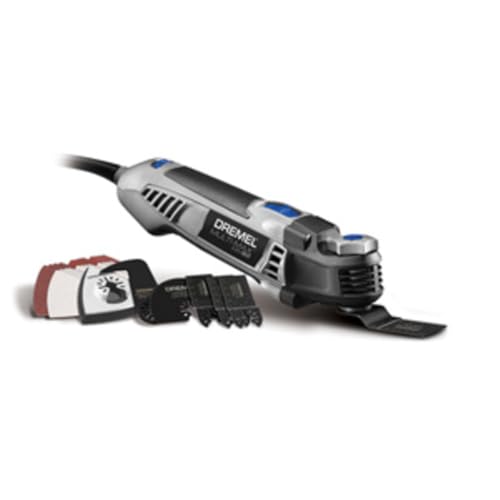
Dremel MM50-01 Multi-Max
Best for: Homeowners who want a corded oscillating tool with everything included and ready to use
- Brand
- Dremel
- Type
- Oscillating multi-tool
- Power
- Corded
- Voltage
- 5.0 amps
- Weight
- 3.6 lbs
$89.95Amazon price as of Oct 6, 3:47 PM EDTProduct prices and availability are accurate as of the date/time indicated and are subject to change. Any price and availability information displayed on Amazon.com at the time of purchase will apply to the purchase of this product.
What we like
- 30 accessories included for immediate versatility
- Highest top speed (21,000 OPM) in this roundup
- Consistent corded power that never fades
- Compact head (30% smaller than previous model) for tight spaces
Watch out for
- Corded design limits mobility
- Heavier than cordless options at 3.6 lbs
- Not compatible with any battery platform for cordless convenience
The Dremel MM50-01 is, I think, the best corded oscillating tool for most homeowners, and the kit format makes it an outstanding value. You get the tool, 30 accessories (including cutting blades, sanding pads, and a scraper), and a storage bag. No batteries to charge, no separate accessories to buy. Plug it in and start working.
The 5.0-amp motor delivers consistent power that never fades, which is the fundamental advantage of corded over cordless. The variable speed dial ranges from 10,000 to 21,000 OPM, giving you the highest top speed in this roundup. That extra speed is noticeable when cutting through hardwood or plywood. The 3.2-degree oscillation angle matches the Makita and outperforms the Bosch.
Dremel redesigned the MM50's head to be 30% more compact than the previous MM45, which helps in tight spaces. The angled body improves ergonomics for flush cutting against floors and walls. The tool-free blade change system (twist the knob, push down, insert the accessory) is intuitive and works reliably.
The downside, obviously, is the cord. You're tethered to an outlet, which limits mobility and introduces a tripping hazard on job sites. For workshop use, home repairs, and projects near an outlet, corded power is actually an advantage: unlimited runtime and no batteries to maintain.

Genesis GMT35T
Best for: Budget-conscious buyers who want a capable corded oscillating tool for occasional projects
- Brand
- Genesis
- Type
- Oscillating multi-tool
- Power
- Corded
- Voltage
- 3.5 amps
- Weight
- 3.2 lbs
$59.27Amazon price as of Oct 6, 3:47 PM EDTProduct prices and availability are accurate as of the date/time indicated and are subject to change. Any price and availability information displayed on Amazon.com at the time of purchase will apply to the purchase of this product.
What we like
- Lowest price in this roundup with a 16-piece accessory kit
- 3.7-degree oscillation angle cuts faster than narrower-angle tools
- Tool-free accessory clamp and die-cast aluminum gear housing
- Lightweight at 3.2 lbs for a corded tool
Watch out for
- Brand lacks the service network and reputation of major tool brands
- 3.5 amps is less powerful than the Dremel MM50's 5.0 amps
- Short 6.5-foot cord
The Genesis GMT35T is the cheapest way to get a genuinely useful oscillating tool into your toolbox. You get a 3.5-amp corded motor, a six-position variable speed dial from 10,000 to 20,000 OPM, and a 3.7-degree oscillation angle. That angle is wider than the Dremel's 3.2 degrees, which helps the blade clear sawdust and cut a little more aggressively in wood.
The kit is surprisingly complete for the price. It includes a flush-cut bi-metal blade, a coarse-tooth flush-cut blade, an HSS segmented blade, a delta sanding pad with 12 sanding sheets, an accessory storage box, and a carrying bag. The tool-free accessory clamp makes blade swaps quick, and the die-cast aluminum gear housing holds up better than the all-plastic heads on many no-name budget tools.
The Genesis is an excellent second oscillating tool or a smart first purchase if you're not ready to invest in a cordless platform. Build quality is a step below DeWalt, Milwaukee, and Dremel, and the 6.5-foot cord is on the short side, so plan on an extension cord. But for flush-cutting a door jamb, scraping caulk, or sanding a few corners a couple of times a year, it's more than adequate.

Fein AMM 700 Max AS
Best for: Professional tradespeople who demand the highest build quality and longest tool life
- Brand
- Fein
- Type
- Oscillating multi-tool
- Power
- Cordless (18V AMPShare, battery sold separately)
- Voltage
- 18V
- Weight
- 2.43 lbs (without battery)
$369.95Amazon price as of Oct 6, 3:47 PM EDTProduct prices and availability are accurate as of the date/time indicated and are subject to change. Any price and availability information displayed on Amazon.com at the time of purchase will apply to the purchase of this product.
What we like
- Metal drive head for outstanding durability under sustained loads
- QuickIN blade change in under 3 seconds with StarlockMax compatibility
- Best-in-class anti-vibration system for all-day comfort
- AMPShare compatibility with Bosch Professional 18V batteries
Watch out for
- Significantly more expensive than any other option on this list
- Battery and charger sold separately
- Overkill for occasional home use
Fein invented the oscillating tool in 1967, and the AMM 700 Max AS shows why the company still commands a premium nearly six decades later. Every component, from the metal drive head to the brushless PowerDrive motor to the QuickIN clamping system, is engineered for professional-grade durability. The metal drive head is the most significant differentiator: it handles sustained heavy loads in a way that lighter-duty tools with more plastic in the head simply can't match.
The QuickIN system changes accessories in under three seconds without any tools. The StarlockMax mount accepts Starlock, StarlockPlus, and StarlockMax blades, giving you access to roughly 180 Fein accessories, the widest range of premium blades on this list. The anti-vibration system is exceptional. If you spend hours using an oscillating tool for floor installation, tile work, or cabinetry, that vibration reduction protects your hands and wrists over time.
The AMM 700 Max AS runs on the AMPShare battery platform, which means Bosch Professional 18V batteries work here too. The 2 x 2.0-degree oscillation angle (4.0 degrees total) strikes a balance between cutting speed and vibration, and the variable speed runs from 10,000 to 19,500 OPM. It ships with a universal bi-metal blade and an L-BOXX carrying case, but no battery or charger. The tool costs roughly double the DeWalt or Bosch, but professional users who run their oscillating tool daily will recoup that investment in longevity and reduced fatigue.
Blade Compatibility: Starlock vs Universal
The blade interface is one of the most confusing aspects of buying an oscillating tool, so let's clear it up.
Universal blades use an open-backed, multi-hole design that fits most oscillating tools from DeWalt, Milwaukee, Makita, Ryobi, Genesis, and Dremel. These blades are widely available from dozens of manufacturers, and they're typically the least expensive option. The clamping mechanism varies by tool brand (lever clamp, thumb screw, or quick-release), but the blade itself is standardized. If you want the widest accessory selection at the lowest cost, universal compatibility is the way to go.
Starlock blades use a three-dimensional interface co-developed by Bosch and Fein. Instead of clamping a flat blade, the Starlock system snaps into a 3D mount that grips the blade on multiple surfaces. This design transfers more torque to the accessory, reduces slippage, and enables faster blade changes. The trade-off is that Starlock tools only accept Starlock blades natively.
There are three Starlock tiers:
| Tier | Accessories | Fits |
|---|---|---|
| Starlock | Standard accessories for most tasks | All Starlock tools |
| StarlockPlus | Larger blades for deeper cuts | StarlockPlus and StarlockMax tools |
| StarlockMax | Heavy-duty accessories for professional applications | StarlockMax tools only |
Cross-compatibility note: Starlock blades share the same 12-point pattern as OIS blades, so a Starlock blade will physically fit on many universal-mount tools from Milwaukee, Makita, and others. However, universal blades will not fit on a Starlock-only tool without an adapter. The Bosch GOP18V-28N accepts Starlock and StarlockPlus. The Fein AMM 700 Max accepts all three tiers.
For most homeowners, I'd pick a tool with universal blade compatibility (DeWalt, Milwaukee, Ryobi, or Dremel) for the most flexibility and the lowest ongoing accessory costs. For professionals who value blade stability and are willing to pay more per blade, the Starlock system is genuinely superior.
Common Questions About Oscillating Tools
What's the difference between an oscillating tool and a reciprocating saw?
A reciprocating saw (sawzall) moves its blade in a long, aggressive back-and-forth stroke designed for demolition and rough cuts. An oscillating tool moves its blade in a tiny arc (typically 2.8 to 4.2 degrees), making it far more precise and versatile but slower for heavy cutting. Use a reciprocating saw for tearing out walls and cutting pipes. Use an oscillating tool for detail cuts, sanding, scraping, and any work requiring precision.
Can an oscillating tool cut metal?
Yes, with the right blade. A bi-metal or carbide-tipped blade will cut through nails, screws, thin sheet metal, copper pipe, and even bolts. Reduce the speed to 10,000-15,000 OPM for metal cutting to prevent overheating and extend blade life. For heavy metal cutting, a reciprocating saw or angle grinder is still the better choice. See our angle grinder vs oscillating tool comparison for more detail.
How long do oscillating tool blades last?
It depends heavily on the material you're cutting and the blade quality. A good bi-metal blade might last through 20-50 cuts in wood before dulling noticeably. Carbide blades last significantly longer (often 10x or more) but cost more upfront. Cheap blades from no-name brands often dull within a few cuts and flex under load. Investing in quality blades from Bosch, Fein, Diablo, or Imperial Blades pays for itself quickly.
Corded or cordless: which should I buy?
For most people, cordless is the better choice in 2026. Modern brushless motors and high-capacity batteries deliver performance that rivals corded tools for typical home projects. Cordless also eliminates cord management, lets you work anywhere, and integrates with your existing battery platform. Choose corded only if you'll be using the tool for extended sessions (hours of sanding or scraping), you don't own a compatible battery platform, or you want the lowest possible upfront cost.
Is a more expensive oscillating tool worth it?
For occasional home use (a few times a year), a Ryobi, Dremel, or Genesis delivers more than enough performance. I think the DeWalt is the sweet spot for frequent users who want reliability without overspending. The Milwaukee and Fein are worth the premium only if you use the tool regularly for professional work, where cutting speed and vibration control directly affect your productivity and comfort.
Final Thoughts
The best oscillating tool for most people is the DeWalt DCS356B 20V MAX XR. In my opinion, it combines a brushless motor, 3-speed control, universal blade compatibility, and light weight at a price that makes sense for both homeowners and professionals. If you need more cutting power and lower vibration, step up to the Milwaukee 2836-20. If blade quality and ergonomics matter most, the Bosch GOP18V-28N with its StarlockPlus system is hard to beat.
For budget-conscious buyers, the Ryobi PBLMT51B offers genuine brushless cordless performance at a budget-friendly price, and the Ryobi ONE+ platform makes it an easy add to an existing collection. If you prefer corded power and want everything in the box, the Dremel MM50-01 kit with 30 accessories is outstanding value.
Personally, if I were picking just one from this list, I would go with the DeWalt for the universal blade compatibility alone. Whatever you choose, an oscillating multi-tool is one of those purchases that immediately earns its place in your workshop. The first time you flush-cut a door jamb, scrape old caulk in seconds, or sand into a corner that no other tool can reach, you'll understand why this tool belongs in every toolkit alongside your drill and jigsaw.
The bottom line
DeWalt DCS356B 20V MAX XR is our best overall.
Best for: Homeowners and contractors who want a reliable all-around oscillating tool with universal blade compatibility
Affiliate Disclosure
This post contains affiliate links. As an Amazon Associate, HomeBuildLab earns from qualifying purchases at no additional cost to you. Learn more
Prices shown are from Amazon at the time indicated and may change. The price and availability on Amazon.com at the time of purchase apply.
Sam Hartwell
Sam Hartwell edits HomeBuildLab's tool reviews and home improvement guides. Every pick starts with manufacturer spec sheets, warranty terms, parts availability and owner feedback, then gets matched to a specific job and budget. Guides list the trade-offs plainly and get updated when models change or go out of stock.
Keep reading: Grinders & Multi-Tools
All grinders & multi-tools guides → How-To
Grinders & Multi-Tools
What Is an Oscillating Tool Used For? 10 Jobs It Does Better Than Anything Else
What is an oscillating tool used for? From flush cuts to grout removal, here are 10 jobs where an oscillating multi-tool outperforms every other power tool.
Updated
 Comparison
Grinders & Multi-Tools
Rotary Tool vs Oscillating Tool: Same Aisle, Completely Different Jobs
Rotary tool vs oscillating tool: I compare motion type, precision, versatility, and best uses so you can pick the right multi-tool for your next project.
Updated
 Comparison
Grinders & Multi-Tools
Angle Grinder vs Oscillating Tool: Two Tools That Solve Completely Different Problems
Angle grinder vs oscillating tool: one grinds through steel, the other makes precision flush cuts. Learn which tool fits your next project and why it matters.
Updated
 Top Picks
Grinders & Multi-Tools
Best Rotary Tools in 2026: Dremel and the Alternatives Worth Buying
Looking for the best rotary tool in 2026? I compared 7 models from budget kits to pro picks and chose the best for carving, cutting, grinding, and polishing.
Updated
 How-To
Grinders & Multi-Tools
How to Use an Angle Grinder Safely: A Practical Guide for Beginners
Learn how to use an angle grinder safely with our step-by-step guide. Covers PPE, disc types, basic techniques, and the mistakes that cause most injuries.
Updated
 How-To
Grinders & Multi-Tools
How to Solder: A Beginner's Guide to Strong, Clean Joints
Learn how to solder with this step-by-step beginner's guide. Covers tools, solder types, technique, and how to fix mistakes for clean, reliable joints.
Updated
The HomeBuildLab newsletter
New guides and tool deals worth knowing about
One short email when we publish or update a buying guide. No spam, unsubscribe anytime.